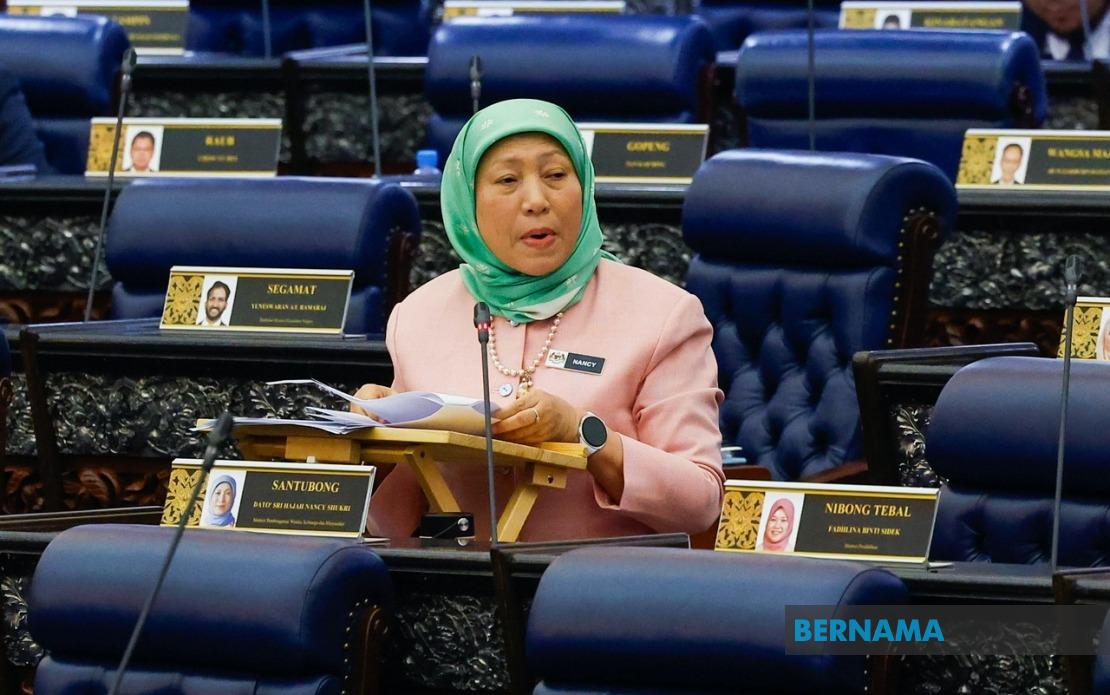
Parliament has taken a decisive step toward professionalising Malaysia's social work sector by passing the Social Work Profession Bill 2026, cementing social work's status as a fully regulated field within the country's institutional landscape. The milestone, achieved through majority vote in the Dewan Rakyat, represents the culmination of a decade-long engagement process involving government ministries, state authorities, academic institutions, civil society organisations, and practising professionals. Minister of Women, Family and Community Development Datuk Seri Nancy Shukri characterised the achievement as a foundational moment for Malaysia's social welfare apparatus, signalling the MADANI Government's determination to establish benchmarks for professionalism, ethical practice, and institutional accountability across the social services sector.
The legislative framework responds to Malaysia's shifting demographic and socioeconomic circumstances. Pressures stemming from an ageing population, rapid urbanisation, mounting cost-of-living pressures, and novel social challenges have created an environment in which formal professional standards become increasingly essential. Without structured regulatory oversight, the profession risked fragmentation and inconsistent service delivery. The Bill addresses these pressures by constructing a comprehensive legal architecture designed to accommodate both current realities and anticipated future demands on Malaysia's social work workforce.
Central to the Bill's operation is the establishment of the Malaysian Social Work Profession Council, which will function as the primary regulatory authority. This institutional body carries multiple responsibilities, including the issuance of practising certificates to qualified practitioners, the formulation and maintenance of professional competency standards, and the enforcement of ethical guidelines governing professional conduct. Beyond these administrative functions, the Council will serve as the profession's institutional voice, promoting social work's standing within the broader healthcare and social services ecosystem. The creation of a single authoritative regulatory body eliminates the fragmentation that previously characterised the profession, where standards and credentials varied significantly depending on the employing organisation or sector.
A crucial dimension of the legislation concerns public protection and transparency. The Bill establishes a verification mechanism enabling citizens and organisations to authenticate the credentials of social work practitioners before engaging their services. This transparency mechanism addresses a longstanding vulnerability in Malaysia's social services environment, where the absence of centralised credential verification created opportunities for unqualified individuals to present themselves as professional social workers. By establishing a public registry of registered practitioners, the legislation strengthens citizen confidence in social service providers and reduces the likelihood of exploitation or malpractice.
The regulatory framework is anticipated to catalyse significant shifts within the human resources dimensions of Malaysia's social work sector. By elevating the profession's institutional status and establishing recognised competency standards, the legislation creates clearer career pathways and professional advancement opportunities. This development should encourage greater participation among university graduates, particularly those who might previously have viewed social work as an ancillary rather than primary career option. Enhanced career prospects, coupled with the legitimacy conferred by professional regulation, are expected to improve recruitment and retention within the sector.
Institutional collaboration represents another dimension where the legislation promises substantial impact. The Bill's framework is designed to facilitate coordination between government bodies, private sector organisations, and non-governmental organisations engaged in service delivery. This collaborative structure recognises that Malaysia's complex social challenges—spanning poverty alleviation, child protection, elderly care, mental health, and family crisis intervention—exceed the capacity of any single institutional sector. By establishing common professional standards and ethical frameworks, the regulatory regime creates a shared language and common expectations that facilitate seamless inter-agency cooperation.
The parliamentary debate surrounding the Bill's passage reflected noteworthy consensus across political divides. Twenty-three Members of Parliament, drawn from both government and opposition benches, participated in substantive discussion during the second reading. This bipartisan engagement underscores recognition across Malaysia's political spectrum that professional social work regulation serves the national interest rather than partisan objectives. Nancy Shukri's explicit acknowledgment of this cross-party commitment suggests that future implementation efforts can proceed without the institutional friction that sometimes accompanies sectarian legislative agendas.
The legislative process itself demonstrates the extensive groundwork underlying the Bill's passage. Throughout the preceding decade, the responsible ministry conducted sustained consultations with federal and state authorities, educational institutions, professional associations, and civil society actors. This iterative engagement ensured that the resulting framework reflected diverse perspectives and accommodated varying institutional contexts across Malaysia's thirteen states. Rather than imposing a uniform model from above, the consultation process allowed stakeholders to shape regulatory architecture reflecting practical realities on the ground.
Implementation will determine whether the Bill's aspirations translate into tangible professional advancement. The Malaysian Social Work Profession Council must establish credible credential verification processes, develop competency standards reflecting Malaysian social conditions rather than merely importing international frameworks, and cultivate professional legitimacy among both practitioners and service-users. The Council's governance structure, appointment processes, and resource allocation will substantially influence whether it functions as a dynamic regulatory body or an administrative formality.
For Southeast Asia more broadly, Malaysia's legislative recognition of social work as a regulated profession carries regional significance. The region's social work sectors frequently operate in institutional grey zones, lacking the regulatory clarity and professional standing that Malaysia's new framework provides. Malaysia's experience may inform peer nations confronting similar pressures to formalise and elevate their social work professions. Particularly relevant for other ASEAN members grappling with rapid urbanisation and ageing populations, the Malaysian model demonstrates how legislation can simultaneously enhance professional status, strengthen public protection, and facilitate institutional collaboration.
Looking forward, the ministry has committed to carefully considering recommendations advanced during parliamentary debate to refine implementation approaches. This receptiveness suggests that the Council's eventual establishment will incorporate parliamentary insights and stakeholder feedback accumulated throughout the legislative journey. Given Malaysia's complex social landscape—characterised by diverse ethnic and religious communities, varying levels of urbanisation, and distinctive state-level governance arrangements—the regulatory framework's ability to accommodate heterogeneity while maintaining professional standards will prove crucial to its effectiveness and longevity.

