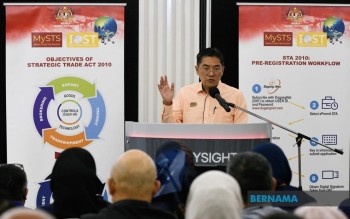
The Ministry of Investment, Trade and Industry (MITI) has reaffirmed its commitment to fortifying Malaysia's electrical and electronics (E&E) sector as a cornerstone of the nation's technological competitiveness and economic resilience. Deputy Minister Sim Tze Tzin underscored this strategic priority while addressing industry stakeholders in Penang's Bayan Lepas, emphasizing that sustained investment and support for the E&E ecosystem remains essential for Malaysia to retain its prominence within intricate global manufacturing networks.
Malaysia's standing as a critical node in the international technology supply chain rests substantially on its prowess in semiconductor assembly, testing, and packaging operations, alongside manufacturing of advanced sensors and telecommunications equipment. The country, particularly through manufacturing hubs concentrated in Penang and the broader Northern Region, hosts numerous world-class technology producers whose operations underscore Malaysia's relevance to multinational corporations seeking diversified production locations. This geographical concentration represents a significant competitive advantage, as decades of investment and expertise have created an ecosystem that rivals other established tech manufacturing centers globally.
The strategic importance of the E&E sector transcends mere industrial output; it reflects Malaysia's integration into value chains controlled by global technology giants and the resilience this provides during market fluctuations. As geopolitical tensions and supply chain disruptions reshape manufacturing geography, Malaysia's established infrastructure and skilled workforce position it as an increasingly attractive alternative for companies seeking to reduce dependency on single-source suppliers. The semiconductor industry, in particular, carries outsized significance given worldwide shortages that have disrupted everything from automotive production to consumer electronics manufacturing.
Beyond production capabilities, MITI is prioritizing export control compliance as an integral component of sector strengthening. Sim emphasized that maintaining orderly international trade through rigorous adherence to export control regimes protects Malaysia's reputation as a trustworthy trading partner and ensures the sector operates within international legal frameworks. This compliance architecture becomes ever more critical as technology bifurcation accelerates globally, with export controls becoming more stringent and complex, requiring companies to navigate intricate regulatory landscapes to maintain market access.
The ministry's engagement with industry through regional clinics demonstrates a collaborative governance approach designed to translate policy into practical support. The Strategic Trade Act (STA) Northern Region Clinic, which drew 86 participants, provides direct advisory services addressing product classification, permit applications, and licensing procedures—the bureaucratic friction points that can impede operations if left unresolved. By offering accessible guidance on internal audit requirements and regulatory compliance, MITI reduces transaction costs for manufacturers and facilitates smoother operations across international borders.
Malaysia's robust trade performance in the first half of the year has created momentum that the government seeks to channel toward improved worker welfare. Deputy Minister Sim's appeal to high-performing companies to share prosperity through wage increases and bonuses reflects recognition that sustained competitiveness requires a stable, motivated workforce. In an era of intensifying competition for skilled technical talent across Asia, wage stagnation risks driving brain drain as engineers and technicians migrate to higher-paying jurisdictions. By encouraging profit-sharing, the government aims to retain human capital essential for maintaining technological leadership.
The semiconductor and E&E sectors employ hundreds of thousands of Malaysians across assembly lines, quality control, engineering, and management roles. Their collective productivity underpins not only direct corporate profits but also government revenues through corporate taxation and employment income taxes. When these sectors thrive, multiplier effects ripple through the broader economy via supplier demand, worker spending, and reinvestment in new facilities. Conversely, any deterioration in competitiveness would threaten livelihoods across entire communities, particularly in Penang where manufacturing represents a dominant economic sector.
For Malaysian policymakers, the challenge lies in maintaining sector attractiveness amid evolving competitive dynamics. Vietnam, Thailand, and Indonesia have invested heavily in competing for similar manufacturing operations, offering labor cost advantages and proximity to growing Southeast Asian markets. Meanwhile, efforts to reshore production in developed economies and India's emergence as a manufacturing alternative add further competitive pressure. MITI's emphasis on compliance and regulatory predictability represents an acknowledgment that Malaysia can no longer compete primarily on cost; instead, it must differentiate through operational reliability, technological sophistication, and institutional stability.
The intersection of trade policy, export controls, and industrial development requires sophisticated coordination between MITI and other agencies overseeing security, labor standards, and environmental compliance. As semiconductor manufacturing becomes increasingly advanced—with newer facilities requiring billions in capital investment—Malaysia must demonstrate that it offers the institutional consistency foreign investors demand. Political stability, transparent governance, and predictable regulatory frameworks are as important as physical infrastructure and labor availability.
Looking forward, Malaysia's trajectory in the global E&E sector depends on investments in workforce development, research and development capabilities, and infrastructure modernization. While the country excels at assembly and testing operations, developing indigenous design and engineering capabilities would add value and create higher-wage employment. Government initiatives to strengthen collaboration between industry and educational institutions could yield long-term benefits through human capital development tailored to sector needs.
The regional significance of Malaysia's E&E sector extends beyond Malaysia's borders. As a major exporter, the sector's health influences Southeast Asia's broader economic performance and competitive positioning against China, India, and developed nations. Supply disruptions emanating from Malaysia ripple through global value chains, affecting manufacturers worldwide. Conversely, when Malaysian manufacturers thrive, the region benefits from knowledge spillovers, investment flows, and technology transfer that strengthen the entire ecosystem.
MITI's continued commitment signals that the government recognizes the sector's importance extends beyond immediate economic returns. The E&E industry represents Malaysia's ticket to remaining a significant player in the digital economy and technological advancement reshaping the 21st-century world. By strengthening regulatory frameworks, facilitating industry engagement, and encouraging profit-sharing with workers, the ministry pursues a holistic approach that balances corporate interests with broader national development objectives. Success in this endeavor would ensure Malaysia maintains relevance in increasingly sophisticated and competitive global technology markets for decades to come.

