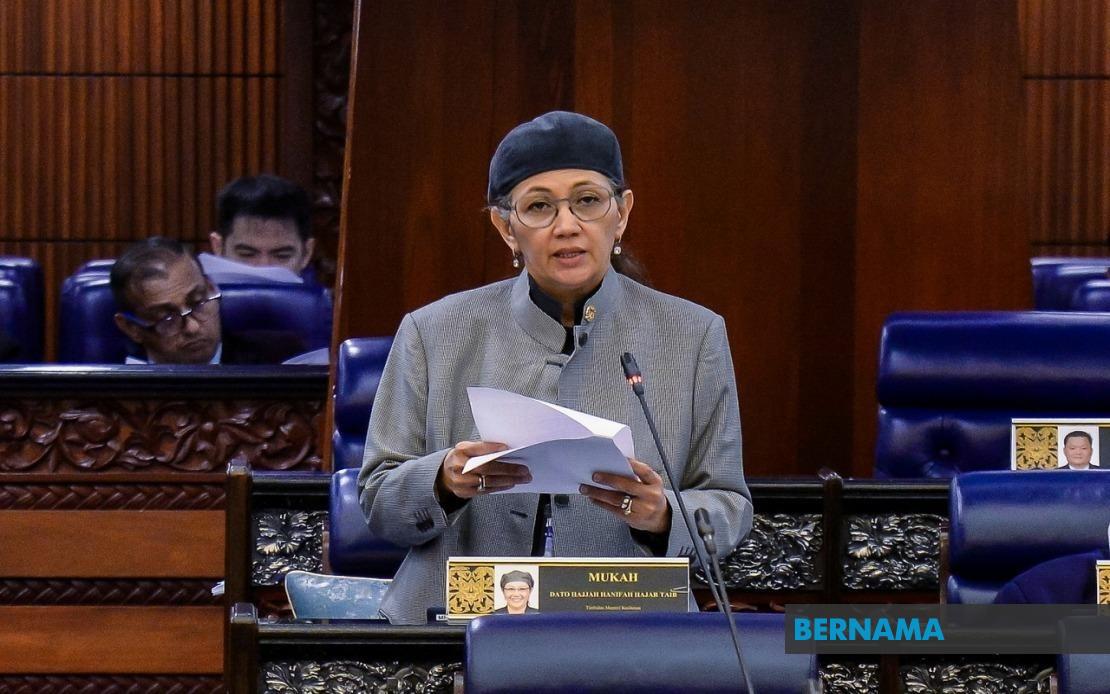
Malaysia's Ministry of Health is taking concrete steps to tackle Sabah's entrenched physician shortage, with Deputy Health Minister Datuk Hanifah Hajar Taib announcing plans to station 560 permanent medical officers in the state from October this year. The initiative represents a substantial portion of a broader nationwide recruitment campaign aimed at filling 4,500 permanent medical posts across the country through two coordinated phases. Addressing Parliament during a special sitting, Hanifah Hajar provided lawmakers with a candid assessment of the challenges facing healthcare workforce expansion in the eastern Malaysian state.
The recruitment drive carries an uncomfortable reality that underscores the complexity of filling healthcare vacancies in remote regions. While 560 doctors will be offered permanent positions in Sabah, the Ministry anticipates that historical attrition patterns will limit actual arrivals to approximately 280 officers. This sobering projection stems from historical reporting rates hovering around 50 per cent, a figure that reflects the broader reluctance among medical professionals to accept postings in less urbanised areas. Even with the expected arrivals, the additional personnel would fall approximately 24 officers short of fully addressing Sabah's documented deficit of 256 medical officers, highlighting the persistent structural challenges the state faces in attracting and retaining qualified healthcare workers.
The recruitment effort builds on an earlier wave of permanent postings rolled out in the first phase. Beginning June 29 this year, 328 medical officers nationally received permanent appointment offers, with 39 positions allocated to Sabah. However, the actual uptake proved disappointing: only 20 doctors reported for duty in the state, while 19 declined their assignments. This mixed outcome underscores the difficulty of matching supply with demand in remote health systems, where career prospects, family considerations, and quality-of-life factors significantly influence physicians' decisions about accepting postings.
Sabah's current medical workforce structure reveals the scope of the challenge confronting health administrators. The state maintains 2,803 established medical officer posts, yet only 1,863 positions—representing 66.5 per cent—are actively filled. An additional 366 doctors, comprising 13.1 per cent of the establishment, remain on study leave pursuing postgraduate qualifications. The remaining 570 posts, accounting for 20.3 per cent of the total, sit vacant. To manage this significant shortfall and maintain operational capacity, the Ministry has deployed 680 contract doctors throughout Sabah, a temporary measure that provides essential coverage but offers neither long-term stability nor career certainty for the healthcare system.
The broader context of Malaysia's physician distribution reveals that Sabah's struggles are not isolated. According to the 2024 Health Indicators report, eight states across the country, including Sabah, fall below the national average for doctor-to-population ratios. This geographic imbalance in healthcare workforce distribution poses a fundamental equity challenge, as residents in underserved regions face longer wait times, reduced access to specialist services, and potential gaps in emergency care capacity. Yet the picture is not entirely bleak. Sabah has demonstrated measurable improvement, with its doctor-to-population ratio rising 25.1 per cent between 2020 and 2023, suggesting that targeted interventions can yield positive results when sustained over time.
To address persistent recruitment challenges, the Ministry has introduced structural reforms designed to incentivise physicians to accept postings in less attractive locations. A revised e-Placement system implemented in 2025 now requires contract officers transitioning to permanent positions to select at least one preferred placement in either Sabah, Sarawak, or Labuan. This compulsory choice mechanism effectively leverages the aspirations of doctors seeking permanent security to distribute talent more equitably across the country. Additionally, the Ministry has established explicit placement quotas through the e-Placement platform, allocating 650 permanent positions to Sarawak and 310 to Sabah—figures that together represent 42.7 per cent of the total 2,248 nationwide permanent placements. These quotas ensure that eastern Malaysian states receive proportionate shares of new physician recruitment, though they also depend on sufficient qualified candidates accepting these designated positions.
The systemic approach reflects a recognition that simply offering higher salaries or improved facilities, while important, remains insufficient without addressing underlying structural disincentives. The transition mechanism embedded in the e-Placement system represents administrative innovation aimed at overcoming the voluntary nature of posting acceptance. By making placement in Sabah or Sarawak a prerequisite for permanent appointment security, the Ministry creates a bargaining dynamic where career advancement becomes contingent on geographic flexibility. This approach acknowledges that many early-career physicians view postings in less developed regions as temporary inconveniences rather than permanent career destinations.
For Malaysian healthcare policy more broadly, the Sabah recruitment initiative signals a government commitment to reducing geographic disparities in health service quality. The eastern Malaysian states have historically received less policy attention than the peninsula, partly due to different demographics, administrative structures, and transportation infrastructure. Investing substantially in physician recruitment there represents a recognition that universal healthcare access requires equitable distribution of qualified personnel, not merely infrastructure investment.
Looking forward, the success of the October recruitment phase will depend significantly on whether the Ministry can influence physician preferences beyond contractual mechanisms. Building reputational appeal, supporting spousal career opportunities in Sabah, and ensuring competitive compensation packages may prove as important as administrative quotas. The 280 doctors anticipated to arrive represent meaningful progress toward closing a 256-doctor gap, though this calculation assumes no additional attrition among existing staff. Sabah's healthcare system requires not merely filling current vacancies but also developing sufficient depth to accommodate future growth and retirement cycles, making sustained recruitment momentum essential for long-term stability and service reliability.

