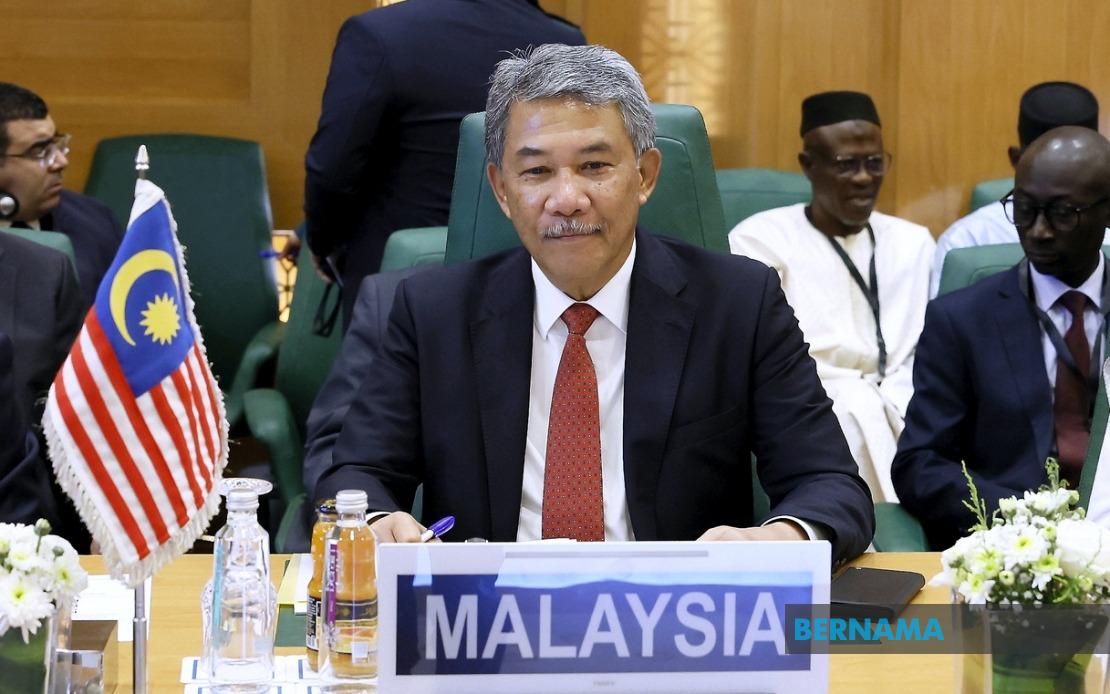
Malaysia has escalated diplomatic pressure on the international Islamic community to mount a unified stance against Israel's settlement expansion programme, with Foreign Minister Datuk Seri Mohamad Hasan delivering a forceful rebuke at an extraordinary gathering of OIC foreign ministers in Jeddah. The announcement underscores Malaysia's commitment to leveraging multilateral forums to challenge what Kuala Lumpur characterises as unlawful territorial seizure and demographic engineering designed to extinguish Palestinian statehood prospects. The government's intervention reflects broader regional concerns that incremental Israeli consolidation of occupied lands threatens the viability of any future negotiated two-state framework.
At the heart of Malaysia's appeal lies the July 2024 International Court of Justice Advisory Opinion, a legal determination that member states should respect by withdrawing support for Israeli settlement activities. Mohamad emphasised that adherence to this international judicial pronouncement constituted not merely a political choice but a fundamental obligation for nations committed to rule-based international governance. The invocation of the ICJ ruling carries particular weight for Southeast Asian audiences, as it demonstrates how Malaysian diplomacy attempts to ground its advocacy in established legal mechanisms rather than rhetorical assertion alone. The advisory opinion's existence provides OIC members with international legal cover should they wish to adopt more assertive positions regarding sanctions or economic measures.
The specifically targeted US$2.3 billion settlement initiative, often referred to as the E1 expansion plan, represents an especially provocative undertaking in Israeli territorial strategy. This development scheme would effectively sever territorial continuity between the West Bank's northern and southern regions, rendering a consolidated Palestinian state geographically fragmented and administratively unviable. For Malaysian policymakers, this particular project exemplifies how settlement activity transcends mere land acquisition; it constitutes a deliberate architectural dismantling of Palestinian political independence. The E1 corridor's strategic positioning means that its development would fundamentally alter the demographic and geographic realities upon which any future Palestinian governance must rest, making it a litmus test of international commitment to Palestinian self-determination.
Beyond settlements, Malaysia's statement encompassed broader security concerns within occupied Palestinian territories. The Foreign Minister highlighted the persistent pattern of settler violence against Palestinian civilians, the systematic eviction of Palestinians from East Jerusalem neighbourhoods, and measures targeting the city's cultural and religious character. These phenomena collectively represent what Malaysian officials describe as a comprehensive strategy to diminish Palestinian presence and Palestinian claims to the disputed city. For regional observers, particularly in Muslim-majority nations, these developments carry profound symbolic weight given Jerusalem's status as an Islamic holy city. Malaysian diplomatic interventions therefore resonate with deeper religious and historical sensibilities that transcend conventional territorial disputes.
The Al-Aqsa Mosque compound incident of July 23, wherein Israeli government officials and far-right activists entered the sacred site, provoked particular ire from Kuala Lumpur. Mohamad characterised such incursions as fundamentally unacceptable provocations that violate the sanctity expected within interfaith relations and international norms governing religious spaces. This episode, and Malaysia's response, underscores how settlement disputes intertwine with religious site access and protection—dimensions that distinguish the Israeli-Palestinian conflict from conventional territorial disagreements. The Malaysian position advocates for strengthening Jordan's historical custodianship role over Islamic and Christian holy sites, positioning regional states as guardians of interfaith stability.
Malaysia's extended commentary on the Gaza humanitarian catastrophe situates the settlement question within a broader accountability framework. By documenting the approximately 70,000 Palestinian deaths, the destruction of civilian infrastructure including hospitals and schools, and the comprehensive obstruction of humanitarian assistance, Kuala Lumpur frames settlement expansion not as an isolated territorial matter but as part of an integrated policy ecosystem producing mass civilian suffering. This rhetorical integration serves multiple purposes: it amplifies the moral dimensions of Malaysia's advocacy, it connects Israeli actions across different operational domains, and it appeals to international humanitarian constituencies beyond Islamic circles. The accumulation of documented harms strengthens Malaysia's argument that the international community faces a credibility crisis should it continue tolerating these practices.
The two-state solution framework anchors Malaysian diplomacy, with Kuala Lumpur advocating establishment of a fully independent Palestinian state based on June 4, 1967 borders, including East Jerusalem as the capital. This formulation reflects consensus positions within the Arab League and broader OIC membership, yet its reiteration carries significance insofar as it establishes Malaysia's willingness to accept negotiated borders rather than maximalist territorial claims. For international audiences assessing Malaysian reasonableness and diplomatic flexibility, this positioning matters considerably. It allows Kuala Lumpur to present itself as advocating within established international frameworks rather than pursuing revolutionary territorial revision, thereby maintaining diplomatic credibility while advancing Palestinian interests.
Malaysia's appeal for strengthened Palestinian institutional capacity and reconstruction emphasises state-building dimensions often overlooked in settlement disputes. By calling for OIC support for Palestinian governance institutions, Kuala Lumpur acknowledges that Palestinian independence requires not merely territorial delineation but functional sovereign capacity. This perspective recognises that fragmented, isolated, or devastated Palestinian territories cannot sustain viable statecraft regardless of formal international recognition. Malaysian advocacy thus extends beyond defensive postures against settlement expansion to constructive proposals for institution-building, suggesting Kuala Lumpur envisions itself as supporting Palestinian state formation comprehensively.
The diplomatic focus on the United Nations Relief and Works Agency for Palestine Refugees in the Near East reflects Malaysian concern regarding structural dismantling of Palestinian governance and welfare infrastructure. The Israeli seizure of the Kalandia Training Centre represents more than property confiscation; it eliminates institutional capacity for Palestinian refugee services provision. Combined with legislation introducing capital punishment for Palestinians, these measures signal systematic institutional attrition. Malaysia's emphasis on UNRWA protection acknowledges that Palestinian refugee populations depend critically on international organisational infrastructure, making UNRWA's mandate preservation a precondition for Palestinian subsistence.
For Malaysian readers and Southeast Asian observers, the Jeddah gathering and Malaysia's statement carry implications extending beyond immediate Middle Eastern affairs. They demonstrate how Kuala Lumpur leverages OIC membership to position itself as a consequential voice within the Islamic world on geopolitical matters. Malaysia's detailed engagement with settlement architecture, legal frameworks, and humanitarian documentation reflects sophisticated diplomatic labour rather than reflexive solidarity posturing. The consistent framing around international law, judicial opinions, and institutional preservation suggests Malaysia seeks to influence both OIC policy formation and international opinion by anchoring advocacy in seemingly neutral legal and institutional language rather than sectarian rhetoric.
Regionally, Malaysia's emphasis on collective OIC action reflects awareness that unilateral Malaysian statements carry limited diplomatic weight absent broader Islamic consensus. By mobilising the OIC mechanism and appealing for member state unity, Kuala Lumpur amplifies its voice while distributing responsibility for policy positions across multiple governments. This collective framing also positions Malaysia as consensus-builder within Islamic diplomatic circles rather than outlier nation pursuing idiosyncratic agendas. For Southeast Asian countries with more cautious approaches to Palestinian advocacy, Malaysia's diplomatic methodology offers templates for balancing domestic Muslim constituencies' expectations against international relations management.
The question of accountability and enforcement mechanisms remains implicit but consequential in Malaysian diplomacy. By repeatedly invoking international law, ICJ determinations, and UN Security Council responsibilities, Kuala Lumpur highlights implementation deficits within global governance structures. Malaysia's frustration with protracted international paralysis despite legal clarity appears evident in its emphasis on credibility testing and rule-based order enforcement. This perspective resonates particularly with Southeast Asian states accustomed to seeing international legal determinations inconsistently applied depending on geopolitical alignments, lending Malaysian arguments additional salience for regional audiences sceptical of international justice mechanisms' impartiality.

