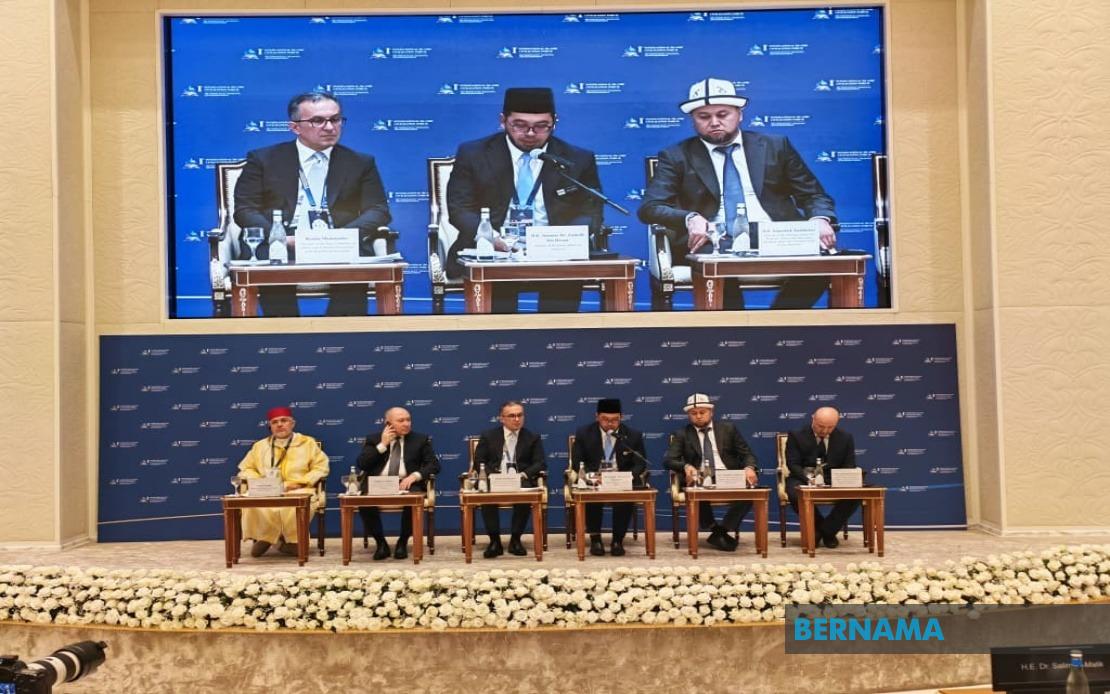
Malaysia has called upon the Islamic world to harness the profound lessons emerging from the Gaza humanitarian crisis as a catalyst for civilisational renewal and meaningful global contribution. Speaking at the International Islamic Civilisation Forum in Tashkent, Uzbekistan, Datuk Dr Zulkifli Hasan, the Minister in the Prime Minister's Department (Religious Affairs), emphasised that the immense suffering of Gaza's civilian population demands more than expressions of sympathy. Instead, he framed the tragedy as a moment for the Muslim world to reaffirm foundational principles of justice, compassion, and human dignity whilst confronting uncomfortable questions about the inconsistent application of international law globally.
The minister's intervention at the forum's plenary session marked a strategic shift in how Malaysia is articulating regional responses to geopolitical crises. Rather than dwelling exclusively on the immediate humanitarian dimensions of Gaza, Zulkifli positioned the tragedy within a broader philosophical framework—one that questions the Islamic world's contemporary relevance and future trajectory. He argued that the crisis has exposed a critical juncture for Islamic civilisation, demanding that Muslim-majority nations resist the tendency to define themselves solely through reactive stances toward external events and developments.
Zulkifli articulated a central tension characterising contemporary Islamic discourse: the reliance on historical precedent rather than future vision. He acknowledged that Islamic civilisation's past achievements in architecture, science, governance, and ethical thought remain undeniable historical facts. However, he contended that perpetually referencing these accomplishments without proposing substantive contemporary contributions represents a fundamental misreading of civilisational purpose. The critical question, he suggested, is not whether Islamic civilisation once attained greatness, but rather what transformative role it should claim in actively shaping humanity's collective future amid unprecedented technological, geopolitical, and environmental upheaval.
The minister identified a widespread hunger in the contemporary global order extending far beyond material advancement. Modern societies, he argued, increasingly seek moral clarity, principled leadership rooted in enduring ethical values, and governance frameworks that subordinate economic logic to human dignity. Zulkifli positioned Islamic civilisation as inherently equipped to fulfil these needs, emphasising that its historical grandeur derived not merely from architectural magnificence or scientific innovation, but from its demonstrated capacity to construct just societies, nurture ethical leaders, and advance knowledge explicitly as service to both the divine and humanity. This formulation reframes Islam's contribution as addressing civilisational deficits particularly acute in secular, technologically advanced societies.
Central to Zulkifli's vision is the concept of intellectual and moral renewal grounded in collective responsibility. He advocated for a renaissance that fundamentally restores ethical considerations to governance structures, reintegrates wisdom into knowledge creation, and realigns development initiatives with purposeful human flourishing. This renaissance, he stressed, cannot emerge from isolated intellectual efforts or governmental directives alone, but requires widespread moral conviction and shared commitment to foundational Islamic principles of justice and equity.
Historical context provided by the minister underscored Islamic civilisation's traditional openness to cross-cultural intellectual exchange. Medieval Muslim scholars actively synthesised knowledge from Greek, Persian, Indian, and Chinese intellectual traditions, creating frameworks for integration rather than isolationism. Zulkifli proposed that contemporary Muslim societies deliberately resurrect this spirit of engaged cosmopolitanism, particularly regarding emerging technologies. He called for Muslim scholars, ethicists, and policymakers to become active architects in developing ethical frameworks governing artificial intelligence, biotechnology, and quantum computing—ensuring that technological innovation perpetually serves humanity and safeguards human dignity rather than advancing narrow commercial or geopolitical interests.
Environmental stewardship emerged as another critical dimension of Zulkifli's civilisational renewal framework. He invoked Islamic concepts of humanity's role as divine trustees of creation, arguing that contemporary Muslim-majority nations must translate theological commitments into concrete environmental policies and sustainable development practices. This positions Islamic governance models as offering distinctive solutions to the ecological crises confronting both Muslim and non-Muslim populations globally.
A significant analytical thread throughout Zulkifli's address emphasised preventing Islamic civilisational renewal from being misconstrued as civilisational rivalry. He explicitly cautioned against zero-sum interpretations where Islamic ascendancy requires Western decline or vice versa. Instead, the minister framed renewal as fundamentally collaborative—an opportunity for Muslim-majority nations to contribute distinctive ethical and intellectual resources toward humanity's shared challenges through genuine dialogue, equitable partnership, and mutual respect. This positioning reflects Malaysia's broader diplomatic strategy of building robust Muslim-world coalitions whilst maintaining constructive engagement with nations across all civilisational backgrounds.
Zulkifli highlighted bilateral potential between Malaysia and Uzbekistan, identifying complementary strengths that could serve wider Islamic and Asian interests. He noted Uzbekistan's substantial legacy in Islamic scholarship and thought, positioning it as a counterbalance to Malaysia's particular expertise in Islamic governance frameworks, Islamic finance systems, and demonstrated capacity for peaceful multicultural coexistence. Together, he suggested, these nations could function as bridges connecting Central Asian and Southeast Asian regions, advancing knowledge creation, ethical innovation, and sustainable development models applicable across the Muslim world.
The minister's remarks implicitly address several audiences simultaneously. To fellow Muslim-majority nations, he advocates proactive engagement with global challenges rather than defensive posturing. To Western audiences, he signals Islam's commitment to ethical universalism rather than particularistic tribalism. To Malaysia's diverse domestic population, he articulates a vision of Islamic governance transcending narrow religious nationalism whilst grounding identity in universal principles accessible across civilisational boundaries.
The broader significance of Malaysia's intervention at the Tashkent forum reflects evolving Southeast Asian positioning within global geopolitical competitions. Rather than aligning exclusively with either Western or Chinese-led international orders, Malaysia articulates a distinctive civilisational voice centred on ethical universalism, inclusive development, and dialogue-based conflict resolution. This approach positions the country as a potential mediator and thought leader within both Muslim-majority spaces and broader international forums grappling with fundamental questions about technology, justice, and humanity's future direction.

