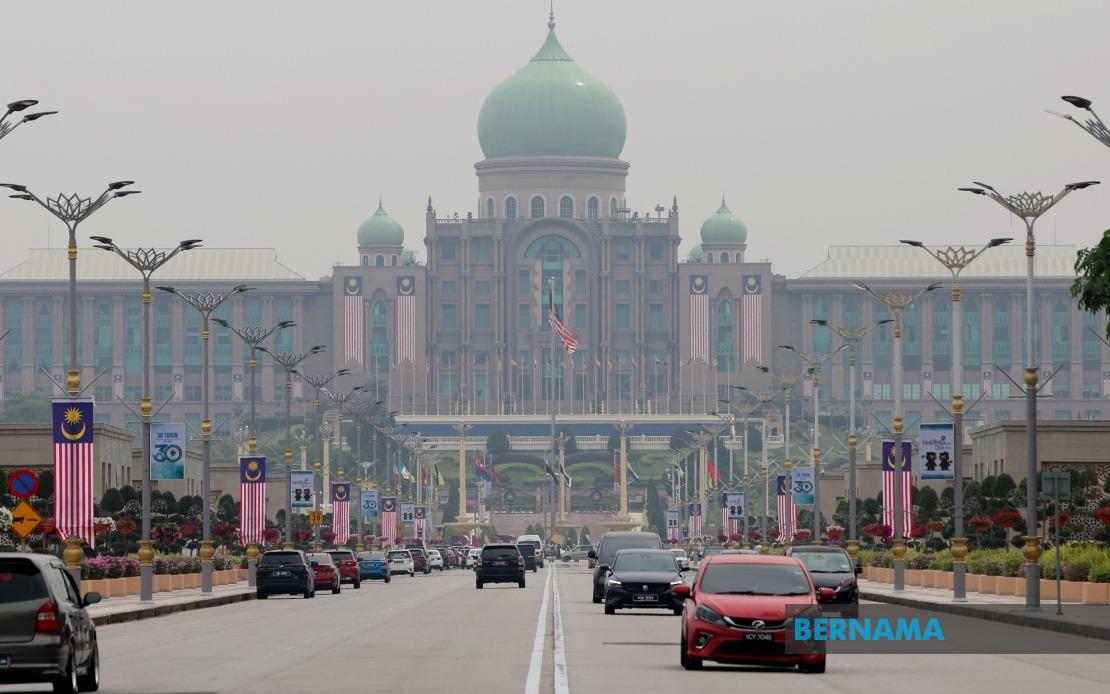
Malaysia has intensified its appeal for unified action across ASEAN in tackling the escalating threat of transboundary haze, emphasising that the challenge demands coordinated preventive strategies, robust preparedness measures, and sustained surveillance rather than isolated national responses. The call was formally conveyed to ASEAN Secretary-General Dr Kao Kim Hourn through Natural Resources and Environmental Sustainability Minister Datuk Seri Arthur Joseph Kurup, signalling the gravity with which Kuala Lumpur views the emerging situation across the region.
Kurup outlined a multifaceted approach that member states must adopt to buttress their collective defences against haze pollution. This includes intensifying control mechanisms, bolstering monitoring of vulnerable zones prone to fire outbreaks, expanding hotspot detection capabilities through advanced surveillance systems, rigorous enforcement of existing prohibitions on open burning, and ensuring fire-fighting units maintain peak operational capacity. The minister's remarks reflect growing concern that complacency—particularly when individual nations believe their own fire incidents remain manageable—could prove catastrophic once winds carry smoke across borders, a pattern well-documented in Southeast Asia's environmental history.
While current fire situations within respective ASEAN territories remain ostensibly controlled, the regional dimension introduces an unpredictable variable that no single country can manage independently. Transboundary haze has historically affected millions across the region, disrupting economies, damaging public health, and straining diplomatic relations. Malaysia's experience with severe haze episodes, most notably in 1997–1998 and 2015, underscores why proactive regional coordination rather than reactive crisis management must become the operational norm. The principle underpinning this approach is that prevention and early intervention prove far more cost-effective and less disruptive than managing widespread haze once it has formed and spread.
Meteorological data gathered by regional monitoring networks reveals an increasingly concerning pattern. Prolonged dry spells gripping southern portions of the ASEAN region have triggered a measurable uptick in hotspot occurrences, which serve as precursors to larger-scale fire events. More troubling still is the longer-term climate outlook: meteorologists expect the El Niño phenomenon to intensify gradually through the coming months, creating conditions historically associated with extended drought periods and heightened fire risk across Indonesia, Malaysia, and neighbouring zones. This convergence of immediate dry conditions with an anticipated amplification of El Niño dynamics creates a compound risk scenario that demands elevated preparedness.
Accurate and timely information sharing emerges as a cornerstone of the Malaysian position. Real-time data on hotspot locations, fire intensity, wind patterns, and haze dispersion models enables each nation to make informed decisions about resource deployment and public advisories. The alternative—fragmented information or delayed communications—leads to delayed responses and allows small fires to metastasise into regional crises. Kurup emphasised that early interventions grounded in reliable intelligence represent the most effective tool for preventing minor incidents from escalating into transboundary disasters. This underscores a fundamental shift in thinking: from viewing haze as a problem that emerges only when smoke appears to recognising it as a phenomenon best addressed long before visible atmospheric degradation occurs.
The ASEAN Secretariat has assumed the role of Interim Coordinating Centre for Transboundary Haze Pollution Control, a responsibility Malaysia has publicly welcomed as a constructive step toward institutionalising regional cooperation mechanisms. This institutional framework, operating under the mandate of the ASEAN Agreement on Transboundary Haze Pollution, provides a formal structure for facilitating dialogue, coordinating preparedness initiatives, and strengthening the legal and operational architecture binding member states to collaborative action. Malaysia's backing of this arrangement signals confidence in multilateral approaches, though the actual effectiveness of such coordination ultimately depends on the political will and resource commitments each nation extends.
For Malaysian readers, the implications are immediate and personal. The nation's geographic position in the peninsula and on Borneo renders it vulnerable to haze from both Indonesian Sumatra and Indonesian Kalimantan. Past haze episodes have forced schools and offices to close, triggered respiratory health crises in hospitals, degraded air quality to hazardous levels, and imposed economic losses running into billions of ringgit. Businesses dependent on clear visibility, tourism operators, and agricultural exporters all face potential disruptions when haze returns. Moreover, Malaysia's role as a regional advocate for environmental cooperation positions it as a leader with both credibility and responsibility in pushing for solutions that transcend narrow national interests.
The broader Southeast Asian context amplifies the urgency of Malaysia's message. As climate change intensifies weather volatility and anthropogenic pressures mount on forests and peatlands, the region faces mounting environmental stress. The haze problem cannot be solved through unilateral action; a single nation's enforcement of burning prohibitions, however rigorous, cannot prevent fires across a neighbour's border from drifting downwind. This reality makes ASEAN solidarity not merely desirable but essential for collective survival and prosperity. Kurup's statement reflects this understanding, framing transboundary haze not as an isolated technical issue but as a shared challenge requiring pooled resources, aligned policies, and unwavering commitment.
The reference to El Niño strengthening portends a critical test for ASEAN cohesion. Historical patterns suggest that robust El Niño conditions lasting six to nine months can create extended drought windows that dramatically increase fire risk. If member states have not substantially strengthened their preparedness infrastructure, enforcement capacity, and regional coordination mechanisms before those months arrive, the consequences could be severe. Malaysia's proactive messaging now—well before the worst dry conditions typically materialise—represents an attempt to catalyse action while there remains time to build resilience rather than scramble to respond to crisis.
Kurup's statement also subtly underscores a strategic consideration: environmental leadership at the regional level enhances Malaysia's diplomatic standing and soft power within ASEAN. By positioning itself as a champion of collective action and sustainable practices, Malaysia reinforces its role as a responsible regional actor committed to the common good. This approach contrasts with nationalist posturing that prioritises narrow advantage and undermines regional trust. In an era when transnational challenges from climate to pandemics demand multilateral responses, Malaysia's advocacy for coordinated haze management signals maturity in understanding that national interest is best served through enlightened regional cooperation.
Looking forward, the effectiveness of this call for unified action will be measured through concrete steps: enhanced real-time monitoring systems, increased funding for fire-fighting capabilities, stricter enforcement of open burning bans, and transparent data sharing through ASEAN channels. Member states must translate rhetoric into resource allocation and personnel deployment. Malaysia itself will likely intensify its domestic fire prevention efforts while simultaneously engaging ASEAN partners in bilateral and multilateral forums to ensure that commitments translate into action. The coming months will reveal whether ASEAN can maintain collective discipline and unity when commercial interests in agriculture and other sectors pressure governments to relax enforcement or whether transboundary haze will once again expose the limits of regional cooperation.

