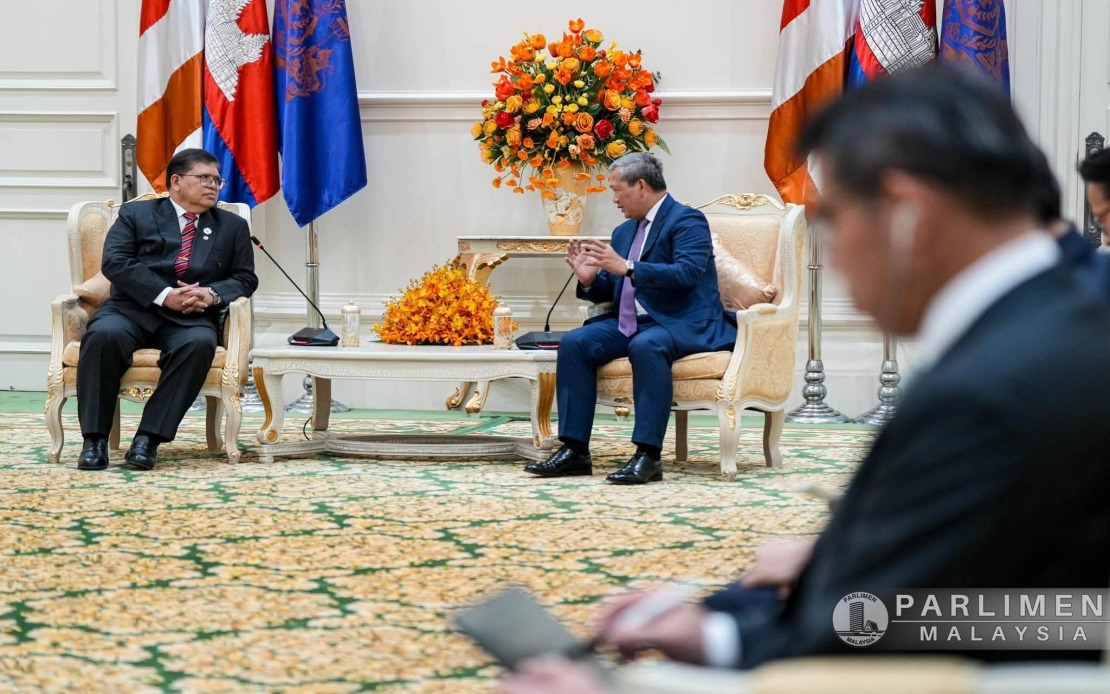
Malaysia has renewed calls for sustained diplomatic engagement to address the escalating Cambodia-Thailand border tensions, with Dewan Rakyat Speaker Tan Sri Johari Abdul emphasising that dialogue remains the only viable pathway to preserving regional peace. Speaking from Phnom Penh after meetings with Cambodian leadership during the Second Inter-Parliamentary Speakers' Conference, Johari stressed that bilateral disputes must not be allowed to fracture the broader unity and cooperative spirit that underpins ASEAN's collective stability and prosperity.
The border situation between Cambodia and Thailand has long represented one of Southeast Asia's most sensitive geopolitical flashpoints, with periodic flare-ups threatening not only the two nations involved but also the broader regional equilibrium. As a non-aligned intermediary and fellow ASEAN member, Malaysia's intervention carries particular weight in regional peace efforts. Johari's public statements reflect Kuala Lumpur's strategic interest in preventing the dispute from escalating into armed conflict, which would destabilise the entire region and undermine decades of painstaking efforts to build institutional trust and cooperation frameworks within the bloc.
During his meeting with Cambodian Prime Minister Hun Manet, Johari acknowledged Malaysia's understanding of Cambodia's legitimate concerns regarding the border tensions and their humanitarian impact on local communities. The acknowledgment itself carries diplomatic significance, signalling Malaysia's empathy for Cambodia's position while simultaneously reinforcing the need for constructive engagement rather than unilateral actions. This balancing act reflects the delicate diplomatic choreography required when addressing contentious matters within ASEAN, where all member states must feel heard and respected despite disagreements.
Johari reaffirmed Malaysia's commitment to supporting multilateral efforts aimed at bringing all parties back to the negotiating table, positioning Kuala Lumpur as a facilitator committed to de-escalation and conflict resolution. This stance aligns with Malaysia's traditional role within ASEAN as a champion of dialogue-based approaches and the bloc's non-interference doctrine, though adapted to support regional stability when direct conflict threatens. Malaysia's willingness to engage both Cambodia and Thailand in diplomatic channels underscores the recognition that neighbourhood conflicts, if left unresolved, can metastasise into broader regional problems affecting trade, investment flows, and security arrangements that benefit all member states.
Beyond the immediate border crisis, Johari and Hun Manet used their meeting to explore deepening bilateral cooperation across multiple sectors, reflecting Malaysia's broader strategy of strengthening ties with Cambodia through economic interdependence and institutional linkages. Parliamentary cooperation, economic collaboration, and human capital development emerged as priority areas, suggesting both nations view expanded bilateral engagement as complementary to regional stability efforts. When countries develop robust economic and people-to-people connections, the calculus of conflict shifts, as the costs of hostility become tangible and immediate.
The discussion of youth exchange programmes and educational initiatives holds particular significance for Malaysia's regional engagement strategy. By creating opportunities for young Cambodians and Malaysians to interact, collaborate, and build relationships outside formal governmental channels, these programmes help construct a generation of leaders and professionals with personal stakes in maintaining good relations. Such soft power investments generate long-term dividends that formal diplomacy alone cannot achieve, embedding regional cooperation into the social fabric rather than relying solely on government-to-government negotiations.
Technical and Vocational Education and Training emerged as a specific area of expanded cooperation, reflecting both nations' recognition that skills development represents a mutual interest in an increasingly competitive regional economy. By collaborating on TVET through institutional exchanges and industry partnerships, Malaysia and Cambodia can address shared labour market challenges while simultaneously creating frameworks for sustained engagement and mutual learning. These technical-level partnerships often prove more resilient than high-level political agreements, as they involve multiple stakeholders and create distributed interests in maintaining good relations.
Johari's appreciation for Cambodia's efforts to facilitate Malaysian business operations and investments signals Malaysia's economic stake in Cambodia's stability and prosperity. Malaysian companies operating in Cambodia represent not just commercial interests but also channels through which Malaysian influence flows into the Cambodian economy. This economic interdependence can serve as a stabilising force, as disruptions to business operations and investment flows would damage both nations' economic prospects and create domestic pressure for reconciliation.
The broader context for Malaysia's diplomatic push involves ASEAN's fundamental challenge: maintaining regional solidarity and institutional effectiveness while member states pursue divergent national interests and face bilateral disputes. The Cambodia-Thailand border issue tests ASEAN's commitment to its foundational principles, particularly the doctrine of settling disputes through peaceful means and constructive dialogue. If ASEAN cannot manage this problem effectively, its credibility as a regional mechanism for conflict resolution faces serious erosion, potentially inviting external powers to exploit regional divisions.
For Malaysian policymakers, preventing Cambodia-Thailand tensions from escalating serves multiple strategic interests. A major conflict between ASEAN members would disrupt ASEAN's institutional functioning and possibly fracture the bloc along geographic or ideological lines. It would also create humanitarian and refugee pressures that neighbouring countries, including Malaysia, would inevitably face. Furthermore, regional instability invites external powers to engage in rivalry for influence, potentially drawing ASEAN into great power competition that undermines the bloc's autonomy and strategic space.
Johari's emphasis on preserving ASEAN's cohesion reflects the understanding that in an era of increasing geopolitical competition between major powers, regional unity represents the bloc's most valuable strategic asset. When ASEAN speaks with one voice and members maintain stable internal relations, the bloc wields greater influence in managing external pressures and pursuing collective interests. Conversely, internal disputes weaken ASEAN's negotiating position with external actors and create openings for external interference that undermine regional autonomy.
The diplomatic engagement on Cambodia-Thailand issues also occurs within Malaysia's broader Cambodia policy, which emphasises economic engagement, institutional cooperation, and careful neutrality in bilateral disputes. By refusing to take sides while encouraging both parties toward dialogue, Malaysia positions itself as a trusted intermediary capable of facilitating future negotiations. This reputation for fair-mindedness and commitment to regional stability represents a form of soft power that enhances Malaysia's diplomatic influence within ASEAN and with external partners.
Moving forward, Malaysia's approach suggests a long-term commitment to supporting regional conflict resolution mechanisms and encouraging ASEAN to strengthen its institutional capacity for managing bilateral disputes. The Inter-Parliamentary Speakers' Conference itself represents one such mechanism, creating forums where senior political figures can engage in substantive discussions outside formal governmental settings. Expanding and deepening these institutional channels may help prevent bilateral disputes from escalating into military confrontations by maintaining communication lines and building personal relationships among regional leaders.

