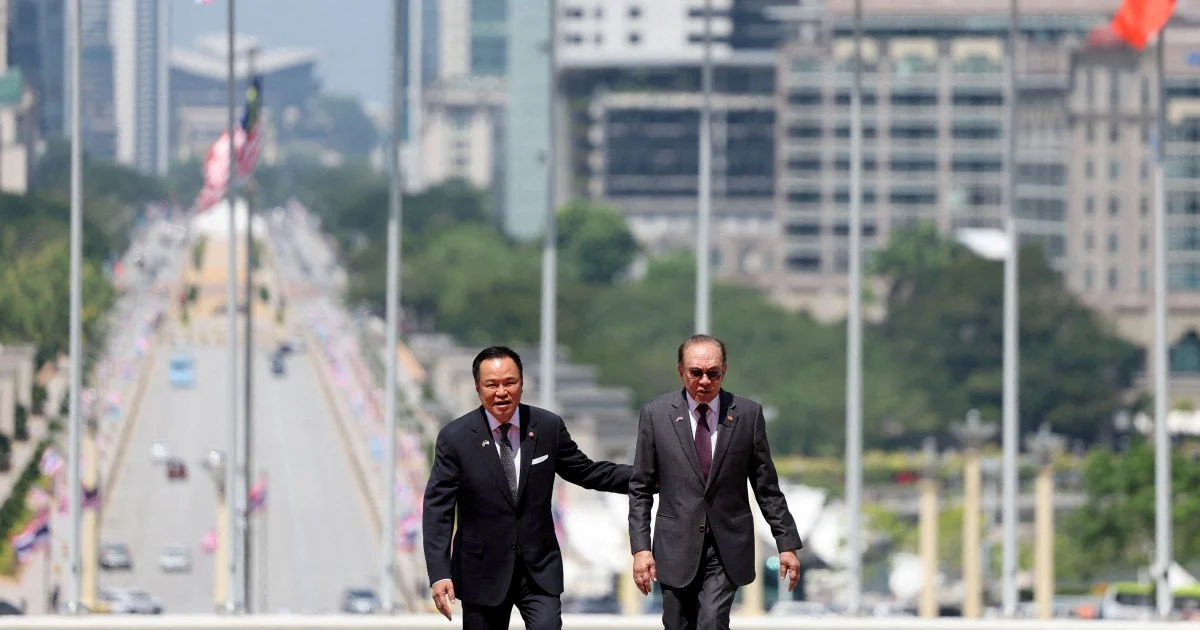
Malaysia's position on Myanmar's deepening political turmoil centres on the need for comprehensive dialogue involving all relevant parties, Prime Minister Datuk Seri Anwar Ibrahim stated in Putrajaya. The Malaysian government maintains that sustainable solutions to the crisis cannot emerge from narrow negotiations or unilateral actions, but rather through mechanisms that bring diverse interests to the negotiating table.
Anwar's emphasis on inclusive engagement reflects a broader regional diplomatic approach adopted by ASEAN nations in responding to Myanmar's instability since the military coup in February 2021. Malaysia, as a fellow ASEAN member and significant regional economic partner, has consistently advocated for dialogue-based resolutions that extend beyond military and civilian leadership to encompass civil society organisations, ethnic armed groups, and other stakeholders holding genuine influence over the country's political trajectory.
The concept of allowing Myanmar's people to chart their own course stands in contrast to externally imposed solutions or outcomes determined solely by military or political elites. This principle underscores Malaysia's belief that legitimate governance must ultimately rest on the consent and participation of ordinary citizens, reflecting broader democratic values espoused by Southeast Asian nations navigating similar governance challenges.
Myanm’s humanitarian situation has deteriorated markedly since the military takeover, with widespread reports of civilian casualties, displacement, and economic collapse. The ongoing conflict between the military junta and various armed resistance movements has created a complex landscape where simple bilateral negotiations prove insufficient for addressing the multifaceted dimensions of the crisis spanning political legitimacy, human rights, and territorial stability.
Inclusive engagement frameworks theoretically accommodate the interests of the military establishment, the previous civilian government under Aung San Suu Kyi's National League for Democracy, numerous ethnic armed organisations controlling significant territories, and civil society voices representing broader population interests. This layered approach acknowledges that Myanmar's path forward necessarily involves reconciling competing visions for the nation's political future among groups with substantial constituencies and institutional capacity.
From Malaysia's perspective, the crisis poses direct implications for regional stability and economic cooperation within ASEAN. Myanmar's membership in the regional grouping and its geopolitical significance mean that prolonged instability generates consequences extending across Southeast Asia through migration flows, cross-border armed activity, and disruption of regional trade networks that Malaysia depends upon for economic vitality.
MAK's advocacy for inclusive dialogue also reflects practical recognition that excluding major stakeholders from peace processes typically results in spoiler dynamics, where marginalised parties undermine implemented agreements through renewed violence. The Myanmar experience demonstrates how military actors alienated from negotiations can continue destabilising efforts indefinitely, perpetuating cycles of conflict that prevent recovery and development.
ASEAN's collective approach has evolved to emphasise the Myanmar policy framework focused on supporting dialogue mechanisms, though implementation remains complicated by disagreements among member states regarding appropriate pressure levels and diplomatic strategies. Malaysia's position articulates a middle path acknowledging the gravity of Myanmar's humanitarian emergency while maintaining confidence in dialogue-based approaches rather than external military intervention.
The commitment to allowing Myanmar's people self-determination reflects international principles of sovereignty and non-interference that ASEAN members historically defend vigorously. Paradoxically, this stance sometimes creates tension with humanitarian imperatives when civilian populations face acute suffering, raising complex questions about balancing respect for national sovereignty against moral obligations to address mass atrocities.
Malaysia's diplomatic messaging suggests ongoing engagement efforts behind the scenes despite public perceptions of stalled progress on Myanmar within ASEAN forums. Regional countries maintain various communication channels with different Myanmar factions, contributing collectively to diplomatic pressure for negotiations despite lacking unanimous positions on specific policy outcomes or timelines for resolution.
The inclusive engagement framework Malaysia advocates ultimately depends on whether conflicting Myanmar parties possess sufficient motivation to prioritise negotiated settlement over continued military contest. Current dynamics suggest entrenched positions among major stakeholders, with the military junta maintaining confidence in its coercive capacity while resistance movements build organisational strength and popular support, potentially extending conflict horizons and reducing immediate incentives for compromise-based agreements.
Looking forward, Malaysia and other ASEAN members face the challenge of maintaining diplomatic relevance and pressure for dialogue while acknowledging realistic constraints on external influence over Myanmar's internal trajectory. The success of inclusive engagement approaches ultimately hinges on internal Myanmar actors' recognition that shared interests in national recovery outweigh zero-sum competition for political dominance, a calculation that currently appears elusive across major stakeholder groups invested in current struggle for power and legitimacy.

