Malaysia has formally registered its candidacy to return to the United Nations Security Council as a non-permanent member for the 2036–2037 term, signalling the country's continued commitment to global governance reform and international peace efforts. The official submission marks a significant diplomatic move that reflects Kuala Lumpur's ambitions to play a more prominent role in shaping global security policy during a period when international tensions and regional conflicts demand heightened scrutiny from middle-power nations.
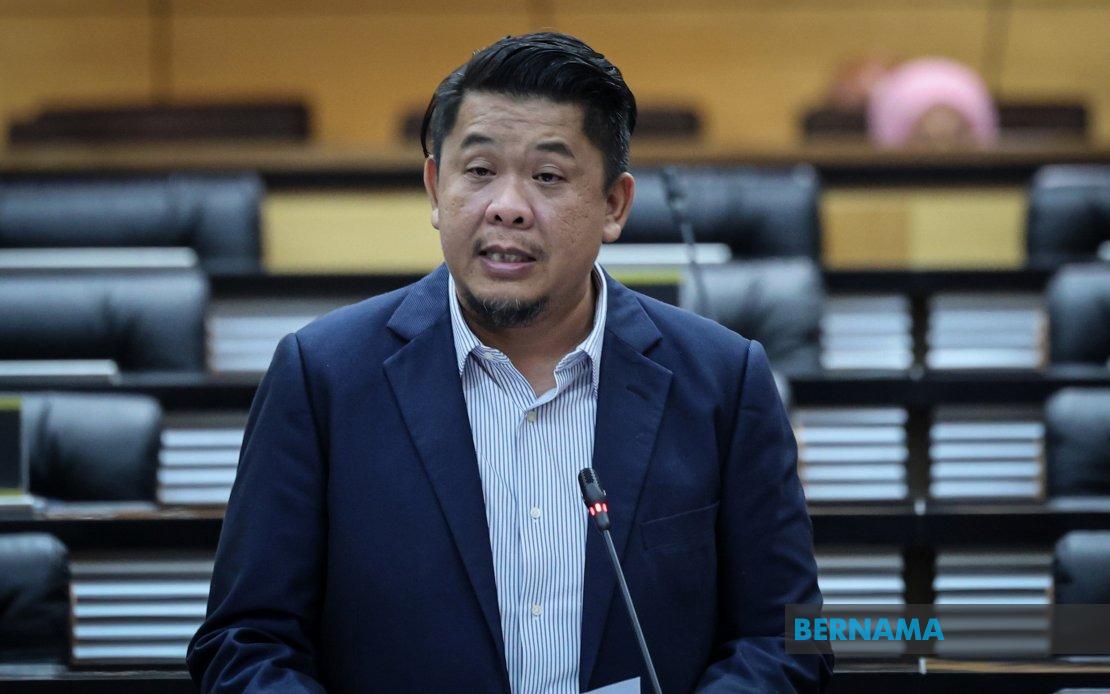
Deputy Foreign Minister Datuk Lukanisman Awang Sauni announced the candidacy submission while addressing Parliament, emphasising that Malaysia intends to leverage its potential seat to advance a broader agenda centred on restructuring the UNSC's institutional framework. Rather than viewing the non-permanent seat as a ceremonial honour, Malaysian policymakers are positioning it as a platform to advocate for systemic changes that would democratise decision-making within the world's most powerful security body. The timing of Malaysia's candidacy comes amid renewed global debates about the relevance and legitimacy of the Security Council's permanent member structure, which has remained unchanged since 1945.
At the heart of Malaysia's reform platform lies the veto power wielded exclusively by the five permanent members—the United States, Russia, China, France, and the United Kingdom. This mechanism, intended during the post-World War II era to prevent major power conflicts, has increasingly become a source of frustration for developing nations and smaller players in international relations. Malaysia's position reflects a growing consensus among non-aligned and developing countries that the veto has become an obstacle to decisive action on humanitarian crises, military interventions, and mass atrocities. By frontally challenging this arrangement, Malaysia is aligning itself with a broader movement for UN reform that has gained momentum in recent years.
Deputy Foreign Minister Lukanisman articulated a particularly compelling argument regarding the veto's application in cases of egregious international crimes. He stressed that Malaysia believes the veto should be prohibited when circumstances involve grave breaches of international humanitarian law, including war crimes, genocide, crimes against humanity, and the destruction of civilian infrastructure. This position carries added weight given Malaysia's visible concern about ongoing conflicts in the Middle East, particularly the situation in Gaza, which has become a focal point for Malaysian civil society and foreign policy advocacy. The statement reflects how regional sensitivities and humanitarian concerns increasingly inform Malaysia's diplomatic priorities at the global stage.
Foreign Minister Datuk Seri Mohamad Hasan is scheduled to reinforce these commitments during Malaysia's National Statement at the 81st UN General Assembly Debate, which will take place in New York during September. This prestigious platform allows Malaysia to articulate its vision not only to the UN membership but also to domestic audiences and regional allies who monitor Malaysia's international positioning. The General Assembly debate serves as an annual opportunity for countries to signal their priorities and values, and Malaysia's emphasis on UNSC reform will demonstrate its alignment with non-aligned principles and its advocacy for a more equitable global order.
The candidacy submission also reflects Malaysia's strategic calculation about its regional and international standing. As a mid-sized economy with significant influence within ASEAN and the Non-Aligned Movement, Malaysia possesses credibility as a bridge-builder between developed and developing nations. A seat on the Security Council would amplify Malaysia's voice on issues ranging from regional security in Southeast Asia to broader questions about multilateral peacekeeping, sanctions regimes, and humanitarian intervention. The non-permanent seat, while lacking the veto power of permanent members, still carries substantial influence over the council's agenda and resolutions.
Malaysia's previous experience on the UNSC provides historical precedent for this candidacy. The country has served as a non-permanent member multiple times in the past, accumulating experience in navigating the complex politics of the security council and building coalitions with like-minded nations. This institutional memory, combined with Malaysia's growing diplomatic sophistication and its positioning within regional and global forums, creates a compelling case for its reinstatement. Neighbouring countries and regional partners are likely to view Malaysia's candidacy as beneficial to Southeast Asian representation and interests within the Security Council's deliberations.
The emphasis on UNSC reform in Malaysia's candidacy platform also addresses deeper concerns about the legitimacy and effectiveness of international institutions. As major power competition intensifies—particularly between the United States and China—the paralysis of the Security Council has become more pronounced. Russia and China have repeatedly used their vetoes to block resolutions addressing Syria, Venezuela, and other conflict zones, while Western powers have employed the veto to protect allies from accountability measures. Malaysia's candidacy implicitly offers a perspective from a nation that has historically avoided great power alignments, thereby presenting itself as a neutral arbiter committed to functional international governance rather than geopolitical advantage.
The submission of Malaysia's candidacy also carries domestic political significance. Parliament was informed through the formal question-and-answer session, ensuring legislative awareness and implicitly securing parliamentary endorsement for the foreign ministry's strategic direction. The query raised by Datuk Seri Sh Mohmed Puzi Sh Ali provided an opportunity for the government to publicly articulate its position on the veto power, demonstrating that UNSC reform and global peace are not peripheral concerns but central to Malaysia's foreign policy orientation under the current administration.
Looking ahead to the 2036–2037 term, Malaysia faces competition from other countries seeking non-permanent seats, as UNSC elections are contested affairs involving diplomatic lobbying and coalition-building. However, Malaysia's articulate advocacy for institutional reform, its track record in international forums, and its credibility within the Non-Aligned Movement position it as a competitive candidate. The bid represents more than a quest for symbolic prestige; it reflects Malaysia's determination to influence how the international community addresses security challenges, humanitarian crises, and the structural inequalities embedded within global governance frameworks. Success would provide Malaysia with a platform to translate its rhetorical commitments to reform into concrete advocacy during a crucial period for international security.

