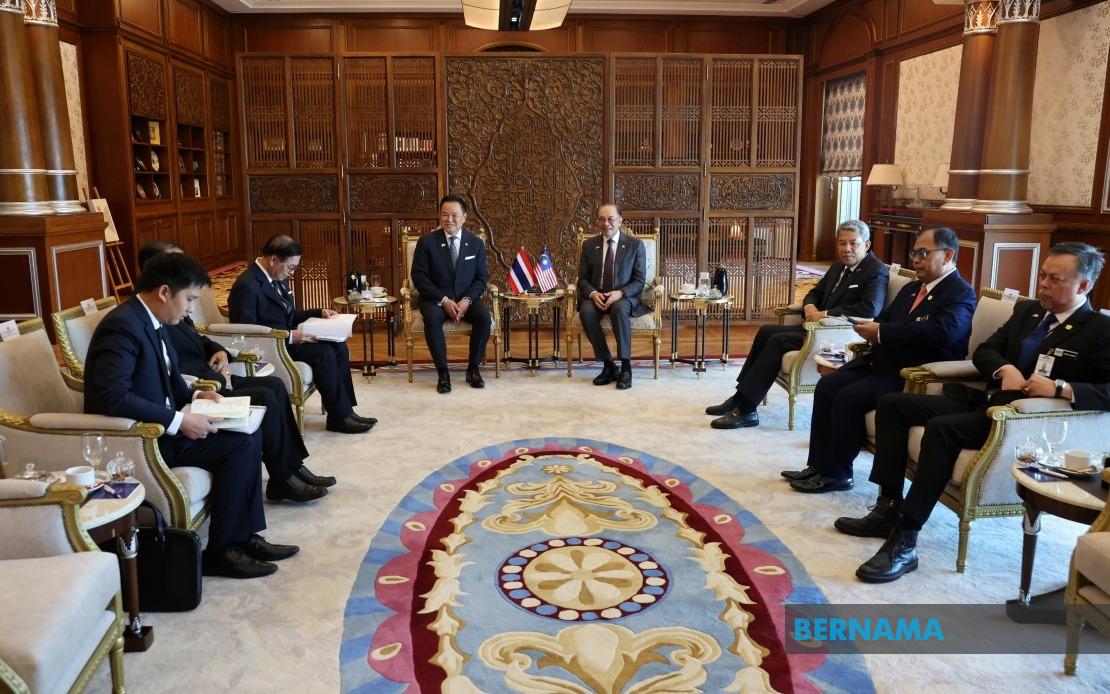
Malaysia is doubling down on its long-standing diplomatic approach to Myanmar's ongoing political upheaval, with Prime Minister Datuk Seri Anwar Ibrahim using high-level talks with Thailand to reinforce the case for dialogue-based solutions. Speaking alongside visiting Thai Prime Minister Anutin Charnvirakul at a joint press conference in Putrajaya on Thursday, Anwar articulated Kuala Lumpur's conviction that the Myanmar question ultimately rests with the Myanmar people themselves, rather than being imposed externally by military fiat or international pressure campaigns.
The Malaysian leader's remarks underscore a broader regional consensus within ASEAN that military-to-military confrontation and economic isolation have proven ineffective in catalysing political change in Naypyidaw. Instead, Malaysia joins several other Southeast Asian capitals in advocating for what is termed "constructive engagement"—a framework that keeps diplomatic channels open, maintains humanitarian access, and encourages incremental negotiations toward democratic restoration rather than demanding overnight transformation. This philosophy reflects both pragmatism and respect for Myanmar's sovereignty, though critics argue it has yielded limited tangible progress since the 2021 coup.
Thailand's position in these discussions carries particular weight, given its geographical proximity to Myanmar and its long history of border trade, migration, and cultural ties that predate modern nation-states. Anwar highlighted Bangkok's unique capacity to act as an interlocutor and confidence-builder, leveraging relationships that outsiders like Malaysia lack. Thailand has already hosted various Myanmar stakeholder meetings and served as a transit point for displaced persons fleeing the junta's violence, making it an indispensable partner in any sustained diplomatic initiative.
The Myanmar crisis has remained a vexing challenge for ASEAN since the military's seizure of power in February 2021 deposed the democratically elected government of Aung San Suu Kyi. Despite being one of the bloc's founding members, Myanmar's political trajectory has become a test of ASEAN's stated commitment to non-interference combined with its equally binding duty to maintain regional stability and uphold the rule of law. The regional organisation has repeatedly invoked its Five-Point Consensus—a 2021 roadmap calling for ceasefire, dialogue, humanitarian access, fact-finding missions, and ASEAN envoy engagement—without securing compliance from the Myanmar military junta.
Malaysia's rhetoric on Myanmar resonates with its broader foreign policy tradition of emphasising dialogue over sanctions, a stance shaped by its own experiences with internal conflict and the belief that diplomatic channels must remain open even during periods of profound disagreement. This orientation has made Kuala Lumpur a trusted voice in regional forums, though it also means Malaysian proposals for Myanmar often lack the enforcement mechanisms that Western governments and some regional critics believe are necessary to produce concrete political change.
Beyond Myanmar, the bilateral conversation between Anwar and Anutin also touched on other sensitive regional matters, including the long-standing Thailand-Cambodia border dispute. Anwar commended Thailand's commitment to peaceful resolution of this issue, signalling Malaysia's confidence in Bangkok's willingness to pursue dialogue rather than military escalation. The Malaysian Prime Minister reiterated his government's faith in the wisdom of the leaders directly involved, whilst also expressing ASEAN's collective interest in maintaining the region's stability and predictability—essential conditions for economic growth and regional integration.
Anutin's visit to Malaysia marked his first bilateral trip to the country since his reappointment as Thai Premier in March 2026, indicating both the importance Bangkok places on maintaining strong ties with Kuala Lumpur and the rhythm of high-level diplomatic engagement that characterises ASEAN relationships. Such visits serve multiple purposes: they provide opportunities to align positions on contentious regional issues, demonstrate bilateral goodwill to domestic audiences, and reinforce the personal relationships between leaders that often prove crucial in times of crisis.
The timing of this engagement is particularly significant given broader geopolitical tensions affecting Southeast Asia, including great-power competition between the United States and China, supply chain disruptions stemming from global conflicts, and the economic pressures facing many regional economies. Within this context, Malaysia and Thailand's emphasis on intra-ASEAN dialogue and consensus-building reflects a determination to preserve regional agency and prevent outside powers from instrumentalising internal disputes for their own strategic advantage.
A concrete symbol of Malaysia-Thailand cooperation materialised in plans for Anwar and Anutin to jointly inaugurate on Friday a new road connecting the Immigration, Customs, Quarantine and Security Complex in Bukit Kayu Hitam, Kedah with the Customs, Immigration and Quarantine facility in Sadao, Thailand. This infrastructure project, located in one of the region's busiest border zones, exemplifies the kind of practical bilateral collaboration that generates tangible benefits for citizens and businesses in both countries. Enhanced border connectivity streamlines trade flows, reduces smuggling opportunities, and facilitates legitimate cross-border movement—outcomes that matter enormously for the development of Malaysia's northern states and Thailand's southern provinces.
The broader trajectory of Malaysian policy toward Myanmar suggests that Kuala Lumpur believes sustained engagement, despite its frustrations, remains preferable to isolation or sanctions regimes that might further entrench the military junta and close off future pathways to reform. This reflects a belief that transformation in Myanmar, when it eventually comes, will emerge from internal momentum and regional persuasion rather than external coercion—a philosophy that aligns Malaysia with several other ASEAN members but continues to draw criticism from human rights advocates who argue it insufficiently prioritises accountability for military violence.
For Malaysia specifically, Myanmar's stability carries direct implications for regional security architecture, refugee flows, and economic integration. Prolonged conflict in Myanmar disrupts supply chains, drives irregular migration across Malaysian borders, and diverts regional resources toward managing humanitarian crises rather than pursuing developmental priorities. By emphasising Thailand's role and reinforcing the case for engagement, Anwar is signalling that Malaysia sees no viable alternative to the patient, relationship-based diplomacy that characterises ASEAN's approach to internal crises.

