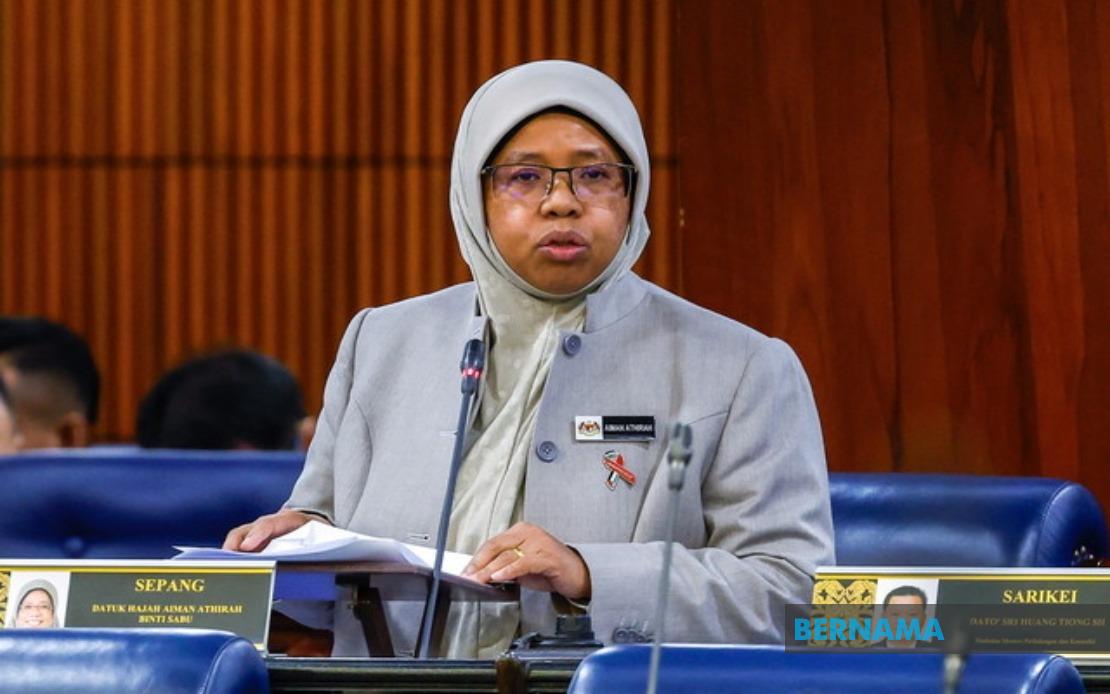
The Ministry of Housing and Local Government has given the go-ahead for nearly 600 development initiatives targeting Chinese new villages and Indian communities nationwide, signalling continued government commitment to upgrading living conditions in these traditionally marginalised settlements. Deputy Minister Datuk Aiman Athirah Sabu announced during parliamentary proceedings on June 29 that the ministry's Department of Local Government had endorsed 573 projects for Chinese new villages alongside 21 initiatives for Indian villages, representing an overall investment of RM73 million in the current financial year.
The scale of infrastructure work in Chinese new villages demonstrates substantial momentum across multiple programme streams. Among the 573 approved projects, 366 focus on core infrastructure development—roads, water systems, electricity and drainage improvements that form the backbone of community functionality. Progress tracking shows 148 of these infrastructure schemes have reached completion, while 218 remain in various stages of construction. This bifurcated completion rate reflects the complexity of coordinating municipal works across numerous dispersed settlements, many of which face geographical challenges that complicate execution timelines.
Housing assistance represents a significant component of the intervention strategy. The Housing Repair Assistance Programme accounts for 197 approved projects, with 47 already finished and 150 continuing. This initiative addresses the reality that many residents in these villages occupy aging structures requiring systematic rehabilitation. A separate New Village Housing Construction Assistance Programme targets households seeking new dwellings, with ten projects greenlit but awaiting commencement. The delayed start of construction projects suggests either procurement processes still underway or that groundwork and planning phases remain ongoing.
The Indian village component, though numerically smaller at 21 projects, carries particular significance given the historically lower visibility of Indian community development in Malaysia's public discourse. Eighteen Indian villages across six states—Johor, Melaka, Selangor, Kuala Lumpur, Perak and Negeri Sembilan—feature in the current slate of initiatives. These projects, budgeted at RM2 million collectively, encompass infrastructure improvements alongside public amenities and safety enhancements. Current execution status shows five completed, thirteen under active construction, two in procurement phases, and one remaining in planning stages.
The broader historical context underscores this year's allocation significance. Since 2023, the government has channelled RM328.9 million toward development initiatives benefiting Chinese new villages, reaching approximately 613 settlements nationwide. This multi-year commitment demonstrates sustained, if gradualist, progress in addressing infrastructure deficits accumulated over decades. However, the trajectory also reveals that annual per-village allocations remain modest relative to accumulated needs, particularly given the aging infrastructure and dense population concentrations in many settlements.
Indian village support represents a more recent policy pivot. Dedicated allocations began flowing through KPKT only in 2025, totalling RM15 million earmarked for benefiting 22,144 residents across 50 identified Indian villages through 87 distinct projects. This represents approximately 20,000 ringgit per village on average, indicating that the government recognises Indian communities as requiring targeted intervention. The funding mechanism splits between RM10 million from KPKT's regular 2025 budget supporting 54 projects, and RM5 million channelled through the Indian Community Socioeconomic Development Programme via the Malaysian Indian Transformation Unit, reflecting coordination between multiple government agencies.
The parliamentary question from S. Kesavan representing the Sungai Siput constituency illuminates the persistent political salience of village development. These constituencies frequently encompass Chinese new villages and Indian settlements, making infrastructure and housing quality tangible electoral concerns. Kesavan's inquiry signalled constituent expectations that government deliver measurable improvements rather than rhetorical commitments, a pattern that will likely intensify as these communities benchmark progress against announced targets.
Implementation challenges warrant acknowledgment when evaluating these figures. Coordinating hundreds of construction contracts across multiple states, managing community consultations, navigating land tenure complexities in some villages, and securing contractors willing to work in geographically dispersed locations all create practical friction. The gap between approved and completed projects—particularly the 150 housing repairs still in progress against only 47 completed—suggests execution typically requires extended timelines. Weather delays, supply chain disruptions, and the need for proper community engagement further extend typical project durations.
For Malaysian policymakers and Southeast Asian observers, these initiatives reflect a broader regional pattern of government attempts to address historical development imbalances through targeted investment programmes. Malaysia's approach combines infrastructure modernisation with direct housing assistance, a two-pronged strategy also visible in development programmes across Thailand, Vietnam and Indonesia targeting rural or ethnic minority communities. The emphasis on infrastructure completion metrics and housing accessibility aligns with contemporary development thinking prioritising basic service access as prerequisite for broader socioeconomic advancement.
The RM73 million annual allocation, while substantial in absolute terms, requires contextualisation against Malaysia's total housing and development budget, estimated in billions annually. This suggests village development remains a distinctly secondary priority despite rhetorical emphasis on inclusive growth. Nevertheless, the portfolio of 594 projects across two distinct community categories demonstrates that government machinery can coordinate diverse initiatives when political will aligns with budgetary allocation. Moving forward, monitoring actual completion rates—rather than merely counting approved projects—will indicate whether announced programmes translate into tangible improvements in living standards for residents in these historically underfunded communities.

