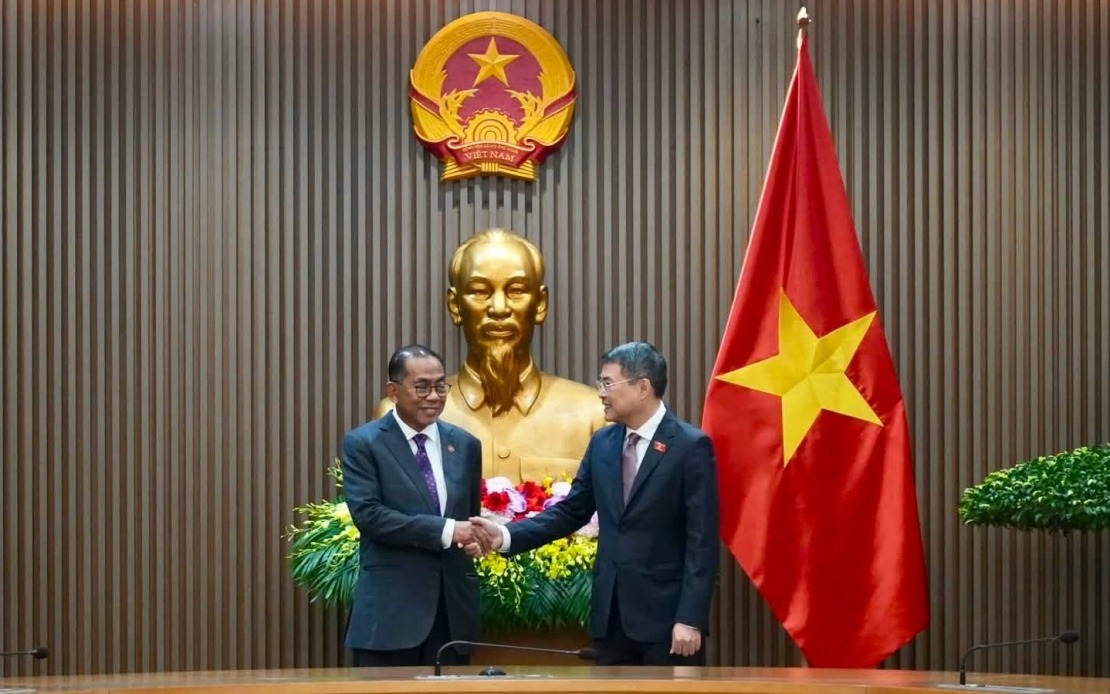
Malaysia and Vietnam are moving to deepen their defence relationship, targeting expanded cooperation in critical areas including maritime security, technological advancement, and defence industrial collaboration. The commitment emerged from discussions between Malaysian Defence Minister Datuk Seri Mohamed Khaled Nordin and Vietnamese Prime Minister Lê Minh Hưng during an official visit to Hanoi, underscoring both nations' determination to build a more robust strategic partnership in an increasingly volatile regional security environment.
The defence minister characterised Vietnam as a trusted and dependable partner, reflecting the maturity of bilateral military ties that have developed substantially over recent years. Malaysia's approach towards Vietnam reflects a broader Southeast Asian strategy of cultivating strong relationships with neighbouring states to create a more cohesive regional security architecture. The two nations share fundamental commitments to ASEAN principles and view dialogue and diplomacy as essential mechanisms for preserving peace and stability across the region, a perspective that carries particular weight given ongoing geopolitical tensions in the Indo-Pacific.
Central to the expanded cooperation is the 2023 Memorandum of Understanding on Defence Cooperation, which both countries intend to use as a foundational framework for elevating their military relationship to a more strategic level. This institutional approach ensures that cooperation remains structured, predictable, and aligned with long-term defence objectives. Rather than relying on ad-hoc engagements, the MoU provides continuity and establishes clear benchmarks for measuring progress across multiple cooperation domains.
Maritime security represents a particularly significant focus area for both nations. The South China Sea remains strategically vital to Malaysian and Vietnamese interests, with both countries maintaining territorial claims and significant maritime economic zones. Enhanced maritime cooperation between Kuala Lumpur and Hanoi could strengthen their collective capacity to address challenges ranging from piracy and smuggling to illegal fishing and environmental degradation. Such collaboration might also include joint patrols, information sharing, and coordinated responses to maritime incidents, contributing to freedom of navigation and regional maritime stability.
Capability development constitutes another pillar of the deepening partnership. Military modernisation remains a priority for both nations as they seek to maintain credible defence forces capable of addressing contemporary threats. Through structured cooperation, Malaysia and Vietnam can share experiences in procurement, training, and operational doctrine development. This exchange of best practices helps both militaries enhance their effectiveness while potentially achieving economies of scale through coordinated defence procurement initiatives.
Technology and artificial intelligence have emerged as critical frontiers in defence planning. Mohamed Khaled's reference to AI, cyber threats, and cognitive warfare reflects growing recognition that modern security challenges transcend traditional kinetic warfare. These emerging domains demand sophisticated technological capabilities and deep expertise. Malaysia and Vietnam can benefit substantially from collaborative research, joint training programmes, and shared intelligence regarding cyber threats and information warfare tactics that adversaries might employ against regional players.
The broader security environment that prompted these discussions reflects genuine anxieties affecting Southeast Asia. Great power competition, particularly involving major powers' strategic rivalry, creates pressure on regional states to navigate complex relationships whilst maintaining autonomy. Grey zone activities—coercive actions falling below conventional military conflict—pose novel challenges requiring new doctrines and coordinated responses. Supply chain disruptions, highlighted by recent global instability, affect defence procurement and operational readiness. By strengthening bilateral defence ties, Malaysia and Vietnam signal their capacity to address these interconnected challenges through regional cooperation rather than external dependence.
ASEAN's collective resilience remains a paramount concern for both nations. Mohamed Khaled's emphasis on strengthening regional resilience through enhanced cooperation reflects frustration with the slow pace of multilateral ASEAN defence initiatives. Bilateral partnerships like Malaysia-Vietnam cooperation can serve as building blocks for broader ASEAN cohesion. When individual Southeast Asian states develop robust defence relationships grounded in shared interests, these arrangements can subsequently inform more ambitious multilateral frameworks that benefit the entire region.
The emphasis on shared strategic perspectives and commitment to ASEAN principles distinguishes this partnership from defence alignments driven purely by external threats or great power patronage. Malaysia and Vietnam are framing their cooperation as rooted in regional ownership and autonomous decision-making. This approach resonates with ASEAN's founding principle of non-interference and helps insulate both nations from accusations of serving external powers' interests in Southeast Asian geopolitics.
Defence industry cooperation carries economic and strategic significance. Joint ventures in defence manufacturing, technology transfer, and expertise exchange can strengthen both nations' industrial bases whilst creating interdependencies that reinforce political stability. Malaysian companies and defence establishments can gain access to Vietnamese manufacturing capabilities and technical knowledge, whilst Vietnam benefits from Malaysian experience in defence industrial management and quality standards.
For Malaysian readers and policymakers, this partnership deepens Malaysia's position as an active participant in regional security architecture rather than a passive observer. By cultivating strategic defence relationships with key Southeast Asian states like Vietnam, Malaysia reinforces its influence within ASEAN and demonstrates commitment to collective regional security beyond formal multilateral mechanisms. This approach acknowledges that genuine security requires continuous diplomatic effort, institutional development, and concrete cooperation mechanisms.
The timing of these discussions also reflects responsiveness to evolving regional dynamics. As geopolitical competition intensifies and security challenges multiply, Malaysia and Vietnam demonstrate strategic agility by identifying cooperation opportunities and formalising commitments. This proactive stance positions both nations advantageously in an environment where security partnerships increasingly determine states' capacity to protect their interests and maintain strategic autonomy. The defence partnership thus serves not merely as a military arrangement but as a political statement affirming both nations' determination to shape their region's future through cooperative engagement.

