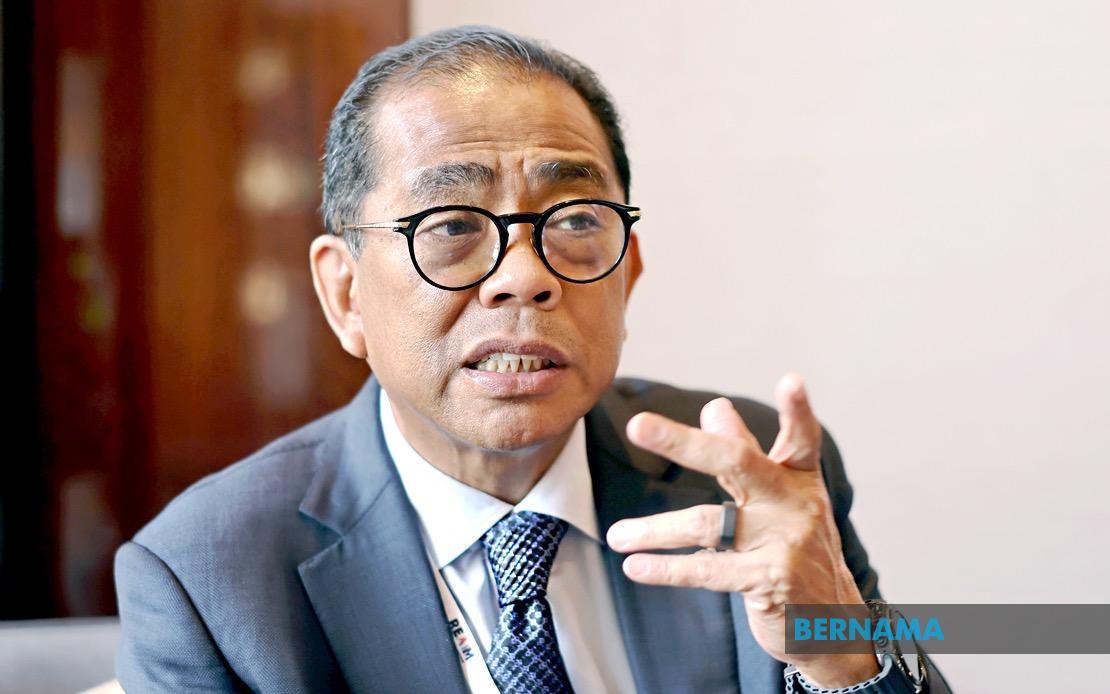
Malaysia and Vietnam have signalled their resolve to deepen defence and security cooperation, with Defence Minister Datuk Seri Mohamed Khaled Nordin using a two-day official visit to Hanoi to outline an ambitious agenda spanning multiple domains of military partnership. The emphasis on elevating bilateral ties comes as the two nations work to anchor regional stability in an increasingly complex strategic environment where traditional and non-traditional security challenges demand coordinated responses.
During discussions with Vietnamese Minister of National Defence Gen Phan Van Giang, Mohamed Khaled highlighted the breadth of areas slated for expansion, moving beyond conventional defence exchanges to encompass intelligence sharing, maritime domain awareness initiatives, and collaborative approaches to submarine rescue operations. The inclusion of artificial intelligence and defence industry collaboration in this framework demonstrates both nations' recognition that future security cooperation must incorporate emerging technologies and innovative operational concepts. These conversations reflect a maturation of the bilateral relationship, moving from symbolic gestures towards substantive capacity-building and knowledge transfer.
A significant development from the visit was Mohamed Khaled's proposal to strengthen the cooperation mechanism through a High-Level Committee structure. This institutional innovation addresses a common challenge in Southeast Asian defence partnerships: ensuring that ambitious agreements translate into concrete implementation rather than remaining aspirational statements. By formalizing oversight mechanisms, Malaysia and Vietnam seek to create accountability mechanisms that track progress and remove bureaucratic obstacles that often delay military cooperation initiatives.
The discussions also tackled what officials characterise as "grey zone activities"—a term encompassing conduct that falls below traditional armed conflict thresholds, including coast guard confrontations, maritime intrusions, and cyber operations. Both nations' willingness to address these emerging security challenges head-on signals a pragmatic understanding that regional peace faces threats from multiple vectors. This contrasts with earlier eras when defence cooperation focused narrowly on conventional military threats.
On the contentious South China Sea issue, Mohamed Khaled reiterated Malaysia's position that dialogue, diplomacy, and international law must form the bedrock of managing territorial disputes. His emphasis on supporting a Code of Conduct—negotiations that have dragged on for decades—reflects growing frustration among Southeast Asian nations that the process requires acceleration. Malaysia's careful articulation of ASEAN unity and strategic autonomy serves as a counterweight to external pressures while maintaining the bloc's relevance as the primary forum for regional dispute resolution.
The visit built upon a foundation established by the Memorandum of Understanding on Defence Cooperation signed in November 2023, demonstrating that abstract commitments require sustained high-level engagement to evolve into tangible programmes. The courtesy call Mohamed Khaled paid to Vietnamese Prime Minister Le Minh Hung underscored the political importance both governments attach to military-to-military relations, elevating defence cooperation from technical bureaucratic channels to the highest levels of state decision-making.
Security cooperation between Malaysia and Vietnam carries particular significance for Southeast Asia's broader stability architecture. Both nations are simultaneously ASEAN members and South China Sea claimants, positioning them at the intersection of regional and great power competition. Their willingness to deepen ties while maintaining commitment to ASEAN frameworks sends a message that smaller nations can pursue substantive bilateral relationships without fragmenting the regional consensus that ensures ASEAN's centrality in managing strategic competition.
The focus on maritime security and submarine rescue operations reflects the reality that the South China Sea remains the theatre where regional tensions most frequently manifest. By developing coordinated protocols for emergency responses, Malaysia and Vietnam reduce the risk of miscalculation during crises. These practical, confidence-building measures often prove more valuable than high-level declarations precisely because they create habits of cooperation at operational levels where friction most commonly occurs.
Within Malaysia's own strategic planning framework, this engagement aligns with the National Defence Strategic Plan 2026-2030, which prioritises strengthening international defence relations as a mechanism for ensuring national sovereignty. For a country navigating complex great power dynamics while managing its own maritime boundaries, deepening partnerships with likeminded neighbours provides both diplomatic leverage and practical security benefits. The integration of this bilateral relationship into Malaysia's broader defence white paper indicates that Vietnamese cooperation now forms a core pillar of Malaysian strategic thinking rather than a peripheral initiative.
The emphasis on coordination of military training programmes and officer exchange schemes promises to build institutional relationships that transcend individual administrations. When military personnel from neighbouring countries train together and develop professional relationships, they create networks of mutual understanding that can prove invaluable during crises. These educational partnerships also facilitate doctrine alignment and operational interoperability, practical capabilities that enhance effectiveness should countries need to coordinate responses to regional threats.
ASEAN's collective commitment to the Defence Ministers' Meeting and its expanded platform including dialogue partners remains central to this bilateral engagement. Rather than pursuing defence cooperation that undermines regional institutions, Malaysia and Vietnam are demonstrating how bilateral relationships can strengthen multilateral frameworks. This approach contrasts with strategies pursued elsewhere globally, where bilateral military partnerships sometimes fragment regional cohesion.
For Malaysian readers and broader Southeast Asian observers, this visit signals that medium powers can sustain strategic autonomy through carefully balanced partnerships. Neither Malaysia nor Vietnam appears willing to align exclusively with any external power, instead building resilience through diversified regional relationships. As regional competition intensifies, such deepened partnerships among ASEAN members may prove essential for maintaining the bloc's ability to shape outcomes affecting its own security and prosperity.

