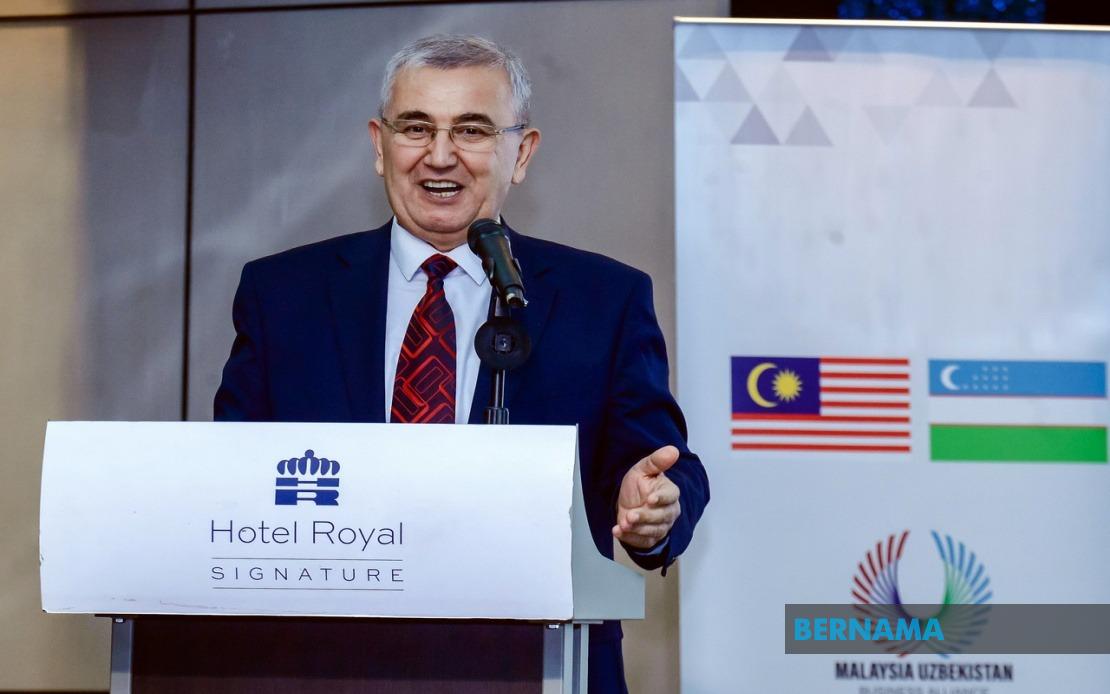
Malaysia and Uzbekistan are moving to establish a more robust agricultural alliance, leveraging complementary strengths in farming innovation and food production to address regional food security challenges. According to Uzbekistan Ambassador to Malaysia Dr Karomidin Gadoyev, agriculture has become a cornerstone of bilateral relations, with both Prime Minister Datuk Seri Anwar Ibrahim's visit to Uzbekistan in May 2024 and President Shavkat Mirziyoyev's earlier trip to Malaysia reinforcing the sector's strategic significance at the highest levels of government.
The momentum gained from Agriculture and Food Security Minister Datuk Seri Mohamad Sabu's recent official visit to Uzbekistan signals a fresh commitment to practical cooperation. This growing engagement reflects broader recognition across Southeast Asia and Central Asia that agricultural productivity and supply chain resilience have become critical economic and geopolitical priorities, particularly as global food systems face mounting pressures from climate volatility and population growth.
The partnership capitalises on distinct competitive advantages held by each nation. Malaysia brings proven expertise in paddy cultivation, aquaculture systems, advanced fisheries management, and precision agriculture technologies, alongside a robust research infrastructure centred on the Malaysian Agricultural Research and Development Institute (MARDI). Uzbekistan, meanwhile, contributes sophisticated irrigation engineering, particularly energy-efficient water management systems essential for arid and semi-arid farming conditions, extensive horticultural operations, and established agri-food processing capabilities that could serve regional markets.
Digital transformation and artificial intelligence have emerged as focal points in discussions between the two countries. Both governments recognise that smart farming technologies—from automated irrigation systems to data-driven crop management—can substantially increase yields while reducing resource consumption. For Uzbekistan, where water scarcity presents persistent challenges, adopting Malaysian expertise in efficient production methods addresses a critical bottleneck. Conversely, Malaysia benefits from exposure to Uzbekistan's irrigation innovations that could enhance sustainability in its own agricultural regions.
Drone technology represents a particularly tangible area of collaboration. Malaysian company Miracule has already established an agricultural drone showroom in Uzbekistan, marking the first commercial footprint for precision agriculture tools in the Central Asian market. The next phase involves scaling drone deployment across Uzbek farmland and potentially establishing local manufacturing or assembly operations for advanced agricultural drones, creating employment while building indigenous technical capacity. This venture exemplifies how technology partnerships can transition from service provision to skills transfer and localised production.
Aquaculture emerges as a critical frontier for deepening ties. Uzbekistan's landlocked geography and rapidly expanding population of nearly 40 million create substantial unmet demand for aquatic protein sources. Malaysian companies have begun investigating investments in shrimp farming and broader fisheries ventures, with particular interest in biofloc technology—a sustainable method that reduces feed costs by up to 30 percent while simultaneously increasing productivity and lowering overall production expenditures. This technology aligns with global trends toward resource-efficient aquaculture amid environmental consciousness.
Current bilateral trade demonstrates the existing foundation upon which expanded cooperation rests. Agri-food commerce between the two nations reached more than RM338 million in 2025, with Malaysian palm oil and value-added palm products constituting the dominant export category. However, both Dr Gadoyev and other officials view this figure as representing only a fraction of achievable potential. Conservative projections suggest doubling or tripling this trade volume over the next five to ten years through diversified product categories and deepened value-chain integration.
A strategic vision has emerged for Malaysia to function as a processing and distribution hub for crude palm oil destined for Central Asian markets. This positioning would allow Malaysia to capture higher margins through value addition while establishing itself as the gateway for Central Asian vegetable oil supplies. Simultaneously, Uzbekistani enterprises would expand their presence in Malaysian markets through premium fresh and dried fruit exports alongside processed food products, creating reciprocal commercial flows that bind both economies more closely.
The Malaysian Agriculture, Horticulture and Agrotourism Exhibition (MAHA) 2026 has been identified as a pivotal platform for advancing these objectives. Uzbekistan's participation will introduce its agricultural sector, specialty fruits, and processed foods to Malaysian business communities and consumers while providing Uzbek enterprises direct access to Southeast Asian distribution networks and investment partners. For Malaysia, the exhibition offers visibility into Central Asian agricultural innovations and potential sourcing opportunities.
From a broader Southeast Asian perspective, this Malaysia-Uzbekistan partnership represents important diversification of regional agricultural sourcing and technology partnerships. As Southeast Asian nations increasingly seek food security resilience and reduced dependency on traditional suppliers, Central Asian agricultural capacity and innovations become strategically valuable. Conversely, Uzbekistan's integration into Southeast Asian agricultural ecosystems creates new export pathways and technology adoption channels for Central Asia.
The emphasis on sustainable technologies, resource efficiency, and digital innovation within this partnership also reflects global agricultural trends toward environmentally responsible production. Both countries are positioning themselves within a broader movement toward climate-smart farming, reduced water consumption, and carbon-efficient operations—priorities that resonate with increasingly stringent international standards for agricultural products.
Looking forward, the success of this partnership depends on translating diplomatic commitments into functioning commercial relationships and technology transfer mechanisms. Concrete next steps include finalising bilateral agreements on agricultural cooperation, establishing joint research initiatives between MARDI and Uzbek agricultural institutions, and providing technical training for Uzbek farmers and agricultural managers in Malaysian farming systems. Financial mechanisms supporting investment in aquaculture ventures and agri-processing infrastructure will prove essential for moving beyond dialogue toward tangible projects.
The partnership ultimately reflects a pragmatic recognition that agricultural prosperity in an interconnected global system requires active knowledge sharing, complementary investment, and integrated value chains spanning geographical regions. For Malaysia, engagement with Uzbekistan opens Central Asian markets and diversifies partnerships beyond traditional sources. For Uzbekistan, Malaysian expertise accelerates modernisation of agricultural systems and creates pathways to Southeast Asian commercial networks, generating mutual benefits that extend beyond bilateral relations to broader regional food security and economic development objectives.

