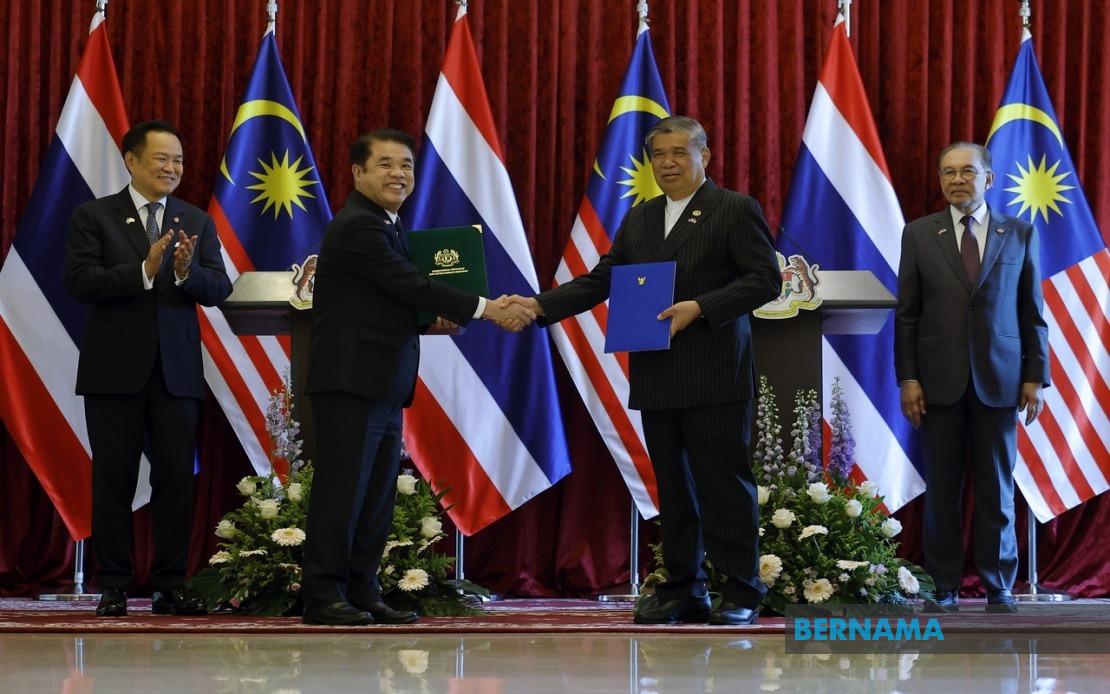
Malaysia and Thailand have bridged a significant divide in their agricultural trade relationship by resolving contentious fisheries market access questions and committing to activate a comprehensive agricultural cooperation agreement within seven days. The breakthrough came during Thailand's Prime Minister Anutin Charnvirakul's first official visit to Malaysia, with Prime Minister Datuk Seri Anwar Ibrahim and Anutin witnessing the formal exchange of the Memorandum of Understanding between Agriculture and Food Security Minister Datuk Seri Mohamad Sabu and Thai Agriculture Minister Suriya Juangroongruangkit in Putrajaya.
The resolution represents a notably expedited timeline for bilateral agricultural cooperation. Thailand had originally sought a one-and-a-half-month implementation window for the MoU, but both nations agreed to compress this to just one week—a compression that underscores the political will of both governments to deepen food security ties amid regional supply chain uncertainties. Anwar characterised the settlement as demonstrating Malaysia and Thailand's mutual dedication to reinforcing food security infrastructure and broadening bilateral commercial engagement, signalling that agricultural integration remains central to Malaysia's regional trade strategy.
The underlying tensions had surfaced earlier when Malaysia implemented stricter import controls on Thai fisheries products effective June 1. These measures required Certificates of Analysis for barramundi shipments and imposed temporary import restrictions on five designated shrimp species—actions that reflected Malaysian regulatory concerns regarding product standards and traceability. Though portrayed as technical safeguards, the controls had created friction in an otherwise expanding trade relationship, necessitating high-level political engagement to navigate.
Thailand's Prime Minister acknowledged the significance of addressing these pending market access cases for both fishery and agricultural commodities, framing food security as a paramount theme in the discussions. His receptiveness to the accelerated timeline demonstrates Bangkok's recognition that barriers to agricultural trade ultimately undermine both nations' regional food resilience objectives, particularly as global supply chain volatility continues to shape Southeast Asian agricultural policy.
The new MoU establishes an expansive institutional framework addressing multiple agricultural dimensions beyond fisheries alone. The agreement encompasses crop production, livestock management, fisheries cooperation, trade facilitation mechanisms, and marketing strategies for agricultural exports. Additionally, it covers research and development initiatives, workforce capacity building, biosecurity protocols, and sanitary and phytosanitary measures—the latter being especially pertinent given the June 1 import restrictions that prompted bilateral negotiations.
Through this structured cooperation mechanism, Malaysia and Thailand intend to establish more transparent and continuous communication channels between their agricultural authorities. This institutional architecture should enable both nations to address emerging agricultural and agri-food sector challenges with greater speed and effectiveness, moving beyond ad-hoc crisis management toward proactive coordination. Such mechanisms prove invaluable when trade disputes arise, as they provide established pathways for technical dialogue before political tensions escalate.
The agricultural relationship between the two countries has demonstrated robust growth trajectory. Bilateral agri-food trade reached RM20.33 billion during the twelve-month period from January to December 2025, illustrating the scale of commercial interdependence. Malaysia primarily supplies Thailand with premium agricultural products including coffee, cocoa, tea, spices, and processed food items, reflecting Malaysian agricultural value-addition capabilities. Conversely, Thailand ships substantial quantities of meat and meat-based products into Malaysia, positioning the kingdom as a critical protein supplier to the Malaysian market.
For Malaysian consumers and businesses, the swift resolution carries practical implications. The expedited activation of the MoU should facilitate smoother import procedures for Thai agricultural goods, particularly proteins, which feature prominently in Malaysian household consumption patterns and commercial food production. The agreement's focus on trade facilitation and SPS measures suggests both governments intend to harmonise standards and reduce bureaucratic friction, potentially lowering food costs and improving supply reliability.
The bilateral fisheries resolution also reflects broader regional trends in Southeast Asian agricultural trade governance. As ASEAN nations navigate increasingly complex global food security challenges—exacerbated by climate variability, geopolitical disruptions, and shifting dietary demands—intra-regional cooperation mechanisms become progressively important. Malaysia-Thailand agricultural integration exemplifies how neighbouring economies can leverage complementary production capacities and comparative advantages to strengthen collective food system resilience.
The timing of Anutin's visit and the agricultural MoU activation should also be contextualised within Thailand's broader regional diplomatic initiatives. Bangkok has positioned itself as a regional food hub and technology provider, and deepening cooperation with Malaysia—its largest ASEAN trading partner by agricultural value—reinforces this strategic positioning. For Malaysia, strengthening ties with Thailand's agricultural sector aligns with national food security objectives, particularly regarding protein sufficiency and value-chain diversification.
Looking ahead, the success of this MoU will largely depend on the capacity of both nations' agricultural authorities to translate high-level political commitments into functional operational protocols. The establishment of transparent communication mechanisms and structured coordination bodies will test whether Malaysia and Thailand can move beyond managing disputes toward genuinely collaborative agricultural development. Should the framework prove effective, it may serve as a template for other ASEAN agricultural partnerships facing similar market access tensions.
Both governments acknowledged during bilateral discussions last week that cooperation extends beyond agriculture into trade, investment, and regional security matters, indicating that agricultural integration forms part of a wider strategic partnership architecture. This holistic approach—linking food security cooperation with broader bilateral ties—suggests both capitals view agricultural agreements not merely as commercial arrangements but as foundational elements of stable regional relationships and mutual prosperity.

