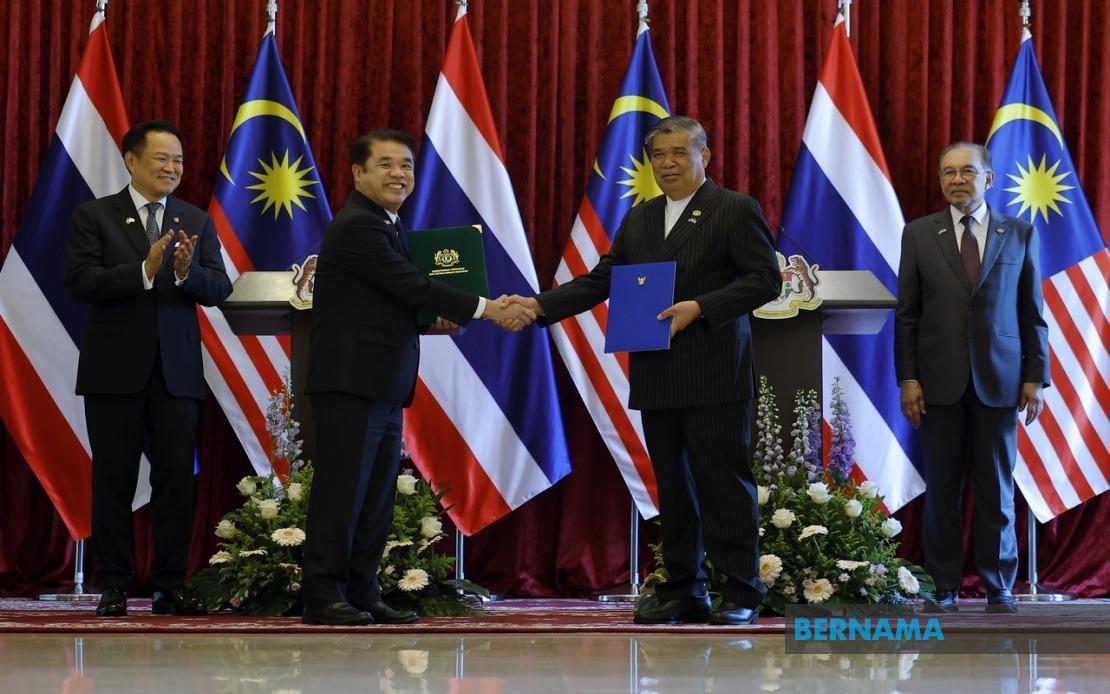
In a significant demonstration of regional partnership, Malaysia and Thailand have moved to fortify their agricultural cooperation framework through a comprehensive memorandum of understanding negotiated during high-level bilateral talks in Putrajaya on Thursday. The agreement represents a deliberate effort by both nations to harness their complementary agricultural strengths while addressing longstanding trade barriers that have hindered farmers and exporters on both sides of the border. The accord was formalized during a visit by Thai Prime Minister Anutin Charnvirakul to meet with Malaysian Prime Minister Datuk Seri Anwar Ibrahim, marking Anutin's first official bilateral visit to Malaysia following his political reappointment in March 2026.
The memorandum encompasses an expansive range of collaborative initiatives spanning crop production, livestock management, fisheries development, agricultural research, and technology exchange programmes. Beyond these sectoral focuses, the agreement explicitly prioritises human resource development and food security—twin pillars that underscore both nations' recognition of demographic pressures and the imperative to build resilient, self-sufficient food systems across Southeast Asia. This multifaceted approach signals that Bangkok and Kuala Lumpur view agricultural cooperation not merely as a trade facilitation exercise but as a strategic foundation for long-term stability and prosperity.
A particularly noteworthy outcome involves the resolution of protracted market access disputes affecting two high-value commodities: shrimp and barramundi. These species represent significant income streams for fishing communities and aquaculture operators throughout both nations, yet regulatory and phytosanitary barriers have repeatedly obstructed cross-border commerce. By tasking their respective agriculture ministers with accelerating implementation of agreed measures, both governments have signalled urgency in clearing these obstacles. The move carries tangible implications for smallholder and medium-scale producers who have endured uncertainty over export channels, potentially unlocking new revenue opportunities across rural regions in both countries.
The bilateral engagement extends well beyond the agricultural sphere, encompassing commitments to deepen cooperation in trade and investment, tourism development, infrastructure projects, and security partnerships. This broader agenda reflects a strategic vision of comprehensive economic integration that leverages complementary industrial capabilities and geographic proximity. Within this context, agricultural cooperation serves as both a standalone priority and a building block for more ambitious regional integration goals. The two governments have reaffirmed their shared ambition to achieve US$30 billion in annual bilateral trade in the near term, a target that underscores the scale of economic opportunity both sides perceive.
The timing of this initiative carries particular significance as Malaysia and Thailand approach a historic milestone: the 70th anniversary of their diplomatic relations in 2027. Thai Government Spokesperson Ratchada Thanadirek indicated that Prime Minister Anutin has directed relevant Thai agencies to expedite implementation of the negotiated agreements and to finalise any outstanding bilateral memoranda well ahead of this commemoration. This forward-looking stance demonstrates that the two governments view 2027 not as a mere historical marker but as a target date to consolidate partnership gains and demonstrate tangible results to their respective publics.
The supply chain cooperation dimensions outlined in the bilateral communiqué are particularly relevant for Malaysian policymakers and businesses. Both nations have committed to strengthening supply chain integration in food security, energy resources, and high-technology sectors. For Malaysia, this represents an opportunity to diversify agricultural exports whilst potentially accessing Thai innovations in crop production and aquaculture techniques. Conversely, Thailand stands to benefit from Malaysia's more developed downstream processing capabilities and its strategic position as a gateway to wider ASEAN and global markets. Such complementarities have long existed in theory but have been underutilised due to regulatory fragmentation and inadequate institutional mechanisms.
The infrastructure component of the bilateral visit underscores the practical dimensions of this expanding partnership. On Friday, Anwar and Anutin were scheduled to jointly inaugurate a newly constructed road linking the Immigration, Customs, Quarantine and Security Complex in Bukit Kayu Hitam, Kedah, with its counterpart facility in Sadao, Thailand. This cross-border infrastructure project facilitates faster movement of agricultural goods and reduces transaction costs for traders operating across the Malaysia-Thailand frontier. For Malaysian farmers and exporters, particularly those based in the northern states, such logistical improvements translate directly into enhanced competitiveness and expanded market reach.
From a Southeast Asian perspective, this Malaysia-Thailand cooperation framework contributes to broader regional resilience. As global food systems face mounting pressures from climate variability, supply chain disruptions, and geopolitical uncertainties, collaborative approaches to food security among major regional producers strengthen the entire association. Malaysia and Thailand together command substantial agricultural output and fishing capacity; their coordinated efforts to modernise production techniques, share research findings, and harmonise food safety standards create positive spillovers benefiting consumers throughout ASEAN and beyond.
The emphasis on technology transfer and human resource development within the agreement deserves particular attention. Southeast Asian agriculture increasingly relies on precision farming, digital traceability systems, and advanced aquaculture methodologies. By formally committing to knowledge exchange in these domains, Malaysia and Thailand position their agricultural workforces to participate more productively in value-added production rather than remaining confined to commodity export models. This human capital dimension has often been overlooked in agricultural trade negotiations but ultimately determines whether countries can sustain competitive advantages over the long term.
The resolution of shrimp and barramundi trade disputes also carries symbolic weight. These products represent precisely the type of high-volume, regionally-traded commodities where non-tariff barriers have proliferated. By demonstrating capacity to overcome such obstacles through structured bilateral engagement, Malaysia and Thailand establish a replicable model that other ASEAN partners might emulate. The success or failure of implementation over coming months will signal whether such frameworks translate into genuine market opening or remain aspirational documents.
For Malaysian agribusiness stakeholders, the MoU opens several practical pathways. Northern Malaysian states such as Kedah, Perlis, and Terengganu stand positioned to benefit most immediately from enhanced Thai market access and from proximity to Thai supply chains. Meanwhile, southern Malaysian producers may find opportunities in processing Thai agricultural inputs or in collaborative ventures with Thai companies seeking to expand into Malaysian distribution networks. Small and medium enterprises in the agricultural value chain should monitor the agriculture ministers' progress in implementing specific measures, as these will determine whether opportunities materialise at their operational level.
The broader strategic context matters as well. Thailand and Malaysia have occasionally experienced tensions over maritime boundary demarcation and minority rights issues. Yet their capacity to compartmentalise disagreements and advance cooperation in areas of mutual benefit—as demonstrated through this agricultural initiative—reflects pragmatic statecraft. Such cooperation potentially builds interpersonal relationships and institutional channels that may facilitate dialogue on more contentious matters. From a regional stability perspective, economic integration grounded in tangible agricultural partnerships arguably contributes more sustainable foundations for peace than security-focused arrangements alone.
Moving forward, the critical test will be implementation rigour. Both governments have committed resources and reputational capital to this framework. Agriculture ministers now carry responsibility for translating diplomatic language into regulatory harmonisation, capacity-building programmes, and market access improvements. Malaysian stakeholders should engage actively with relevant government agencies to ensure that the MoU's provisions translate into concrete support for their operations. The 2027 anniversary milestone provides a natural checkpoint at which both nations will assess whether this ambitious cooperation agenda has delivered tangible benefits to farmers, traders, and consumers across both countries.

