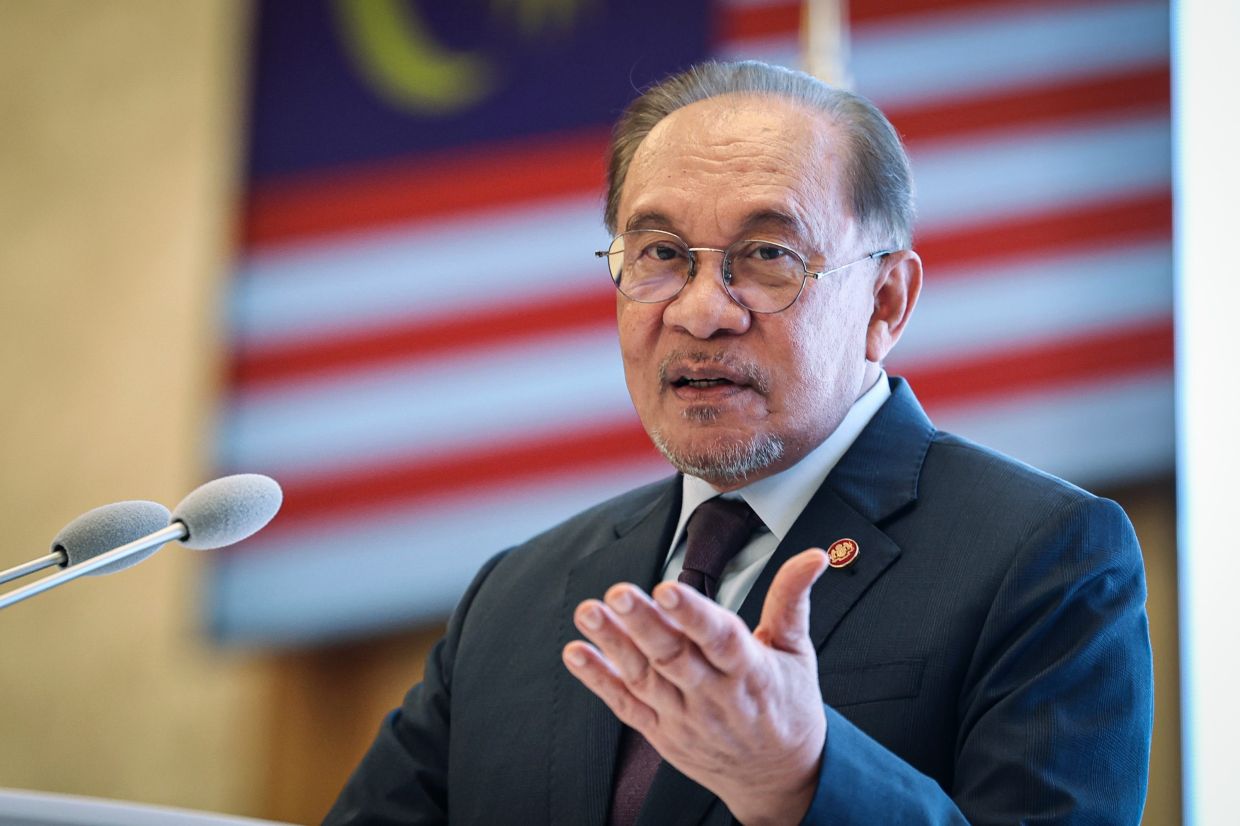
Prime Minister Datuk Seri Anwar Ibrahim has signalled that the long-awaited master plan for the Johor-Singapore Special Economic Zone will be completed in the coming months, reflecting accelerating momentum in one of Southeast Asia's most significant cross-border economic initiatives. Speaking after a courtesy call with Singapore President Tharman Shanmugaratnam, Anwar highlighted that both nations remain committed to advancing the JS-SEZ project, which has become emblematic of deepening Malaysia-Singapore cooperation.
The announcement comes during Tharman's three-day state visit to Malaysia, which began on July 13 at the invitation of His Majesty Sultan Ibrahim, King of Malaysia. Such high-level visits between the two neighbouring countries typically serve as platforms for resolving contentious issues and reinforcing shared economic objectives. The timing of this public statement underscores the political importance both governments are placing on the JS-SEZ initiative as a flagship development that could reshape the economic landscape of the southern region.
Anwar, who concurrently holds the finance portfolio, indicated that the bilateral discussions extended well beyond the JS-SEZ project itself. The two leaders exchanged perspectives on the broader Malaysia-Singapore relationship, regional security concerns, and issues of mutual strategic interest. This comprehensive approach to bilateral engagement suggests that both capitals are viewing their partnership through a holistic lens, recognising that economic cooperation cannot be separated from political trust and regional stability considerations.
The JS-SEZ represents a watershed moment for both nations. The special economic zone, straddling the Johor-Singapore border, is conceived as a catalyst for attracting regional and international investment, facilitating cross-border commerce, and creating high-value employment opportunities for citizens on both sides. For Malaysia, the project carries particular significance as it could position Johor as a premium investment destination and complement ongoing federal development initiatives aimed at modernising the southern region.
During their meeting, both leaders emphasised their commitment to resolving outstanding bilateral issues through constructive engagement rooted in mutual respect and understanding. This language reflects a deliberate effort to move beyond historical friction points that have occasionally strained Malaysia-Singapore ties. The emphasis on dialogue-driven problem-solving suggests that despite occasional public disagreements—whether concerning water agreements, maritime boundaries, or airspace issues—both governments view their partnership as fundamentally cooperative rather than adversarial.
The progress narrative that Anwar highlighted is particularly notable given the complexity of developing transnational economic zones. Such projects invariably involve intricate negotiations spanning regulatory harmonisation, security protocols, tax treatment, labour mobility, and infrastructure development. The fact that both sides are confident enough to announce imminent finalisation of a master plan indicates substantial groundwork has been completed in recent months.
For Malaysian policymakers, the JS-SEZ carries implications beyond economics. The zone could serve as a testbed for regulatory modernisation and business-friendly policies that, if successful, might influence broader reforms across the country. Singapore's reputation for efficiency and institutional competence means that joint governance arrangements could establish high operational standards. For Johor specifically, the development could accelerate diversification away from traditional sectors and attract talent and capital that might otherwise gravitate toward Selangor or Kuala Lumpur.
Regionally, the JS-SEZ project carries symbolic weight as evidence that ASEAN's most developed economies can collaborate constructively on transformative initiatives. In a context where regional integration often proceeds unevenly and geopolitical tensions occasionally overshadow economic cooperation, a successful Malaysia-Singapore special zone could demonstrate that pragmatism and shared prosperity can transcend historical grievances or political differences.
Anwar's emphasis on both sides reaffirming their commitment to resolving remaining issues signals that obstacles remain but are considered manageable through continued good faith negotiations. Rather than presenting the relationship as having achieved complete consensus, this formulation acknowledges that differences exist while asserting both governments' determination to narrow them. This realistic framing may actually strengthen confidence by avoiding unrealistic expectations.
The courtesy call itself underscores the diplomatic importance both nations attach to high-level personal engagement. Presidential and prime ministerial meetings create opportunities for nuanced conversations that cannot always occur through official channels, allowing leaders to explore creative solutions and build personal rapport that can smooth subsequent negotiations conducted by officials.
Looking ahead, the formalisation of the JS-SEZ master plan will mark a transition from the conceptual and planning phases to implementation. This shift will bring concrete challenges around infrastructure development, regulatory alignment, and institutional capacity building. Both nations have demonstrated the political will to pursue this initiative, but its ultimate success will depend on sustained commitment through the inevitable complications that large-scale transnational projects encounter.
Anwar's statement that Malaysia-Singapore relations should be strengthened through trust, mutual respect, and shared benefits encapsulates the philosophical foundation upon which successful long-term partnerships rest. As economic interdependence deepens through initiatives like the JS-SEZ, this principled foundation becomes increasingly important in managing disputes and maintaining cooperation through periods of political or economic stress.

