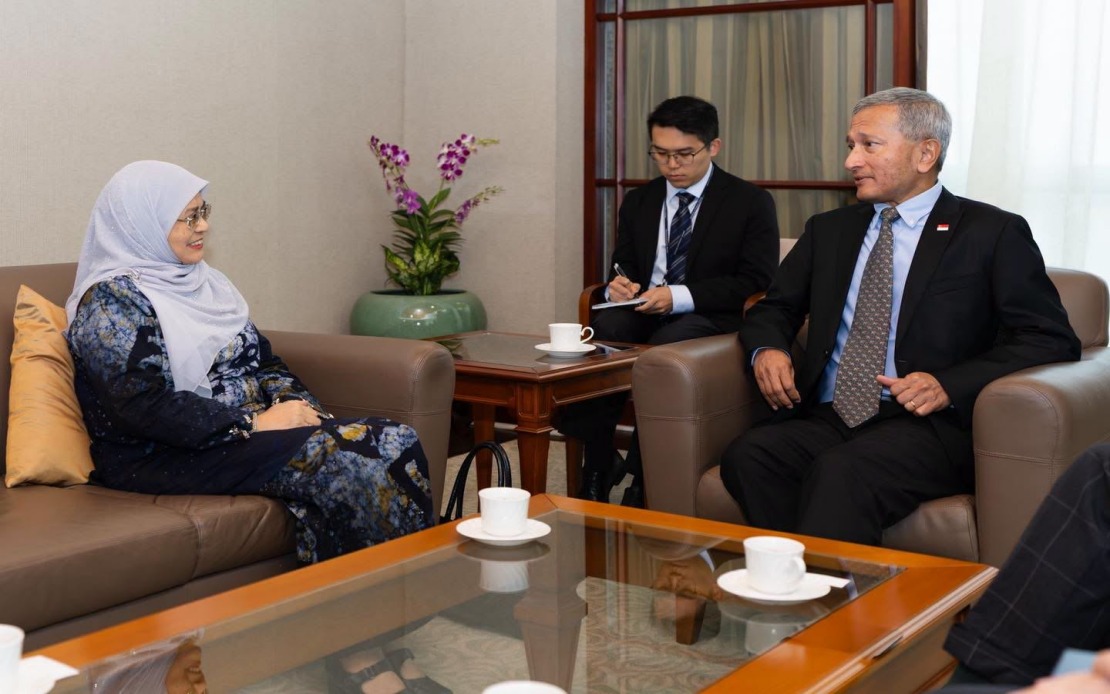
Malaysia and Singapore have signalled their determination to maintain momentum in bilateral relations, with both nations pledging to expand cooperation across multiple sectors. The renewed commitment emerged from an official meeting between Singapore's Foreign Minister Dr Vivian Balakrishnan and Datin Paduka Anizan Siti Hajjar Adnin, the newly appointed Malaysian High Commissioner to Singapore, held in the city-state on Wednesday.
Datin Paduka Anizan, who officially assumed her posting on July 2, 2026, made a courtesy call on the Foreign Minister as part of customary diplomatic protocol. The discussion touched on the trajectory of Malaysia-Singapore relations and the shared determination to identify fresh opportunities for strengthening ties. The Malaysian High Commission later noted that both countries recognise the fundamental importance of sustaining positive momentum in their longstanding partnership, a relationship that has evolved considerably since Singapore's separation from Malaysia in 1965.
During the meeting, officials from both sides engaged in substantive dialogue on bilateral matters and explored strategies to enhance the wellbeing of citizens living on either side of the border. This focus reflects the practical reality that tens of thousands of Malaysians work, study and conduct business in Singapore, while Singaporeans maintain significant economic and family interests in Malaysia. The cross-border dimension of Malaysia-Singapore relations has become increasingly important as economic integration deepens, making policies that facilitate legitimate movement and commerce a shared priority.
In his official statement, Balakrishnan emphasised that the two neighbours share what he described as a special relationship, characterised by their intertwined historical experience, robust personal and community connections, and extensive institutional cooperation. These foundations have allowed both countries to navigate periodic tensions and maintain consistent diplomatic engagement across decades. The Foreign Minister expressed confidence that Datin Paduka Anizan would build effectively on the work of her predecessors, leveraging her extensive diplomatic background to advance Malaysia-Singapore relations further.
The appointment of Datin Paduka Anizan comes at a period when Malaysia-Singapore engagement spans multiple domains including trade, transportation, security, cultural affairs and environmental management. The bilateral relationship, while fundamentally sound, has occasionally faced friction over specific issues such as maritime boundaries, water supplies, and airspace protocols. The selection of experienced diplomats for leadership positions in both capitals suggests both governments recognise the need for nuanced and skilled management of this complex partnership.
Cross-border cooperation remains particularly vital for the region's broader economic architecture. Johore and Singapore form one of the world's most tightly integrated economic zones, with manufacturing, logistics, and financial services creating interdependencies that require constant dialogue and policy coordination. Any disruption in bilateral relations carries potential consequences for regional supply chains and investment flows, making the maintenance of productive diplomatic channels strategically important for Southeast Asia's development trajectory.
The emphasis on improving the lives of ordinary citizens reflects a pragmatic understanding that elite-level cooperation must translate into tangible benefits for populations. Malaysians who commute to Singapore for employment constitute a significant constituency with direct interest in streamlined border procedures, fair labour protections, and recognition of qualifications. Similarly, Singaporean investors and professionals operating in Malaysia depend on stable institutional arrangements and predictable regulatory frameworks.
Datin Paduka Anizan brings considerable diplomatic experience to the role, having served across multiple postings throughout her career in Malaysia's foreign service. Her appointment suggests Kuala Lumpur views the Singapore posting as sufficiently important to warrant deployment of a senior diplomat. This personnel decision itself constitutes a message about Malaysia's commitment to the relationship, signalling that the government intends to give high priority to Singapore matters at the diplomatic level.
Looking ahead, the Malaysia-Singapore partnership will likely continue evolving as both countries navigate regional geopolitical shifts and economic transformations. The Association of Southeast Asian Nations framework provides an additional layer through which bilateral issues can be addressed, though direct bilateral channels remain the primary mechanism for resolving specific concerns. The commitment reaffirmed during this recent meeting suggests both capitals intend to invest in maintaining these channels and preventing periodic irritants from escalating into broader diplomatic friction.
The timing of this diplomatic engagement also reflects Malaysia's broader regional strategy. As Malaysia seeks to enhance its position as a significant player in Southeast Asian affairs and strengthen ties with key economic partners, the Singapore relationship assumes heightened importance. For Singapore, maintaining stable relations with its immediate neighbour remains foundational to its own security and prosperity, making diplomatic attention to the bilateral relationship a consistent priority regardless of which government holds office in either capital.

