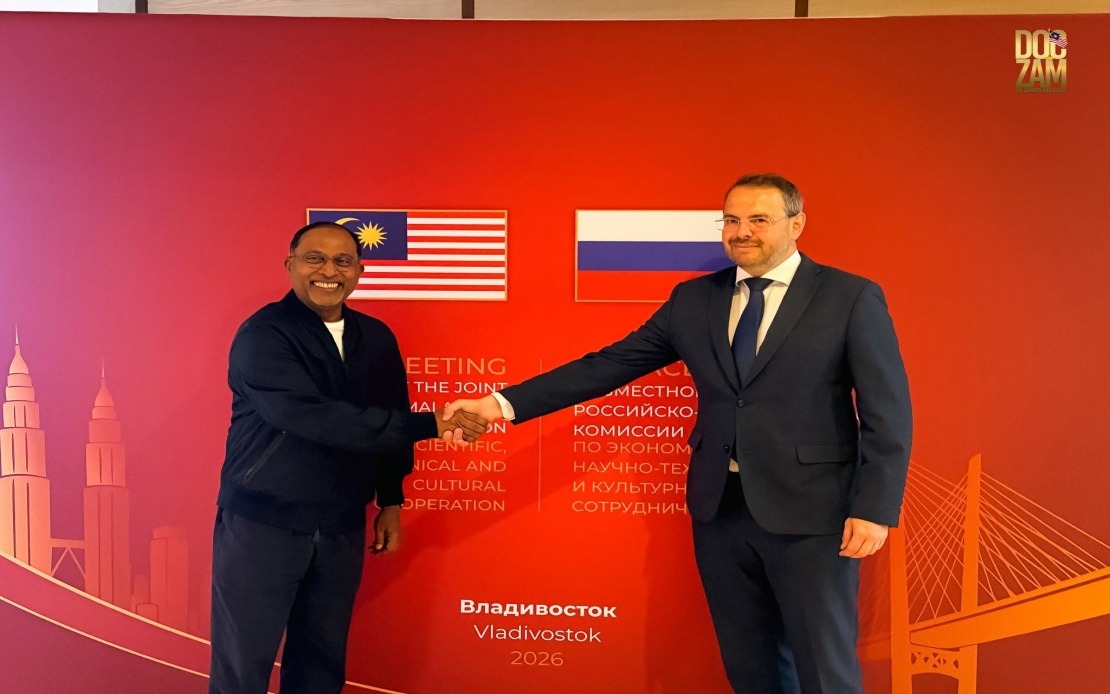
Malaysia is preparing to unlock fresh avenues of bilateral cooperation with Russia through a major strategic dialogue that underscores both nations' commitment to deepening ties across multiple sectors. Higher Education Minister Datuk Seri Dr Zambry Abd Kadir will lead the Malaysian delegation to the Fifth Malaysia-Russia JC-ESTC (Joint Committee on Economic, Scientific and Technological Cooperation) Meeting in Vladivostok from tomorrow until Saturday, August 15, with discussions expected to chart a course for intensified collaboration in areas ranging from commerce and innovation to human capital development.
The breadth of Malaysia's representation at the gathering reflects the comprehensive nature of the bilateral relationship. A total of 17 Malaysian ministries and agencies will participate in the proceedings, demonstrating that economic cooperation transcends isolated sectors and instead encompasses interconnected domains including energy resources, agricultural development, social initiatives, and cultural exchange. On the Russian side, the meeting will be co-chaired by Minister of Science and Higher Education Valery Falkov, with Deputy Minister Konstantin Mogilevsky having already received Zambry upon his arrival in the Russian Far Eastern city.
Among the foremost priorities is expanding the financial and commercial relationship between the two countries. Trade and investment growth will take centre stage as both nations seek to identify untapped opportunities and remove impediments to business development. The discussion will also encompass strategic sector partnerships and emerging technologies where Malaysia and Russia possess complementary strengths, suggesting that bilateral ventures could span fields such as advanced manufacturing, digital innovation, and resource management. For Malaysian businesses and investors, this represents a potential gateway to deeper market access in Russia and the wider Eurasian region.
Higher education constitutes a particularly significant pillar of the planned cooperation. Malaysia intends to prioritise student mobility programmes that allow young people from both nations to study across borders, thereby fostering long-term people-to-people connections. Joint research initiatives and direct university-to-university partnerships are envisaged to produce collaborative breakthroughs in science and technology while simultaneously developing talent pipelines in future-oriented fields. These educational exchanges carry particular relevance for Malaysian institutions seeking to internationalise their academic standing and for Russian universities aiming to tap Southeast Asian expertise.
Zambry emphasised that the cooperation framework must translate strategic intentions into tangible outcomes that benefit ordinary citizens and bolster economic performance. Rather than remaining confined to diplomatic rhetoric, agreements forged during the meeting should spawn concrete projects, investment flows, technology transfers, and novel commercial opportunities. This outcome-focused philosophy suggests Malaysia views the bilateral relationship not merely as a diplomatic gesture but as a practical instrument for economic advancement and technological progress.
The JC-ESTC mechanism itself dates to 2015, providing an established institutional framework that has matured over nearly a decade. By leveraging this existing structure, both countries can build upon previously negotiated commitments while simultaneously identifying areas where earlier agreements may require course correction. The meeting agenda will incorporate a comprehensive assessment of progress on prior undertakings, an honest appraisal of obstacles encountered, and a forward-looking identification of priority zones for joint implementation moving ahead.
Russia and Malaysia possess several naturally complementary strengths that create scope for mutually beneficial arrangements. Russia's considerable expertise in science, technology, and energy sectors aligns well with Malaysia's aspirations for technological upgrading and economic diversification. Similarly, Russia's sophisticated human capital base and Malaysia's position as a regional economic hub and gateway to Southeast Asia suggest partnerships could generate value for both parties. The emphasis on mutual interest and respect signals Malaysia's commitment to relationships founded on genuine reciprocity rather than one-sided advantage.
For Malaysia specifically, deepening ties with Russia carries strategic implications within the broader context of regional geopolitics and economic diversification. Strengthening bonds with major non-Western powers reduces economic dependence on traditional Western partners and opens access to alternative technology sources, investment capital, and market opportunities. In an era of global supply chain reorientation and technological bifurcation, maintaining robust connections with Russia provides Malaysian policymakers with greater flexibility and leverage in international negotiations. The energy sector represents one domain where Russian cooperation could prove particularly valuable given Malaysia's ongoing efforts to secure reliable, diversified fuel supplies.
The meeting's agenda also reflects shifting global priorities centred on technological advancement and innovation-led growth. By emphasising research networks and development initiatives, both countries acknowledge that long-term competitive advantage derives from capabilities in cutting-edge domains rather than traditional resource extraction or low-value manufacturing. For Malaysia, collaboration with Russia in these spheres could accelerate the nation's transition toward a higher-value knowledge economy while simultaneously positioning Malaysian researchers and companies within international innovation ecosystems.
Zambry's statement that the meeting might open a new chapter in bilateral strategic relations suggests both governments anticipate substantive breakthroughs rather than incremental progress. The inclusion of representatives from 17 different governmental entities indicates that follow-up actions will likely extend across multiple sectors and timeframes, potentially spanning infrastructure projects, research collaborations, educational exchanges, and commercial ventures. Such comprehensive engagement suggests Malaysian officials expect the Vladivostok meeting to catalyse a marked acceleration in the pace and depth of bilateral interaction.
The timing and focus of this engagement also reflect Malaysia's strategic positioning within Asian geopolitics. As Western-Eastern tensions persist and developing nations seek to maintain productive relationships across ideological divides, Malaysia's willingness to engage Russia substantively demonstrates its commitment to genuine non-alignment and pragmatic bilateral relations based on national interest rather than external pressure. This approach allows Malaysia to benefit from cooperation with diverse partners while building relationships that support long-term prosperity and technological advancement across multiple sectors vital to national development objectives.

