Malaysia and the Philippines have charted a collaborative path to address the mounting challenge of housing undocumented Philippine nationals in Sabah's immigration detention facilities. During the 9th Malaysia-Philippines Joint Commission Meeting held in Manila on August 18, officials from both nations zeroed in on practical mechanisms to hasten the movement of more than 5,000 detainees currently held across four separate depot centres in the Malaysian state. The urgency reflects growing capacity constraints at these facilities, which have reached unsustainable population levels and strained administrative resources.
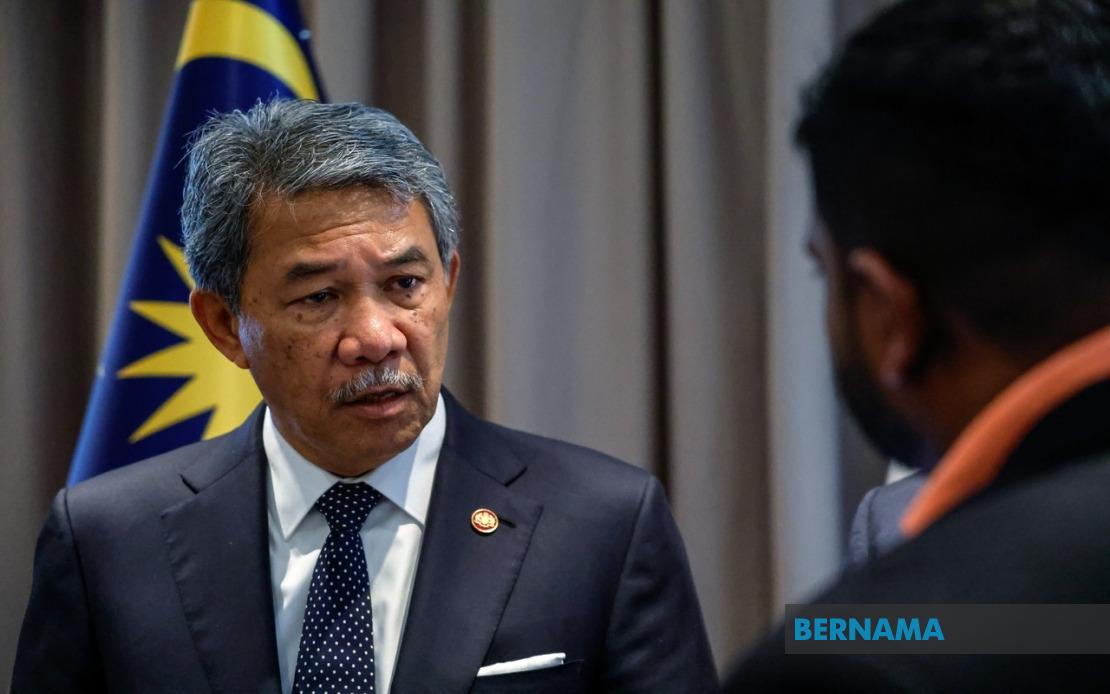
Malaysian Foreign Minister Datuk Seri Mohamad Hasan provided specific details about the repatriation pipeline, noting that the Philippine Embassy in Kuala Lumpur has already completed preliminary screening procedures. This vetting process has determined that just over 1,000 individuals meet the criteria for immediate removal, meaning they have been fully documented and processed and pose no remaining security or administrative obstacles to swift deportation. The minister indicated that the diplomatic focus would shift toward removing bureaucratic friction and identifying the most efficient transportation channels to return these individuals to Philippine territory.
The practical dimensions of the repatriation operation remain complex. Mohamad explained that both governments explored alternative pathways for moving detainees, including maritime routes and other logistical options beyond conventional air transport. The scale of the operation—involving thousands of individuals spread across multiple detention sites—necessitates careful coordination and flexible approaches to ensure sustainable throughput. Malaysia's core objective centers on demonstrating the political will to process these cases without unnecessary delays while maintaining proper legal and humanitarian standards throughout the procedure.
Beyond the immediate repatriation mechanics, the two nations recognized that many undocumented migrants have established roots in Sabah, particularly through their children who have enrolled in local educational institutions. During the commission meeting, Malaysia and the Philippines explored how to address the educational continuity needs of these children during the transition period before their families depart. The Malaysian government committed to studying the feasibility of supporting continued schooling, though any arrangement must operate under strict oversight mechanisms to guarantee quality and appropriateness.
However, the Malaysian position on educational provision carries significant caveats. Mohamad emphasized that any formal educational programs must operate under direct Philippine government management rather than through private operators or unregulated institutions. This stipulation reflects concerns about accountability and quality assurance, particularly given the vulnerable status of these communities. Malaysia's insistence on official channels rather than informal arrangements signals awareness that educational provision in this context carries political and social dimensions extending beyond simple pedagogy.
The question of ongoing screening for the remaining batches of detainees represents another layer of the agreement. With initial cohorts identified for deportation, Philippine authorities must accelerate their own processing capacity to receive and process citizens coming back. Malaysia has pressed its counterpart to move expeditiously through these verification exercises rather than allowing cases to languish in administrative limbo. The bilateral arrangement essentially distributes responsibility—Malaysia provides timely identification and preparation for repatriation, while the Philippines commits to rapid intake and resettlement.
The commission meeting also touched upon historical territorial sensitivities that continue to simmer between the two nations. When questioned about regional commentary regarding Philippine claims to Sabah, Mohamad made clear that this particular issue had not formed part of the substantive discussions during the formal proceedings. Nevertheless, he used the occasion to reiterate Malaysia's position that Sabah's status as Malaysian territory enjoys robust international legal standing, certified through United Nations processes and widely recognized in the global system.
This diplomatic clarification carries weight given the recent public statements by Philippine Senator Robin Padilla urging President Ferdinand Marcos Jr to revive historical claims to Sabah. Such utterances had prompted Malaysia to signal its intention to lodge a formal diplomatic protest. Mohamad's remarks in Manila effectively restated the Malaysian government's baseline expectations—that the Philippines honor established international law and refrain from reopening questions long considered settled. The emphasis on UN recognition and international legal frameworks reflects Malaysia's preference for anchoring disputes in institutional rather than nationalist discourse.
The practical problem of detainee management in Sabah reflects broader immigration pressures across Southeast Asia, where porous borders, economic disparities, and geographic proximity generate persistent unauthorized migration. For Malaysia, the presence of 5,000-plus undocumented individuals in detention represents both a humanitarian challenge and an operational burden. The detention facilities themselves, while serving necessary functions, were not designed to accommodate such sustained populations and cannot indefinitely absorb arrivals without degrading conditions.
For the Philippines, receiving repatriated nationals in large numbers requires corresponding investments in reception infrastructure, employment reintegration programs, and social services. The coordination discussed during the commission meeting suggests both governments recognize that haphazard approaches benefit neither party. Instead, structured bilateral frameworks offer opportunities to manage flows more systematically while upholding standards of human treatment and procedural fairness.
The commission meeting outcome reflects pragmatic bilateral statecraft focused on managing difficult inherited situations rather than achieving transformative breakthroughs. Both nations confronted an undeniable problem—overcrowded detention facilities housing thousands of people whose legal status remains contested—and jointly committed to alleviating it through cooperative mechanisms. The agreement to accelerate repatriation for identified cases while maintaining orderly processing for others represents a measured middle path.
For Malaysian policymakers, the arrangement offers relief from mounting detention costs while preserving the state's authority over immigration enforcement. For Philippine officials, it addresses the vulnerability of nationals held in foreign facilities while requiring corresponding investment in domestic absorption capacity. The educational provisions for children inject humanitarian considerations into what could otherwise be purely transactional exchanges, suggesting both governments acknowledge moral dimensions extending beyond formal citizenship and legal status.
The broader significance of the accord extends to establishing precedent for managing irregular migration through bilateral coordination rather than unilateral enforcement. As Southeast Asian nations grapple with rising migration pressures, the Malaysia-Philippines model—combining commitment to border integrity with recognition of shared humanitarian responsibilities—may offer lessons for neighboring states facing similar challenges. The framework balances sovereignty concerns with practical collaboration, suggesting that determined diplomacy can navigate contentious migration questions without sacrificing either national interests or fundamental human dignity.

