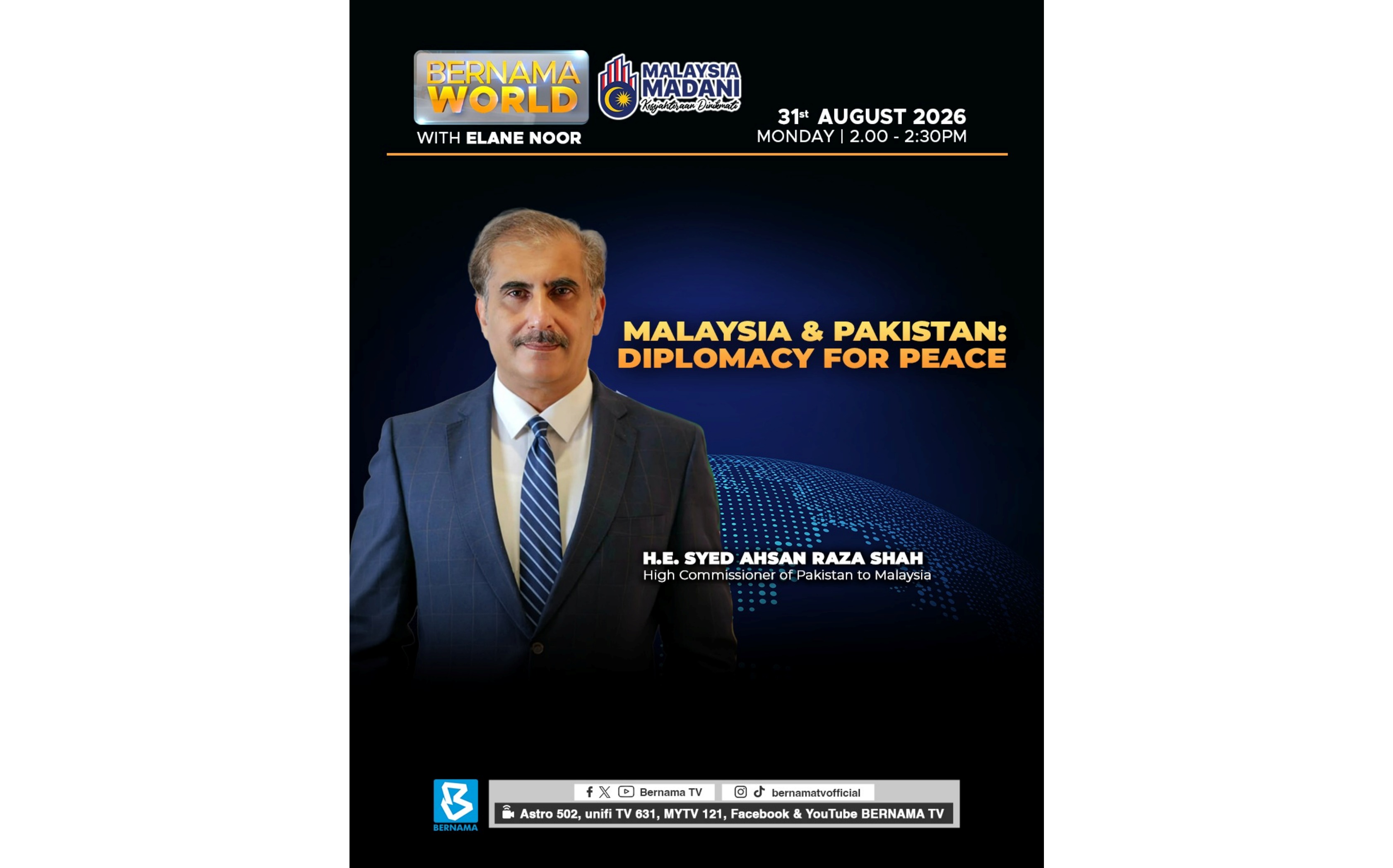
Pakistan's High Commissioner to Malaysia, Syed Ahsan Raza Shah, has advocated for closer collaboration between Kuala Lumpur and Islamabad on approaches to resolving international disputes, arguing that both countries are uniquely positioned to share diplomatic lessons as geopolitical pressures intensify across the globe. Speaking in an interview, the envoy framed such partnership as strategically vital, given the pivotal roles each nation has carved out as a neutral party in recent international crises.
The High Commissioner highlighted how Malaysia and Pakistan have demonstrated their capacity to serve as trusted intermediaries in complex regional conflicts. He pointed to Prime Minister Datuk Seri Anwar Ibrahim's intervention when Thailand and Cambodia tensions threatened to destabilise ASEAN, where Anwar's measured diplomatic response ultimately facilitated a ceasefire and the Kuala Lumpur pact. Similarly, Syed Ahsan underscored Pakistan's strategic location and historical relationships that positioned it to broker dialogue between the United States and Iran during periods of acute hostility. These cases, he suggested, provided concrete examples of how middle-power nations could play constructive roles beyond their immediate borders.
The significance of Pakistan's mediation efforts with Washington and Tehran cannot be overstated within the broader context of West Asian stability. Pakistan's geographic proximity to Iran, combined with longstanding cultural and historical ties, gave Islamabad credibility in Tehran's eyes. Simultaneously, Pakistan's enduring security partnership with the United States provided a channel of communication when direct bilateral engagement appeared impossible. According to the High Commissioner, tensions had escalated to a point where neither side appeared willing to engage constructively, making third-party intervention essential. Pakistan's resulting accord between the two powers represented, in Syed Ahsan's assessment, a diplomatic achievement worthy of regional pride.
Syed Ahsan emphasised that the experiences accumulated by both nations reflected a broader transformation in how diplomacy must adapt to contemporary realities. Prime Minister Anwar, he noted, has characterised the current era as "post-normal times," a formulation that captures the unpredictability and complexity of current international relations. This observation carries particular weight for Malaysia and other Southeast Asian nations, where distant conflicts increasingly generate spillover effects. The High Commissioner stressed that conflict resolution, diplomatic engagement, and mediation each require distinct skill sets and strategic approaches; successful cooperation between nations would demand an exchange of best practices and mutual learning.
Trust emerged as the cornerstone of Syed Ahsan's analysis of effective mediation. He articulated a fundamental truth often overlooked in diplomatic literature: negotiations cannot advance unless all disputing parties perceive the intermediary as both honest and sincerely committed to their genuine interests. This requirement places immense pressure on would-be mediators to establish credibility with multiple stakeholders simultaneously, often holding conflicting objectives. The Pakistan High Commissioner's emphasis on trust resonates particularly for Malaysia, which has long styled itself as a bridge-builder within ASEAN and globally, a reputation that depends on consistent demonstration of even-handedness.
The High Commissioner offered practical guidance on mediation methodology, advocating for patience and incremental progress rather than ambitious attempts to resolve disputes comprehensively in single negotiations. This counsel reflects hard-won experience from Pakistan's own diplomatic engagements. Mediators, Syed Ahsan argued, must remain steadfast when rhetoric escalates and setbacks occur, maintaining composure and forward momentum even as negotiating parties engage in public posturing. Such resilience distinguishes successful diplomatic missions from failed ones, yet it remains an underappreciated dimension of mediation craft.
Anwar Ibrahim's personal diplomatic skills received particular commendation from the High Commissioner. Syed Ahsan noted that the Prime Minister's capacity to establish genuine personal relationships with international leaders functioned as a crucial asset in Malaysia's mediation initiatives. In contemporary diplomacy, such personal rapport can bridge gaps that formal institutional channels struggle to address. This observation underscores how individual leadership qualities remain central to diplomatic success, even in an era of sophisticated communication technologies and multilateral frameworks.
The High Commissioner's broader warning about conflict contagion carries direct implications for Malaysia and the Southeast Asian region. Syed Ahsan cautioned that contemporary conflicts do not remain confined within geographic boundaries; instead, they generate cascading economic, security, and strategic consequences across distant territories. A conflict in West Asia, for instance, could disrupt shipping lanes vital to Malaysian commerce or create refugee movements affecting regional stability. This reality transforms what might initially appear as distant quarrels into matters of direct Malaysian concern, justifying investment in mediation capacity and diplomatic engagement in seemingly remote disputes.
The call for Malaysia-Pakistan cooperation on mediation reflects recognition that middle-power nations increasingly occupy critical roles in international affairs. Neither country possesses the coercive capacity of superpowers, yet both have cultivated reputations for principled engagement and creative problem-solving. Pakistan's experience managing complex relationships with multiple great powers parallels Malaysia's navigation of great-power competition within ASEAN. By formalising exchanges of mediation experience and diplomatic methodology, both nations could strengthen their capacity to respond to future crises while contributing to regional and global stability.
The framing of mediation cooperation as a "strategic necessity" rather than merely beneficial reflects the envoy's assessment of current geopolitical trajectories. Rising tensions, whether between established powers or emerging rivals, suggest that demand for neutral mediators will intensify. Malaysia and Pakistan, by systematically sharing lessons learned and developing coordinated approaches, position themselves to exercise influence disproportionate to their military capabilities. This pathway offers particular appeal for medium-sized Asian nations seeking relevance and agency in an increasingly contested international environment.
For Malaysia specifically, deepening mediation cooperation with Pakistan aligns with broader foreign policy objectives of maintaining strategic autonomy and regional leadership within ASEAN. The partnership also reflects recognition that stability in West Asia directly affects Southeast Asian interests, making diplomatic investment in that region inherently justified. By positioning itself as a reliable facilitator in multiple regional contexts, Malaysia reinforces its standing as a responsible stakeholder committed to rules-based international order, an identity that carries diplomatic dividends.

