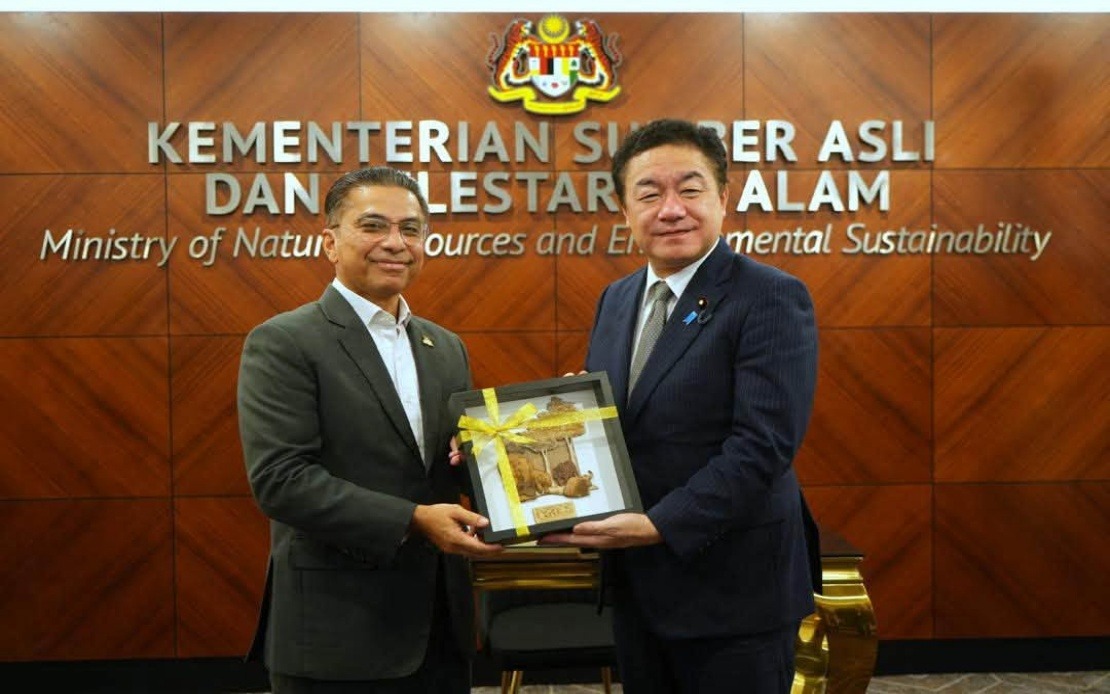
A high-level delegation from Japan's Ministry of Economy, Trade and Industry visited Malaysia's Natural Resources and Environmental Sustainability Ministry on August 26, signalling deepening cooperation between the two nations on critical economic and environmental fronts. The visit by Parliamentary Vice-Minister Komori Takuo reflected both countries' commitment to expanding their strategic engagement under the Malaysia-Japan Comprehensive Strategic Partnership framework, which was reaffirmed during bilateral summit talks held in June.
The meeting, presided over by Deputy Minister Syed Ibrahim Syed Noh, sought to translate the momentum from earlier high-level discussions into concrete action plans across multiple sectors. The delegation's focus on rare earth elements and critical minerals underscores the growing importance of these resources in the global economy, particularly as nations worldwide accelerate their technological and industrial transitions. For Malaysia, which possesses significant REE reserves, this engagement offers opportunities to strengthen its position as a processing and value-added hub rather than merely an exporter of raw materials.
A cornerstone of Malaysia's position in these negotiations centres on its stated moratorium regarding the export of unprocessed rare earth materials. This policy reflects a deliberate strategy to ensure that downstream processing activities and higher-margin value-added operations remain anchored domestically, thereby maximising economic benefits and employment opportunities for Malaysians. By maintaining this stance while engaging with a technologically advanced partner like Japan, Malaysia seeks to leverage foreign expertise and investment while protecting its industrial development objectives. The Japanese side's acknowledgement of this position during the talks suggests pragmatic acceptance of Malaysia's development priorities.
Japan's role in supporting Malaysia's resource development extends beyond bilateral negotiations. The Japan International Cooperation Agency (JICA) and the Japan Organisation for Metals and Energy Security (JOGMEC) have been instrumental in providing technical assistance and facilitating technology transfer initiatives. These collaborations enable Malaysian institutions and private sector entities to build domestic capacity in mineral processing, quality control, and advanced manufacturing techniques. For Malaysian stakeholders, such partnerships represent pathways to acquiring specialised knowledge without the prohibitive costs of developing indigenous expertise entirely from scratch.
Climate cooperation emerged as an equally significant dimension of the bilateral engagement. Both nations have focused on finalising a draft Memorandum of Cooperation concerning the Joint Crediting Mechanism (JCM), a framework rooted in Article 6.2 of the Paris Agreement. This mechanism enables countries to cooperate on climate mitigation projects and trade internationally recognised carbon credits, creating financial incentives for emissions reduction initiatives. For Malaysia, which has committed to achieving carbon neutrality by 2050 and defined ambitious interim targets through its Nationally Determined Contribution (NDC), such arrangements provide crucial financing tools to support energy transition projects and low-carbon technology deployment.
The finalisation of the JCM agreement by year-end would unlock substantial investment potential in Malaysian renewable energy, energy efficiency, and sustainable industrial projects. Japanese companies, particularly those in the renewable energy and energy technology sectors, could establish operations in Malaysia to develop projects under this framework, generating employment while advancing climate objectives. The arrangement also reflects Malaysia's recognition that achieving emissions targets requires international collaboration and access to green finance mechanisms that extend beyond traditional development assistance.
The synergy between REE development and climate action, though not explicitly detailed in the official statements, presents an important subtext to these negotiations. Rare earth elements are fundamental to renewable energy technologies, electric vehicle production, and advanced energy storage systems. By establishing robust processing capabilities for these materials domestically while simultaneously deploying green technologies, Malaysia can position itself as both a supplier and an adopter of critical minerals essential to the global energy transition. This dual role strengthens the country's economic resilience and strategic importance in regional supply chains.
The composition of the Malaysian delegation reflected the inter-agency coordination required for such negotiations. Beyond the Natural Resources Ministry, the Foreign Ministry's participation ensured alignment with Malaysia's broader diplomatic strategy, while senior NRES officials brought technical expertise on mineral resources and environmental matters. This coordinated approach demonstrates the Government's holistic view of these partnerships as integral to multiple national priorities simultaneously.
Japan's representation by Ambassador Shikata Noriyuki and senior METI officials indicated Tokyo's elevated commitment to these discussions. Japan's own critical dependence on imported rare earth elements and minerals, combined with its advanced green technology capabilities, creates natural complementarity with Malaysia's resource base and development ambitions. The visit underscores Japan's strategic interest in diversifying and securing its supply chains for critical materials while supporting climate goals through technology partnerships.
From a Southeast Asian perspective, the Malaysia-Japan cooperation on REEs and climate mechanisms offers broader regional implications. As the region grapples with the challenge of balancing resource development with environmental sustainability and climate obligations, the bilateral framework provides a model for how ASEAN nations might engage developed economies on these issues. Malaysia's emphasis on value-added processing rather than raw material exports presents an alternative paradigm to traditional extractive relationships, potentially influencing how other regional economies approach similar opportunities.
The pathway forward, with an anticipated finalisation of the JCM memorandum by year-end, establishes concrete timelines for implementation. Both nations appear committed to translating rhetorical support into operational frameworks that facilitate investment flows, technology deployment, and institutional collaboration. For Malaysian industries reliant on REE processing and for enterprises positioned to develop climate mitigation projects, these developments signal improving conditions for growth and modernisation.

