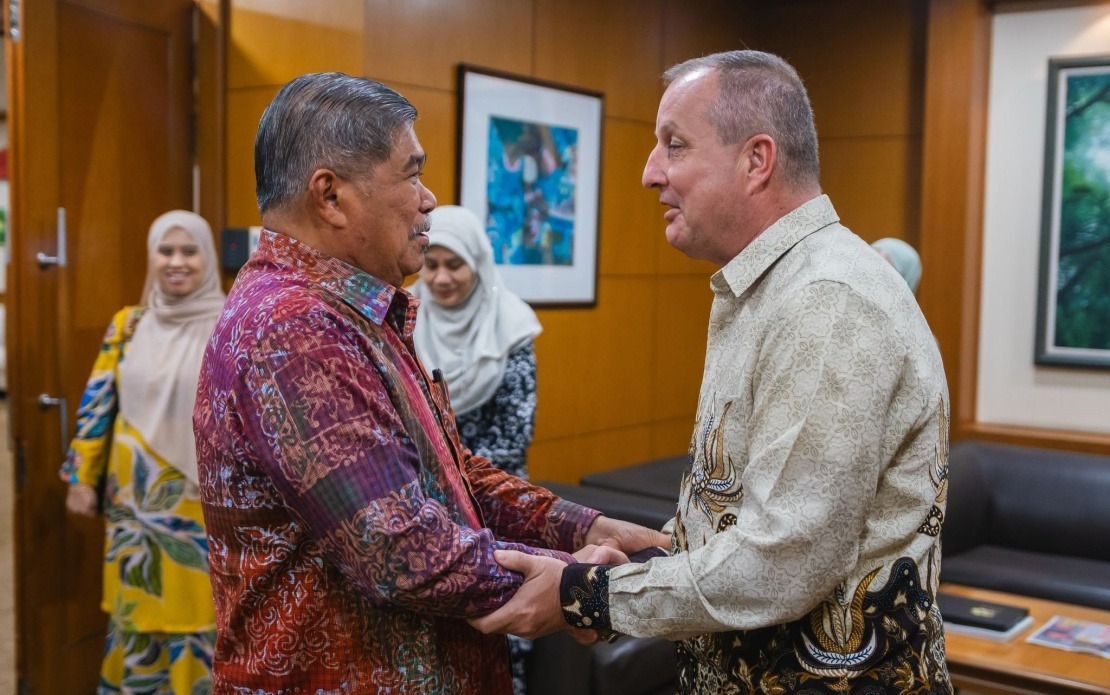
Malaysia and Hungary are moving to substantially deepen their agricultural partnership, reflecting growing recognition that bilateral collaboration can address food security challenges in an era of climate uncertainty and global supply chain volatility. During a recent courtesy call in Kuala Lumpur, Hungarian Ambassador to Malaysia Dr. Sándor Sipos met with Agriculture and Food Security Minister Datuk Seri Mohamad Sabu to chart the course for expanded cooperation between the two nations across multiple dimensions of the agri-food value chain.
The discussions centred on practical mechanisms to translate strategic intent into tangible outcomes. Central to this agenda is Hungary's confirmed participation in the Malaysian Agriculture, Horticulture and Agrotourism Exhibition (MAHA) 2026, a flagship event that attracts industry players, policymakers, and investors from across the region. For Hungary, participation represents a gateway to showcase its agricultural expertise and establish direct connections with Malaysian market participants. For Malaysia, the Hungarian presence signals openness to drawing on international best practices and technological solutions to enhance domestic agricultural productivity.
At the institutional level, the two countries are moving forward with the inaugural Malaysia-Hungary Joint Working Group meeting, establishing formal structures for sustained dialogue on policy alignment, regulatory harmonisation, and sector-wide priorities. Such mechanisms are essential for countries seeking to graduate beyond episodic engagement toward institutionalised cooperation that survives changes in political leadership or shifting priorities. The JWG framework creates continuity and accountability, ensuring that commitments translate into concrete programmes rather than remaining aspirational statements.
Technical collaboration between Malaysia's Agricultural Research and Development Institute (MARDI) and Hungary's University of Agriculture and Life Sciences (MATE) constitutes perhaps the most substantive pillar of the partnership. These institutions are engaging in knowledge exchange across several high-priority domains, including plant genetics, breeding technology, and livestock product development. The Erasmus+ Researcher exchange programme facilitates direct person-to-person engagement between scientists and technicians, fostering the informal networks and trust that underpin genuine innovation transfer. Such academic partnerships carry particular significance for Malaysia, where agricultural modernisation depends on closing the technology and capability gap with more advanced producers.
The focus on genetics and breeding technology addresses a critical challenge facing Malaysian agriculture. As the sector confronts resource constraints, climate variability, and competition for land use, boosting productivity per hectare becomes imperative. Hungarian expertise in developing crop varieties suited to diverse agro-climatic conditions holds direct relevance for Malaysian farmers navigating changing weather patterns and soil degradation. Similarly, livestock advancement represents a strategic priority, as Malaysia seeks to reduce dependence on imported animal protein while improving animal welfare standards and product quality.
For Malaysian agri-entrepreneurs and breeders, the partnership opens pathways to international networks, market intelligence, and validation mechanisms that can enhance competitiveness. Small and medium enterprises operating in high-value niches such as organic production or specialty livestock breeds can leverage Hungarian partnerships to access new markets in Central Europe while adopting proven quality assurance protocols. This bidirectional flow of knowledge and market access transforms the relationship from aid-oriented capacity building into mutually beneficial commerce.
Trade and investment expansion forms another pillar of the emerging partnership. By systematising trade in agri-food products and facilitating investment flows in both directions, Malaysia and Hungary can create commercial incentives that sustain cooperation beyond political cycles. For Malaysia, Hungarian investment in agricultural processing and supply chain infrastructure could complement existing foreign direct investment and spur cluster development. Hungarian firms bring experience in value addition within temperate agriculture that may contain lessons applicable to tropical and subtropical products central to the Malaysian export portfolio.
From a regional food security perspective, the Malaysia-Hungary partnership carries implications beyond bilateral ties. As ASEAN nations navigate inflationary pressures, supply chain disruptions, and climate-related production risks, diversified agricultural partnerships with non-ASEAN producers strengthen collective resilience. Hungary's position within the European Union and broader European agricultural networks creates potential conduits for Malaysian products seeking market access in developed economies, while European agricultural standards and certifications achieved through partnership can enhance consumer confidence in Malaysian exports.
The emphasis on expertise and experience sharing reflects a mature approach to international cooperation. Rather than imposing standardised solutions, the partnership acknowledges that each country operates within distinct contexts and can learn from different organisational models, regulatory approaches, and technological pathways. This pragmatism enhances adoption rates and prevents the common pitfall wherein transferred technology languishes unused because it fails to integrate with local production systems or institutional capabilities.
For Malaysia's broader food security agenda, the Hungarian partnership complements simultaneous engagement with other nations and international institutions. Agricultural diversification requires partnerships at multiple levels—regional through ASEAN frameworks, bilateral through targeted country partnerships, and multilateral through international development organisations. Hungary brings particular strengths in temperate crop production and value-added food processing that address specific Malaysian needs.
Looking forward, the momentum generated by ministerial engagement and institutional linkages must translate into programmes with measurable outcomes—farmer adoptions of improved varieties, successful product certifications, facilitated trade transactions, and published joint research outputs. Success requires sustained funding, political commitment transcending electoral cycles, and willingness to navigate bureaucratic and regulatory differences between Malaysian and Hungarian systems. When these elements align, bilateral agricultural partnerships can meaningfully enhance food security while creating commercial opportunities that mutually benefit participating nations.

