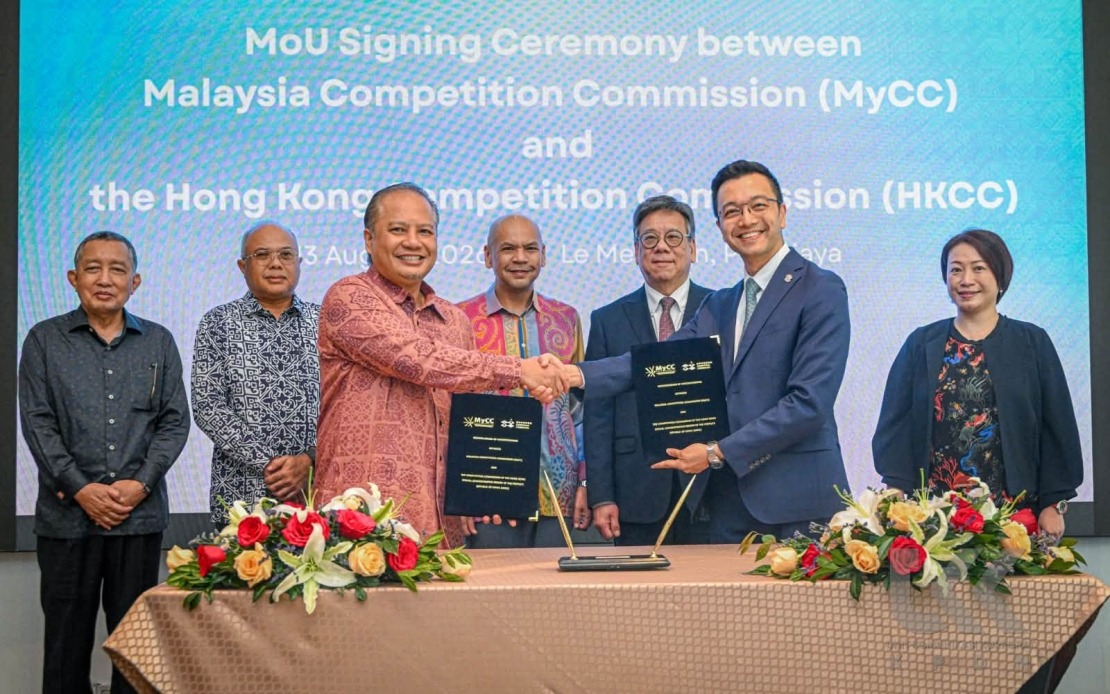
The Malaysia Competition Commission and its Hong Kong counterpart have entered into a formal agreement aimed at enhancing their mutual capacity to police market conduct and coordinate responses to competition issues that straddle both jurisdictions. The Memorandum of Understanding, signed on August 13, represents a significant step in regional regulatory cooperation at a time when digital commerce and multinational enterprises increasingly blur traditional economic boundaries. Datuk Armizan Mohd Ali, the minister overseeing domestic trade and cost of living matters, underscored the partnership's strategic importance for maintaining competitive markets across Southeast Asia's financial and commercial hubs.
This collaboration positions itself as the fourth major bilateral framework that Malaysia's competition authority has established with foreign regulators. Previous agreements with the Türkiye Competition Authority, Korea Fair Trade Commission, and Philippine Competition Commission demonstrate an emerging pattern of institutionalized cooperation among Asian and international agencies. Each partnership reflects recognition that contemporary competition challenges—from cartel behaviour to abuse of market dominance—often transcend national borders. The Hong Kong arrangement carries particular weight given the city-state's role as a major financial centre and trading hub that intersects with Malaysian commercial interests across multiple sectors.
The minister articulated the core rationale for deepening ties: modern economies present competition authorities with enforcement scenarios that cannot be adequately addressed through unilateral action. When businesses operate across jurisdictions, their anticompetitive conduct may harm consumers and legitimate competitors on both sides of a border simultaneously. Without coordinated investigation and information-sharing mechanisms, regulatory gaps emerge that sophisticated operators can exploit. The complexity intensifies in Southeast Asia, where supply chains and corporate structures frequently span multiple countries, making isolated enforcement approaches ineffective.
Under the agreement's framework, both regulators will exchange substantive information on legislative developments within their respective competition regimes. This dimension proves particularly valuable as Asian economies continuously refine their competition law frameworks to address emerging market dynamics. Malaysia's authorities gain insight into how Hong Kong adapts its enforcement strategies, while Hong Kong benefits from observing MyCC's approach to Southeast Asian market conditions. Such transparency helps both sides anticipate regulatory shifts and identify harmonization opportunities that could reduce compliance burdens for multinational enterprises operating in both markets.
The MoU establishes a mechanism for sharing investigative experience and enforcement methodologies between the two agencies. This practical dimension extends beyond mere information exchange to encompass collaborative problem-solving on complex cases. When anticompetitive conduct involves parties or assets in both jurisdictions, coordinated investigation—supported by information-sharing agreements—becomes essential for building comprehensive cases. Investigators can pool findings, corroborate evidence, and develop unified theories of conduct that individual regulators might miss working independently. Such collaboration has proven instrumental in major cross-border cartel prosecutions globally.
Capacity-building constitutes a substantial pillar of the partnership. MyCC and the Hong Kong Competition Commission will conduct joint training sessions, workshops, and research initiatives designed to elevate enforcement capabilities across both institutions. Officer secondments—temporary placements where regulatory personnel work within their counterpart's organization—provide immersive learning opportunities that formal training cannot replicate. Malaysian officials gain exposure to Hong Kong's sophisticated financial market enforcement practices, while Hong Kong's staff benefit from understanding Southeast Asian competitive dynamics and MyCC's experience navigating regional trade flows.
The bilateral arrangement specifically addresses cross-border competition matters, positioning both regulators to tackle issues that neither can fully resolve independently. Malaysian companies engaged in price-fixing involving Hong Kong entities, or multinational enterprises abusing market power across both territories, now face the prospect of synchronized enforcement action. This amplifies deterrence, as violators cannot rely on regulatory fragmentation to shield operations. For Malaysian consumers, the arrangement translates into expanded protection against anticompetitive practices that might otherwise escape effective scrutiny due to jurisdictional limitations.
The partnership reflects Malaysia's deliberate strategy to position itself as a sophisticated regulator capable of international engagement. By institutionalizing relationships with competition authorities from developed and developing economies alike, MyCC enhances its standing within the global competition law community. This positioning carries practical benefits: Malaysian regulators gain seat at discussions shaping international enforcement norms, and Malaysian businesses receive credibility signals when dealing with international partners, as they operate within a jurisdiction that meets international regulatory standards.
For the broader Southeast Asian context, the Malaysia-Hong Kong arrangement contributes to a thickening network of regulatory partnerships across the region. As ASEAN economies increasingly integrate economically and digital commerce abolishes traditional market barriers, fragmented competition enforcement becomes untenable. Bilateral agreements serve as building blocks toward potential multilateral frameworks that could harmonize approaches to cross-border issues affecting multiple nations simultaneously. Malaysia's proactive engagement signals its readiness to participate in such broader cooperation architectures.
The timing of this agreement carries significance given ongoing discussions about competition issues in the digital economy. Platform businesses and e-commerce enterprises operating across Asian markets present unprecedented enforcement challenges that require sophisticated, coordinated regulatory responses. By formalizing cooperation with Hong Kong—a major digital commerce hub—Malaysia positions itself to address these emerging issues collaboratively rather than in isolation. The two regulators can develop shared understanding of how competition principles apply to digital markets, including concerns around algorithmic pricing, data access, and platform gatekeeping.
Minister Armizan emphasized the government's commitment to maintaining a dynamic, competitive ecosystem that benefits consumers and supports economic development. This framing locates competition enforcement within Malaysia's broader economic objectives rather than treating it as a regulatory burden. Enhanced international cooperation simultaneously strengthens enforcement capacity and demonstrates Malaysia's integration into global economic governance structures. As regional supply chains become more complex and multinational investment flows accelerate, regulatory sophistication becomes a competitive advantage.
Looking forward, the MoU establishes a template that MyCC may replicate with other significant trading partners and financial centres. The commission's stated intention to continue strengthening ties with regional and international authorities suggests additional bilateral agreements may follow. Each partnership incrementally expands Malaysia's capacity to address competition issues effectively, while contributing to the broader architecture of Asian economic governance that increasingly defines commerce and investment patterns across the region.

