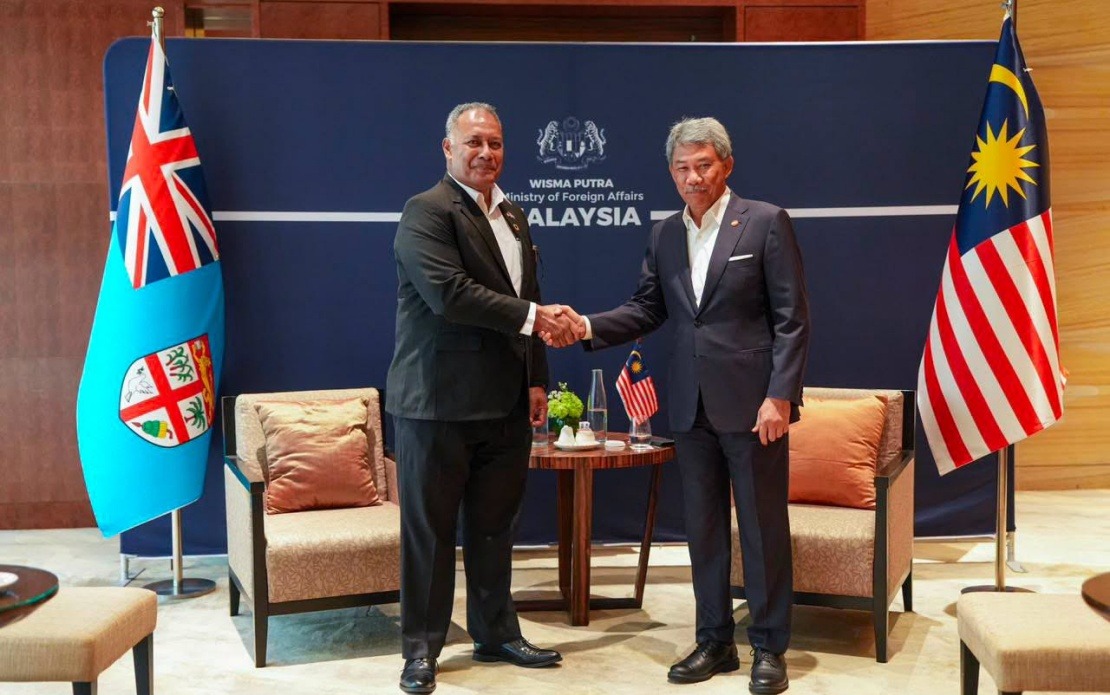
Malaysia and Fiji are moving to broaden their partnership across multiple sectors, with Foreign Minister Datuk Seri Mohamad Hasan and his Fijian counterpart Sakiasi Raisevu Ditoka identifying shared opportunities in trade, renewable energy, and human resource development during high-level discussions this week. The diplomatic engagement underscores growing strategic interest in strengthening ties across the Indo-Pacific, where Malaysia and Pacific island nations have increasingly sought collaborative frameworks on economic and political matters of mutual concern.
During Ditoka's working visit to Malaysia from August 9 to 12, the two ministers conducted wide-ranging talks that extended beyond bilateral matters to encompass broader regional and international challenges. The discussions reflected an acknowledgement that both nations face interconnected issues—from climate change and sustainable development to trade resilience in an increasingly complex global environment. For Malaysia, engagement with Pacific island states represents an important dimension of its regional diplomacy, particularly as it seeks to maintain balanced relationships across Asia-Pacific and beyond.
The cooperation framework identified by Mohamad and Ditoka covers substantial ground. Beyond traditional trade and investment channels, the discussions specifically highlighted renewable energy and forestry as priority areas, reflecting global shifts toward sustainable economic development. Human capital development emerged as another significant pillar, suggesting both countries recognize the importance of building skilled workforces capable of adapting to evolving economic demands. Cultural exchange initiatives were also emphasized, recognizing that people-to-people connections strengthen diplomatic foundations and create lasting bridges between societies.
The timing of these discussions gains added significance from Ditoka's concurrent officiation of the reopening of Fiji's High Commission in Kuala Lumpur on Monday. The restoration of this diplomatic facility signals renewed commitment from both sides to deepen institutional engagement and facilitate smoother communication channels. A functioning high commission provides essential infrastructure for processing visas, promoting business connections, and managing consular matters—practical necessities that underpin effective bilateral relations. For Malaysian businesses seeking Pacific market opportunities and Fijian entities looking toward Malaysian partnerships, the reopened mission offers more accessible pathways for engagement.
Existing trade relationships between the two countries already demonstrate substantive economic interaction. According to Foreign Ministry data, bilateral trade in 2025 reached RM880.01 million, equivalent to approximately US$206.2 million. Malaysia maintains a significant trade surplus, with exports valued at RM867.92 million against imports of merely RM12.09 million from Fiji. This imbalance suggests potential for Fiji to develop export-competitive sectors or for Malaysia to identify additional imports that could address Fijian developmental needs while creating more balanced commercial relationships. The magnitude of Malaysian exports indicates established market penetration and suggests potential for further growth through structured investment in Fijian enterprises or joint ventures.
The emphasis on renewable energy cooperation holds particular relevance for both nations. Fiji, as a Pacific island state, faces acute vulnerability to climate impacts and energy security challenges inherent to its geographical position. Malaysia, despite its tropical resources and hydroelectric capacity, continues pursuing diversified energy strategies including solar and wind development. Collaborative initiatives in this sector could involve technology transfer, investment partnerships, or knowledge-sharing arrangements that benefit both economies while advancing global climate objectives. Such cooperation aligns with commitments both nations have made under international environmental agreements and reflects pragmatic recognition that energy transitions require regional cooperation and resource pooling.
Forestry cooperation between Malaysia and Fiji also warrants attention given Southeast Asia's role in global timber markets and the Pacific's unique forest ecosystems. Malaysia possesses substantial expertise in forest management, timber processing, and sustainable harvesting practices developed through decades of commercial forestry operations. Fiji possesses valuable tropical forest resources requiring modern management frameworks. Partnerships could encompass capacity building, certification support for sustainable timber exports, and collaborative research on forest conservation techniques that preserve biodiversity while supporting economic activity.
The broadened discussions on regional and global issues indicate Malaysia views Fiji and Pacific nations as partners in addressing challenges extending beyond bilateral commerce. Malaysia's participation in various Asia-Pacific forums and its role in ASEAN provide perspective on regional architecture and diplomatic approaches that could inform Pacific island nations' engagement with larger powers and international institutions. Conversely, Pacific perspectives on climate change, maritime security, and sustainable development contribute valuable insights to Malaysian policy deliberation, particularly as it navigates complex geopolitical transitions affecting Asian waters and trade routes.
From a Malaysian perspective, strengthening Pacific ties serves multiple strategic interests. These relationships diversify Malaysia's diplomatic portfolio beyond traditional Asian and Islamic-world partnerships, demonstrating commitment to broad-based international engagement. Economic opportunities in Pacific island markets, though modest in absolute terms compared to major Asian economies, offer growth potential and access to specific natural resources and agricultural products. Additionally, Pacific island nations increasingly influence global governance through voting patterns in United Nations proceedings and participation in climate negotiations, making their diplomatic alignment strategically valuable for mid-sized powers like Malaysia.
The expanded cooperation framework also acknowledges changing patterns in Pacific geopolitics, where various powers compete for influence and partnership opportunities. Malaysia's renewed emphasis on Fiji cooperation demonstrates its intention to maintain active engagement in the region through substantive economic and development partnerships rather than passive observation. This approach contrasts with engagement models based solely on strategic competition or power projection, instead emphasizing mutual benefit and shared development objectives that appeal to island nations seeking genuine developmental partnerships.
Looking forward, the discussions initiated by Mohamad and Ditoka establish foundations for deepening institutional linkages through government agencies, private sector connections, and academic exchanges. The reopened High Commission provides the necessary diplomatic infrastructure for translating these discussions into concrete cooperation agreements and joint initiatives. Implementation success will depend on both governments' commitment to identifying specific projects within the outlined cooperation framework and mobilizing resources necessary for their execution. Trade and investment growth will require Malaysian businesses identifying profitable Fijian opportunities while Fijian enterprises develop competitive advantages in Malaysian and regional markets.

