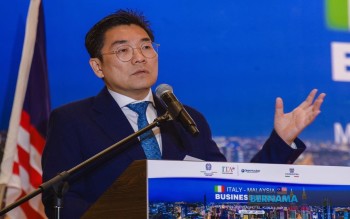
Negotiations between Malaysia and the European Union on a landmark free trade agreement have reached a critical juncture, with both economies now targeting completion of the Malaysia-European Union Free Trade Agreement by 2027. The pace of progress reflects growing economic interdependence between Southeast Asia's largest economy and the world's largest single market, signalling a deepening commitment to bilateral engagement across multiple sectors. Investment, Trade and Industry Deputy Minister Sim Tze Tzin announced that the fourth round of negotiations, held in Kuala Lumpur from June 8 to 12, resulted in the successful conclusion of three substantive chapters covering Customs and Trade Facilitation, Trade Remedies, and Good Regulatory Practices. These additions bring the total number of completed chapters to five, building on earlier progress made during the second and third rounds when negotiators finalised the Transparency chapter and the Small and Medium Enterprises chapter respectively.
The agreement under negotiation represents far more than a routine tariff-reduction accord. According to Sim, the MEUFTA would function as a transformative instrument, drawing Malaysia into closer integration with the European market while creating substantial opportunities in high-technology services, renewable energy infrastructure, and digital commerce. For Malaysia's manufacturing sector, which remains a cornerstone of the economy and employment, such an arrangement would deepen established industrial relationships and unlock new avenues for supply chain collaboration. The framework also carries significance for Italian companies operating in Malaysia and Malaysian enterprises seeking European market access, particularly in electronics, machinery, and advanced manufacturing segments where both regions possess complementary strengths.
Malaysia's trading relationship with Italy—a key European manufacturing hub—illustrates the commercial potential underlying these negotiations. Malaysian trade with Italy surged 14.2 per cent year-on-year to approximately RM17 billion in 2025, establishing Italy as Malaysia's fifth-largest trading partner within Europe. This expansion reflects sustained demand for Malaysian commodities and manufactured goods in European markets. Exports from Malaysia to Italy climbed 12.7 per cent during the same period, totalling RM7.6 billion and dominated by palm oil derivatives, iron and steel products, and electrical and electronics components. Malaysia's import profile from Italy, meanwhile, emphasises high-value manufactured goods including sophisticated machinery, optical and scientific instruments, chemicals, and premium jewellery, demonstrating a mature two-way trade relationship built on complementary specialisations.
The presence of over 80 Italian manufacturing operations valued at US$442 million across Malaysia's industrial landscape underscores why European companies view the country as an attractive investment base. Italian manufacturers have established operations spanning food processing, petrochemicals, precision machinery, and aerospace components, positioning themselves to serve not only the Malaysian market but also the broader Southeast Asian region. This investment concentration reflects Malaysia's enduring advantages: a sophisticated industrial ecosystem, established logistics infrastructure, and reliable supply chain networks that permit manufacturers to consolidate regional production efficiently. For Italian companies, Malaysia offers a strategic foothold enabling access to Southeast Asian consumers and integration into regional manufacturing networks in ways that operating from Europe alone would not facilitate.
Sim's remarks at the Italy-Malaysia Business Mission, itself a product of Prime Minister Datuk Seri Anwar Ibrahim's official visit to Italy in July of the previous year and Italian Prime Minister Giorgia Meloni's reciprocal engagement, highlighted the political commitment underlying commercial expansion. These high-level diplomatic channels have translated into institutional support for business collaboration, exemplified by organised missions bringing together corporate leaders and government policymakers. Such mechanisms accelerate deal-making and relationship-building beyond what traditional diplomatic channels alone accomplish, creating tangible business outcomes from political goodwill.
Looking ahead, negotiators will reconvene in Brussels from September 21 to 25 for the fifth round of discussions, suggesting an ambitious timeline for addressing the remaining outstanding chapters. The transition from Kuala Lumpur to Brussels as the venue reflects the normal rhythm of such negotiations, with talks alternating between partner capitals. The September session will prove pivotal in determining whether the 2027 completion target remains achievable or requires adjustment. Given that half of the anticipated substantive chapters have already been resolved, the trajectory suggests that negotiators have established functional working relationships and developed shared understandings on fundamental issues, potentially accelerating resolution of remaining contentious items.
Malaysia's stake in this agreement extends beyond bilateral commerce with Europe. The electronics and electrical components sector, which constitutes a significant portion of the country's export portfolio, stands to benefit considerably from streamlined market access and reduced tariff barriers. European demand for advanced semiconductor components, precision electronics, and integrated circuit design—sectors where Malaysia increasingly positions itself—aligns naturally with the high-technology focus Sim identified as central to the MEUFTA's potential. For Malaysian enterprises, the agreement would provide a stable, predictable framework for long-term European market development, reducing regulatory uncertainty and enabling capital investment decisions with greater confidence.
The government's broader semiconductor ambition also features prominently in the context of this trade negotiation. The New Investment Incentive Framework, operational since March, provides structured tax incentives targeting advanced manufacturing, front-end semiconductor production, and integrated circuit design activities. These measures apply uniformly to both foreign and domestic investors, reflecting a strategic pivot toward higher value-added manufacturing and away from labour-intensive assembly operations. An EU trade agreement facilitating technology transfer, investment flows, and skilled labour mobility would amplify the effectiveness of these incentives by creating complementary market opportunities and supply chain integration possibilities. Malaysian companies aspiring to advance up the manufacturing value chain would gain European partnership and investment opportunities that domestic incentives alone cannot provide.
The negotiations also carry significance for Malaysia's broader regional role within Southeast Asia. As the largest and most industrially developed economy in the Association of Southeast Asian Nations, Malaysia's bilateral agreements with major global trading powers set precedents and create reference points for other regional economies considering similar arrangements. A successful MEUFTA would demonstrate the viability of deep trade integration between ASEAN economies and developed markets, potentially facilitating subsequent agreements between the EU and other Southeast Asian nations. This demonstrates how bilateral negotiations often generate spill-over effects across regional architectures, with successful frameworks creating momentum for expanding trade networks.
The agreement's emphasis on small and medium enterprises reflects recognition that trade benefits must extend beyond large multinational corporations to support broader-based prosperity. Malaysian SMEs, which constitute the overwhelming majority of the business population, often lack the scale and international experience to navigate foreign markets independently. A structured trade agreement reducing tariff barriers and harmonising regulatory requirements would lower entry barriers for smaller firms seeking European market opportunities. Similarly, Italian SMEs would benefit from improved Malaysian market access, potentially stimulating bilateral investment and technology transfer flows at the grassroots business level.
The machinery and equipment sector warrants particular attention given both economies' capabilities. Malaysia has developed a sophisticated machinery manufacturing ecosystem, particularly within the electrical and electronics supply chains, while Italy remains globally recognised for precision machinery design and production. An agreement facilitating bilateral investment and reducing technical barriers would enable integrated production networks where each country supplies components to the other, creating efficiency gains unavailable through purely domestic manufacturing. Such sectoral integration exemplifies how modern trade agreements transcend simple tariff reduction to encompass supply chain harmonisation and regulatory alignment.
With the 2027 completion target now explicitly articulated, both Malaysia and the EU have committed themselves to a definitive timeline. Achieving this goal would represent a significant diplomatic and commercial accomplishment, requiring resolution of outstanding chapters including rules of origin, intellectual property, government procurement, and investment protection mechanisms. These remaining chapters typically generate substantial negotiation intensity as they involve genuinely contested issues affecting domestic industries and regulatory autonomy. The September round in Brussels will provide crucial indicators regarding whether the anticipated pace can be maintained or whether unforeseen complications might necessitate schedule extension. Regardless of timing, the trajectory established through five completed chapters demonstrates serious commitment from both sides to constructing a comprehensive trade framework that serves contemporary economic realities rather than retreading outdated models.

