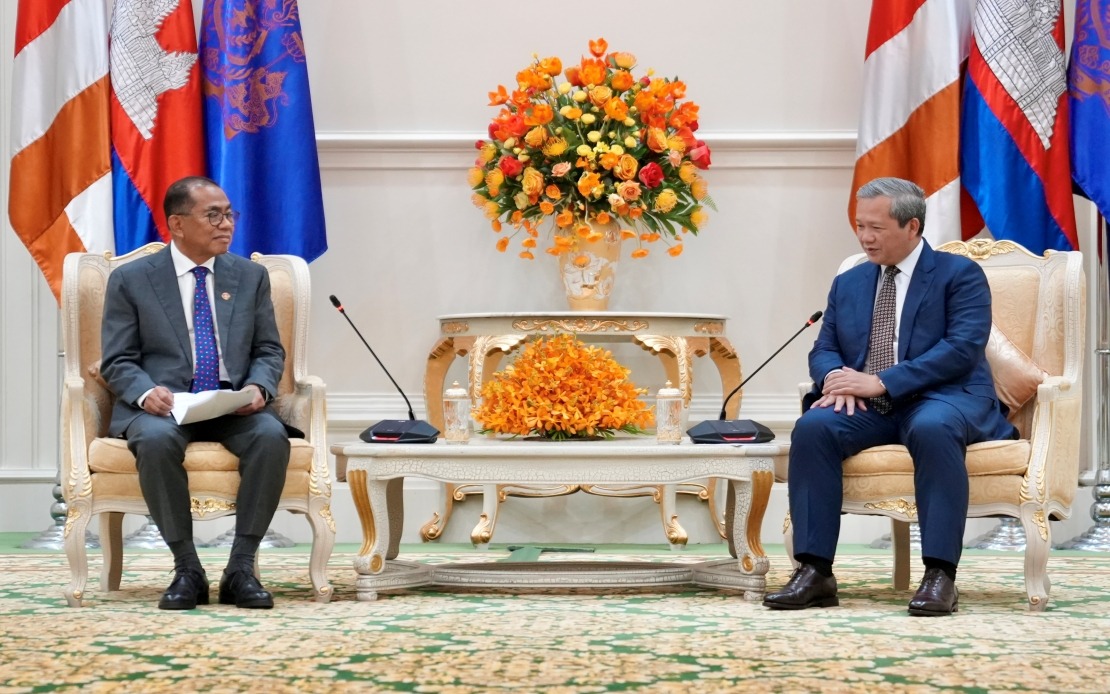
Malaysia and Cambodia are moving forward with expanded defence cooperation following a high-level visit to Phnom Penh by Defence Minister Datuk Seri Mohamed Khaled Nordin, who met with Cambodian Prime Minister Samdech Thipadei Hun Manet and Defence Deputy Prime Minister General Tea Seiha. The engagement reflects Kuala Lumpur's strategic pivot towards consolidating bilateral defence relationships within ASEAN, even as the bloc faces mounting pressures from geopolitical competition and transnational security concerns.
At the heart of discussions was the finalisation of a Malaysia-Cambodia Defence Cooperation Memorandum of Understanding, a framework intended to formalise military collaboration and create institutional mechanisms for sustained engagement. The agreement, now in advanced stages of completion, is expected to be signed during the ASEAN Defence Ministers' Meeting scheduled for the Philippines in the near term. This timing carries symbolic weight, demonstrating that defence diplomacy remains a priority despite changes in ASEAN's rotating leadership structure.
The two nations identified several emerging domains for collaborative effort, moving beyond traditional military activities into areas that reflect contemporary security threats. Jungle warfare training capitalises on shared geographical and environmental contexts, while cooperation in artificial intelligence and drone technology positions both countries within the broader technological competition reshaping military capabilities across Southeast Asia. Defence industry collaboration opens possibilities for indigenous technology development and reduced reliance on external suppliers, a consideration of growing importance as regional states seek strategic autonomy.
Central to the dialogue was reaffirmation of ASEAN centrality in managing regional security architecture. Both Malaysia and Cambodia emphasised the importance of multilateral dialogue mechanisms and peaceful resolution frameworks, particularly relevant given ongoing tensions along the Cambodia-Thailand border. The partners reiterated support for the ASEAN Observer Team mechanism, underscoring commitment to conflict prevention and mediation within the bloc rather than external intervention.
The Code of Conduct negotiations in the South China Sea featured prominently in bilateral discussions, reflecting shared anxieties about maritime security in one of the world's most contested waterways. Malaysia and Cambodia view finalisation of this framework as essential to establishing binding rules that would constrain unilateral actions and protect the interests of smaller claimant states. This convergence of positions carries implications for ASEAN's collective bargaining power in negotiations with larger regional powers.
Mohammad Khaled's visit formed part of a broader regional tour encompassing Vietnam, where he met Prime Minister Le Minh Hung and Defence Minister General Phan Van Giang on August 5-6. The sequential visits to Vietnam and Cambodia underscore Malaysia's deliberate strategy of deepening defence relationships with neighbouring ASEAN states, a approach aligned with the Third Pillar of Malaysia's National Defence Strategy focusing on credible partnerships. This diplomatic intensity demonstrates that defence engagement extends beyond ceremonial exchanges to substantive military and strategic discussions.
The delegation's composition, including Chief of the Royal Malaysian Navy Admiral Tan Sri Zulhelmy Ithnain and Deputy Secretary-General of the Defence Ministry Datuk Mohd Yani Daud, signalled the importance Malaysia attached to the engagement. Participation of senior naval leadership reflects heightened attention to maritime security and freedom of navigation concerns affecting both nations.
Looking ahead, Datuk Seri Mohamed Khaled expressed optimism that strengthened defence cooperation would build momentum towards celebrating 70 years of Malaysia-Cambodia diplomatic relations in 2027. This projected milestone provides a natural inflection point for deepening institutional ties and moving beyond episodic defence exchanges towards sustained military partnerships. The timing also allows both governments to implement the defence MoU's provisions and evaluate effectiveness before the anniversary.
For Malaysia's broader regional strategy, these engagements reflect a commitment to defence diplomacy that transcends the annual ASEAN Chair rotation. Despite relinquishing the Chair this year, Malaysia continues positioning itself as an active security stakeholder invested in regional stability mechanisms and conflict prevention. This consistency of approach reassures neighbouring states of Malaysia's predictability and genuine interest in collective resilience rather than unilateral advantage-seeking.
The emphasis on dialogue and peaceful resolution also carries implications for Malaysia's positioning within ASEAN's internal dynamics. By consistently championing multilateral mechanisms and rules-based order, Malaysia aligns itself with like-minded states seeking to resist external pressure while maintaining institutional cohesion. The defence cooperation with Cambodia demonstrates that even bilateral engagements serve the broader objective of strengthening ASEAN's collective capacity to manage security challenges.
From a Malaysian perspective, the expansion into emerging defence domains such as artificial intelligence and drone technology acknowledges that future security threats extend beyond traditional military dimensions. Cooperation with Cambodia in these areas builds regional expertise and creates networks of technical specialists, contributing to ASEAN's technological resilience. This forward-looking approach positions Malaysia as a security partner concerned with long-term regional capacity-building rather than short-term military advantage.
The implicit message in these engagements extends to other regional powers observing Malaysia's defence diplomacy. By cultivating strong relationships with Cambodia and Vietnam, Malaysia reinforces its credentials as a trusted ASEAN partner committed to regional mechanisms. This diplomatic positioning matters for Malaysia's influence within ASEAN consensus-building and its ability to shape regional security narratives away from destabilising external competition.

