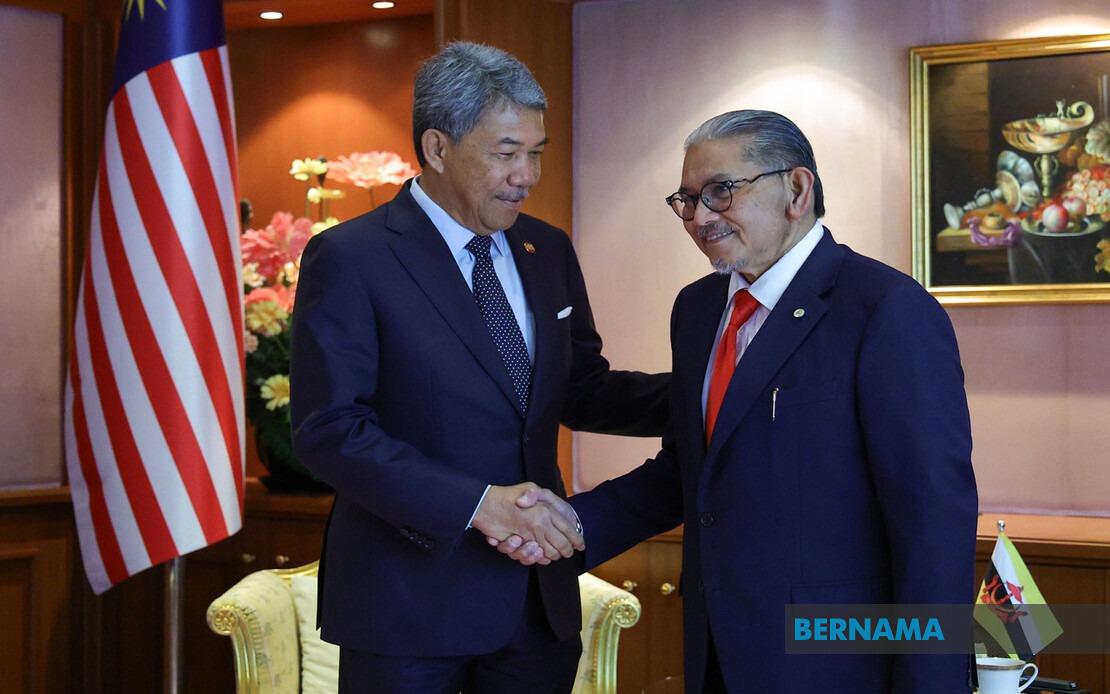
Malaysia and Brunei have reinforced their diplomatic partnership through substantive discussions on cross-border cooperation and regional governance during the 27th Meeting on the Implementation of the Exchange of Letters, which took place in Bandar Seri Begawan on August 21. The talks, co-chaired by Malaysian Foreign Minister Datuk Seri Mohamad Hasan and Brunei Second Minister of Foreign Affairs Datuk Seri Setia Erywan Mohd Yusof, underscored the two nations' commitment to resolving long-standing boundary matters while fostering practical mechanisms that benefit their citizens.
The meeting tackled a range of bilateral concerns, with particular emphasis on delineating the land and maritime boundaries that separate the two countries. These discussions form part of a methodical process to formally demarcate territories and establish clear administrative lines, reflecting the maturing nature of Malaysia-Brunei relations in the post-colonial era. The boundary question has remained a persistent diplomatic issue for both nations, requiring technical expertise, historical documentation, and sustained political will to resolve equitably.
According to Datuk Seri Mohamad, the two countries have now completed approximately 50 per cent of the boundary demarcation process. This milestone represents meaningful progress in a task that demands meticulous attention to geographical, legal, and administrative factors on the ground. Rather than relying solely on historical maps or inherited colonial agreements, both nations recognised the necessity of conducting comprehensive field assessments to identify areas where practical circumstances necessitate clarification or adjustment within the framework of existing law.
The demarcation effort adheres strictly to the 2009 Terms of Reference, a foundational agreement that established the principles and methodology for this undertaking. Both governments have relied on technical committees stationed along the border regions to conduct surveys, gather evidence, and prepare detailed reports that will inform the final demarcation decisions. This deliberate, standards-based approach demonstrates that Malaysia and Brunei are determined to resolve their boundary matters through institutional channels rather than through contentious public disputes.
Beyond border management, the two nations have identified search-and-rescue coordination as a critical area for enhanced cooperation. The meeting concluded with plans to formalise this partnership through a memorandum of understanding on search-and-rescue operations, enabling rapid, coordinated responses to maritime and aerial emergencies across their shared waters and airspace. For a region prone to shipping traffic and occasional natural disasters, such mechanisms are invaluable for protecting lives and property.
Equally significant are measures designed to facilitate movement and connectivity for populations in Brunei, Sarawak, and Sabah. These three territories form a contiguous region in northwestern Borneo, and their peoples have historical, cultural, and economic ties that predate modern border arrangements. By streamlining travel procedures and reducing bureaucratic friction, both governments aim to enable cross-border commerce, family visits, and labour mobility that benefit communities on both sides. For Malaysian citizens in East Malaysia, particularly those with ties to Brunei, such facilitations improve their quality of life and economic opportunities.
The bilateral dialogue reflects the broader context of Malaysia-Brunei relations, which have generally remained cordial despite occasional disagreements. Brunei, as a sultanate with significant oil and gas wealth, has maintained a cautious but constructive diplomatic posture in Southeast Asia. Malaysia, as a larger and more populous nation, has sought to balance its regional leadership ambitions with respect for Brunei's sovereignty and distinct governance model. These meetings demonstrate that both nations value stability, predictability, and rules-based interaction.
From a Southeast Asian perspective, the Malaysia-Brunei dialogue illustrates how neighbours can address contentious issues through persistent, methodical engagement rather than escalation. The region has observed territorial disputes escalate into larger conflicts elsewhere, making the quiet professionalism of the Malaysian-Bruneian approach noteworthy. Both nations appear willing to invest diplomatic capital and technical resources in getting these matters right, rather than seeking quick or politically expedient resolutions.
The search-and-rescue agreement also positions Malaysia and Brunei as contributors to regional maritime safety and security. As shipping lanes in Southeast Asia become increasingly congested and economically vital, coordinated emergency response protocols reduce risks not only for bilateral nationals but also for third-party vessels transiting the area. This practical cooperation complements broader ASEAN initiatives on maritime safety and environmental protection.
Looking forward, the completion of boundary demarcation within the 2009 framework would represent a significant diplomatic achievement, removing uncertainty and potential sources of friction. For Malaysian policymakers, particularly those overseeing East Malaysian affairs, such clarity strengthens the governance architecture of Sarawak and Sabah and enables more confident long-term planning for border regions. For Brunei, clear boundaries reinforce sovereignty and facilitate internal security arrangements.
The August meeting also highlights Malaysia's commitment to bilateral diplomacy as a cornerstone of its foreign policy. Rather than allowing issues to fester or be subordinated to multilateral forums, the Malaysian government continues to prioritise sustained, focused dialogues with individual neighbours. This approach requires consistent diplomatic engagement, institutional memory, and political patience—qualities that tend to produce durable agreements and genuine cooperation.
The success of the 27th Exchange of Letters implementation meeting suggests that Malaysia and Brunei have established effective mechanisms for dialogue and problem-solving. The regular scheduling of these meetings, their substantive agendas, and the involvement of senior officials signal that both governments regard their bilateral relationship as sufficiently important to warrant ongoing attention. As the demarcation process advances and new agreements such as the search-and-rescue MoU are formalised, the two nations will further cement their partnership and reduce potential sources of misunderstanding.

