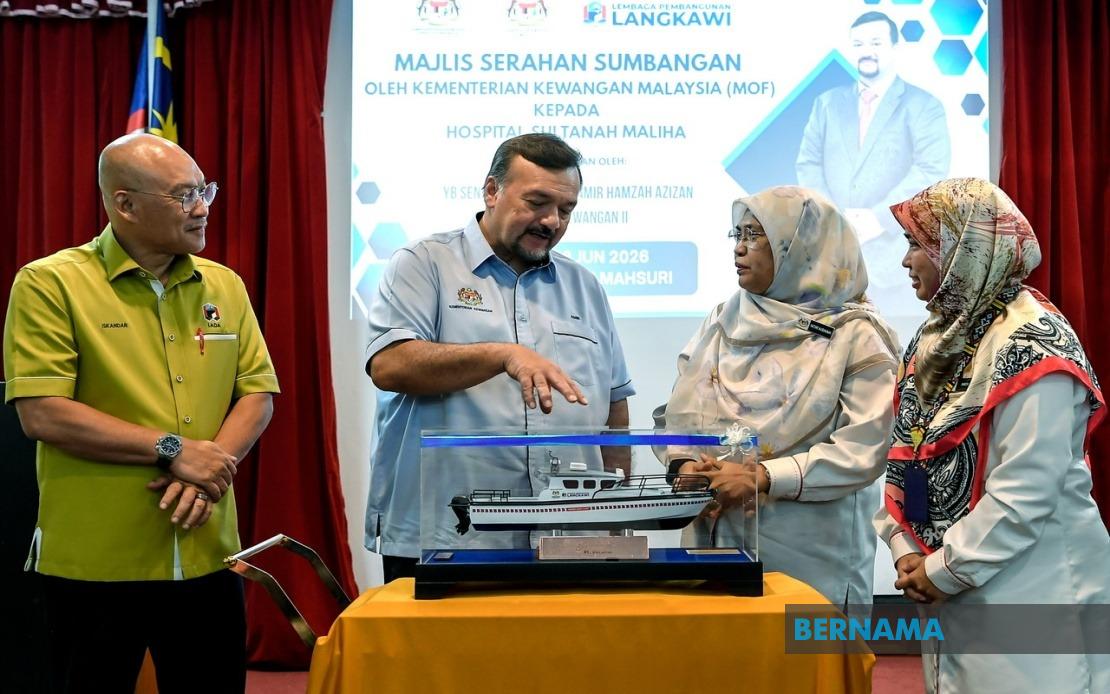
The Malaysian Ministry of Finance has announced a RM5.5 million investment in establishing a dedicated sea ambulance service for Langkawi, marking a significant step toward modernising the island's emergency healthcare infrastructure. The project encompasses both vessel procurement and initial operational expenses, with the service anticipated to begin operations in the first quarter of 2025. This development reflects growing recognition that island communities require specialised medical transport solutions distinct from those available on the peninsula.
Finance Minister II Datuk Seri Amir Hamzah Azizan, speaking in his capacity as both government official and co-chairman of the Langkawi Development Authority, emphasised that the initiative directly addresses longstanding bottlenecks in emergency care. Currently, patients requiring transfer from Langkawi to mainland referral hospitals depend entirely on commercial passenger ferry services, a system that creates dangerous delays when urgent intervention is needed. The constraints become particularly acute during monsoon seasons or when ferry operators reduce service frequencies due to demand fluctuations.
The sea ambulance will be operated by Hospital Sultanah Maliha, the island's primary government healthcare facility, which currently handles first-line emergency and general medical services. The vessel's primary function will be facilitating rapid patient transfers to advanced medical facilities on the peninsula—a capacity that existing commercial transport cannot reliably guarantee. For a destination that attracts millions of international tourists annually alongside serving a resident population of around 65,000, the inability to provide rapid emergency transport represents both a public health vulnerability and a potential liability for the tourism sector.
According to Amir Hamzah, the purpose-built sea ambulance will accommodate two stretchers simultaneously, supported by twelve trained medical and logistical personnel who travel with each patient. This configuration ensures that critically ill individuals receive continuous clinical care throughout their journey rather than remaining in a passenger cabin with limited medical oversight. The vessel is designed specifically to maintain patient dignity, comfort and safety during what are often distressing transfers—considerations that commercial ferries fundamentally cannot address, as they prioritise general passenger comfort rather than medical stability.
Beyond emergency transport, the initiative forms part of a broader healthcare modernisation programme for Langkawi. The Ministry of Finance simultaneously presented RM700,000 worth of medical equipment to Hospital Sultanah Maliha, encompassing diagnostic devices, information technology infrastructure, clinical furniture, ambulances and security systems. These additions directly enhance the hospital's diagnostic and treatment capacity, allowing it to manage more complex cases and reduce the volume of patients requiring mainland referral in the first instance.
A particularly significant component of the equipment package involves the implementation of an Electronic Medical Record system, part of a nationwide Health Ministry digitalisation initiative. The system will enable medical staff to input patient data directly during clinical rounds using mobile computing devices, creating real-time digital records accessible across the hospital network. For Langkawi specifically, this means clinical information becomes immediately available to mainland specialists when patients are transferred, eliminating the delays associated with paper-based handovers and enabling more informed care decisions before patients even arrive at receiving facilities.
The connectivity between Langkawi and peninsular hospitals through the EMR system represents a genuinely transformative development for island healthcare. Rather than treating the island facility as an isolated provider, digital integration effectively extends the diagnostic and specialist expertise available to Langkawi patients. Radiologists, pathologists and medical specialists on the peninsula can review scans and laboratory results remotely, providing urgent consultation to local clinicians without requiring patient movement. This capability proves particularly valuable for time-sensitive conditions where initial assessment quality directly determines patient outcomes.
For Malaysia's broader healthcare strategy, the Langkawi initiative demonstrates recognition that equitable medical access extends beyond urban centres. Island and remote communities face structural disadvantages—geographic isolation, limited specialist availability, transport constraints—that cannot be resolved through conventional urban hospital models. The combination of dedicated emergency transport, equipment modernisation and digital integration creates a more comprehensive solution than any single intervention could achieve.
The timing of the announcement, with operations anticipated to commence in early 2025, suggests the procurement and establishment process is already underway. Hospital Sultanah Maliha staff will require specific training in maritime medical protocols, as sea-based emergency care differs meaningfully from land ambulance operations. Issues including vessel stability during patient care, maritime safety procedures and coordination with maritime authorities represent practical considerations that extend beyond standard ambulance service training.
For Malaysian policymakers, the Langkawi project offers a replicable model for other island and remote communities facing similar emergency transport challenges. The formula—dedicated purpose-built vessels, trained medical crews, digital health integration and equipment investment—could potentially be adapted for locations including Sabah and Sarawak coastal regions, where geographic dispersion creates comparable access barriers. As Malaysia continues developing healthcare infrastructure, recognising that emergency care extends to maritime transport represents an important policy evolution.
The sea ambulance service ultimately addresses a critical gap in Langkawi's healthcare system. By ensuring rapid, clinically appropriate transport for emergency patients while simultaneously strengthening the island's diagnostic and treatment capacity through equipment and digitalisation, the initiative reflects a sophisticated understanding of how healthcare access functions in geographically isolated communities. For residents and the tourism industry alike, reliable emergency medical services represent an essential foundation for public health and economic confidence.

