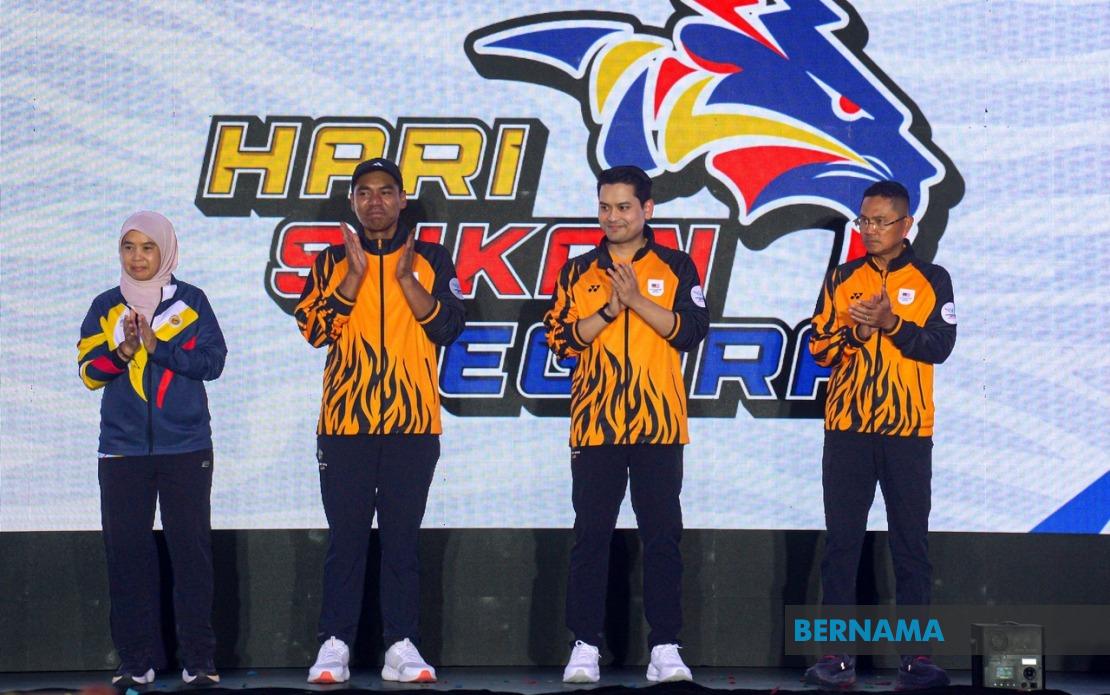
Malaysia's forthcoming National Sports Day in 2026 is being positioned as a transformative celebration that will harness digital innovation to deepen public engagement with sports and physical activity. Running from October 9 to 11, the initiative aims to attract participation from more than 5.3 million Malaysians across grassroots to national competitions and recreational activities, representing an ambitious attempt to embed technology into the country's sports infrastructure while maintaining focus on community wellness.
Youth and Sports Minister Dr Mohammed Taufiq Johari announced the strategic direction during the HSN 2026 pre-launch ceremony at Menara KBS in Putrajaya, emphasizing that the event's central theme—"Digital Technology and Artificial Intelligence"—reflects a deliberate shift toward modernizing how Malaysians experience and engage with sports. Rather than treating technology as peripheral to athletic pursuits, the ministry intends to demonstrate how digital tools and AI can meaningfully enhance sports development and broaden participation across all demographic groups and skill levels.
A notable innovation in the pre-launch itself was the extensive integration of virtual reality technology, signalling the ministry's commitment to tangible implementation rather than mere rhetorical positioning. This decision underscores a broader Malaysian effort to position the nation as digitally progressive within the Southeast Asian sports landscape, aligning HSN 2026 with global trends in sports innovation whilst maintaining accessibility for the general population.
One particularly intriguing aspect of the ministry's approach concerns e-sports, typically regarded as a sedentary, technology-centric activity. Dr Mohammed Taufiq articulated a vision where e-sports can serve as a gateway to broader physical activity rather than an isolated pursuit. By encouraging video game enthusiasts to remain physically active through integrated programming, the ministry appears to be addressing the health paradox of digital recreation—leveraging the popularity of gaming to redirect participants toward conventional fitness and sports participation. This crossover strategy could prove instrumental in engaging younger demographics who might otherwise remain disconnected from traditional sports initiatives.
The national-level launch will be officiated by Prime Minister Datuk Seri Anwar Ibrahim at the National Stadium grounds in Bukit Jalil on October 10, lending significant political weight and visibility to the event. This high-profile endorsement signals government commitment to sports development as a priority policy area and suggests expectations for HSN 2026 to generate substantial media coverage and public enthusiasm.
Beyond the immediate celebration itself, HSN 2026 represents strategic positioning ahead of Malaysia's hosting of the 2027 Southeast Asian Games. The ministry is deliberately leveraging the national sports day as a platform to build momentum, excitement, and public support for the upcoming regional competition. Collaboration between HSN organizers and the Malaysia SEA Games Organising Committee includes plans for a SEA Games Roadshow, creating a continuum of engagement that extends from October 2026 through to the Games themselves. This integrated approach transforms HSN from a standalone event into a component of a longer-term sports mobilization strategy.
The programming structure for HSN 2026 encompasses multiple tiers of activity designed to maximize inclusivity. The MADANI Fun Run and MADANI Fun Walk initiatives will provide accessible entry points for participants of varying fitness levels, whilst the Active Malaysia and Sports Industry segments are intended to accommodate both competitive athletes and recreational participants. The incorporation of Rakan Muda Lifestyle elements suggests an intergenerational approach, recognizing that sustained sports engagement requires cultivating habits and enthusiasm across age groups rather than targeting specific cohorts exclusively.
For Malaysian sports administrators, HSN 2026 represents an opportunity to field-test digital integration strategies that could eventually become standard across national sporting institutions. The use of VR technology and AI frameworks at this event level could generate valuable data about public receptiveness, technical feasibility, and implementation challenges before scaling upward to major competitions like the SEA Games. This incremental approach to technological adoption demonstrates pragmatic planning that balances innovation ambitions with operational realities.
The emphasis on participation volume—targeting 5.3 million—reflects a philosophical orientation toward mass engagement rather than elite achievement. This inclusive framework aligns with public health imperatives across Southeast Asia, where sedentary lifestyles and obesity rates are rising concerns. By framing HSN 2026 around accessible participation and digital innovation rather than elite competition, Malaysia is signalling that sports development serves broader wellness objectives extending beyond medal counts and national prestige.
From a regional perspective, Malaysia's digital integration strategy in HSN 2026 positions the country as an innovator within ASEAN sports governance. Other Southeast Asian nations are similarly grappling with digital transformation in sports administration and participation. HSN 2026 could establish templates and best practices that inform how other ASEAN members approach technology adoption in their own national sports initiatives, potentially elevating Malaysian leadership in sports policy innovation across the region.
The convergence of HSN 2026, the SEA Games roadshow, and the 2027 hosting responsibilities creates a three-year sports momentum arc that extends well beyond the October celebration itself. This extended timeline allows for sustained engagement building, progressive brand development, and cumulative capacity-building within the sports sector. For Malaysian stakeholders, the success of HSN 2026 in attracting its target 5.3 million participants will serve as both a barometer of public sports interest and a dress rehearsal for executing large-scale sports events under the SEA Games scrutiny.

