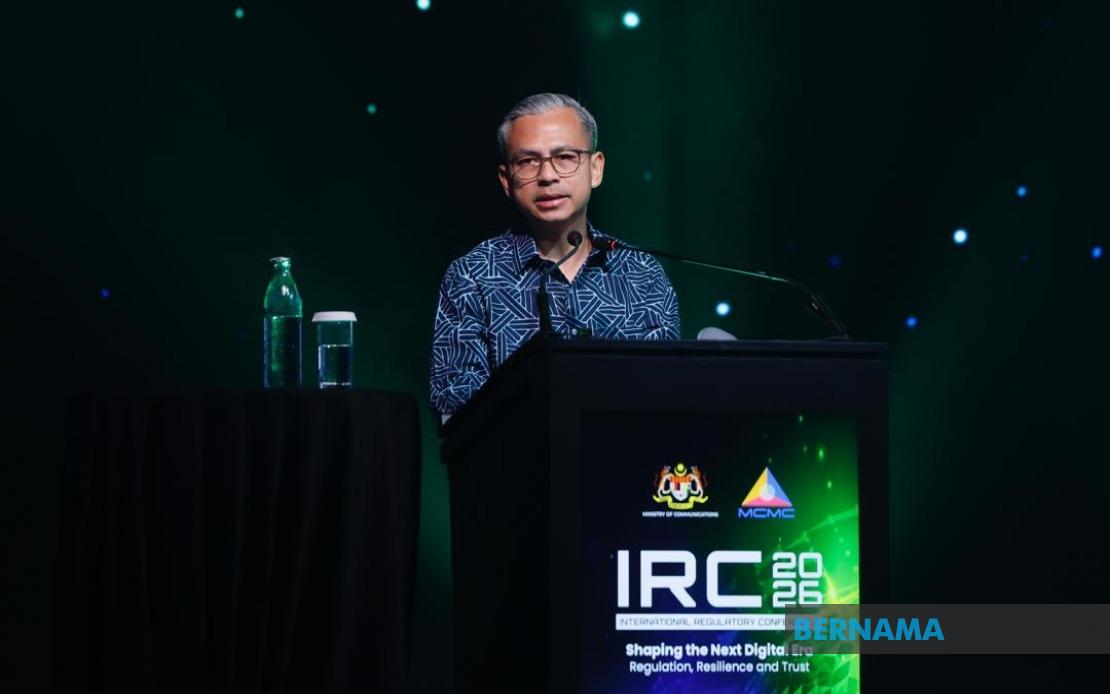
Malaysia is pursuing a comprehensive overhaul of its digital governance infrastructure to ensure that rapid technological advancement does not outpace the regulatory frameworks designed to govern it. Communications Minister Datuk Seri Fahmi Fadzil articulated this priority while officially opening the International Regulators Conference 2026 in Kuala Lumpur, emphasizing that trust has emerged as the central challenge defining the next phase of digital development. The government's approach recognises a fundamental tension: technology continues to evolve at unprecedented speed, yet most legal and regulatory mechanisms remain rooted in assumptions and conditions from years past.
The minister pointed to several concrete initiatives demonstrating Malaysia's commitment to building a more secure and trustworthy digital environment. The National Digital Network Plan, commonly known as Jendela, provides the strategic backbone for broadband expansion, while the nationwide 5G deployment—conducted through a Dual Network model that has attracted international attention—ensures competitive infrastructure development. Equally significant are investments in submarine cable infrastructure, which enhance Malaysia's connectivity resilience and reduce dependence on single points of failure. These physical infrastructure improvements are complemented by regulatory evolution, most notably the Online Safety Act 2025, which represents a paradigm shift from reactive intervention to proactive harm prevention.
The distinction between reactive and proactive regulation carries substantial implications for Malaysia and the broader Southeast Asian region. Historically, digital regulation typically responded to crises or documented harms—a platforms harmed minors, companies violated privacy, disinformation spread unchecked. The ONSA framework inverts this logic by requiring platforms to embed safety mechanisms from inception and maintain accountability for user experiences. This approach strengthens protections for children and vulnerable populations while holding technology companies to demonstrable standards rather than relying solely on post-incident enforcement. Such forward-looking regulation may position Malaysia as a model for neighboring countries wrestling with similar governance questions.
Fahmi stressed the critical importance of regulatory agility, recognising that static rules cannot address the pace of technological change. Effective governance frameworks must possess enough flexibility to respond to emerging challenges—artificial intelligence, quantum computing, autonomous systems—without becoming so permissive that they abandon protective standards or provide industry with indefinite regulatory uncertainty. This balance proves particularly delicate in developing economies where regulators face capacity constraints and where technology companies exercise substantial influence over policy discussions. Malaysia's approach seeks to thread this needle by establishing clear accountability principles while remaining open to novel solutions and industry-led initiatives that advance public objectives.
The International Regulators Conference has evolved into a significant forum for policy exchange, particularly as Malaysia transitioned toward its Dual Network 5G model. Now in its third iteration, the conference attracts regulators and policymakers from jurisdictions across the globe seeking to understand Malaysia's experience with competitive infrastructure deployment and digital governance innovation. This international dimension matters considerably for a middle-income nation aspiring to technological leadership. By hosting regulatory dialogue and facilitating peer learning, Malaysia extends its influence beyond its borders and positions the Malaysian Communications and Multimedia Commission as a serious participant in shaping global telecommunications norms.
The 2026 conference agenda reflects the complexity of contemporary digital governance. Discussions will encompass online safety mechanisms, data governance frameworks, artificial intelligence regulation, quantum-secure communications, and autonomous systems oversight. Each topic presents distinct regulatory challenges. Artificial intelligence, for instance, raises questions about algorithmic transparency, discrimination mitigation, and liability allocation that existing frameworks do not adequately address. Quantum computing threatens current encryption standards, requiring proactive technical and policy responses. The breadth of issues underscores why digital governance cannot be treated as a discrete policy domain but rather as a systemic challenge requiring coordination across communications, commerce, criminal justice, consumer protection and national security sectors.
Fahmi emphasised the value of learning from regional and international experiences, acknowledging that no single jurisdiction possesses complete solutions to digital governance challenges. Southeast Asian nations share common interests in protecting citizens from online exploitation and disinformation while maintaining competitive digital economies. By facilitating cross-border regulatory dialogue, Malaysia gains insight into policy approaches implemented elsewhere and identifies gaps within domestic legislation before crises emerge. This collaborative approach also builds relationships among regulators, enabling more coordinated responses to transnational issues such as international disinformation campaigns or cryptocurrency fraud rings that respect no national boundaries.
The outcomes of the International Regulators Conference will be shared with the International Telecommunication Union, positioning Malaysia as an active contributor to global standards-setting. The ITU plays a crucial coordinating role in telecommunications, and Malaysian participation in ITU Council discussions amplifies the voice of developing nations within international governance structures. This representation matters because global standards developed without input from diverse economies often reflect developed-nation priorities and may not account for conditions in emerging markets where infrastructure limitations, lower digital literacy levels, or different social contexts require adapted approaches.
The Online Safety Act 2025 deserves particular scrutiny because it signals Malaysia's commitment to protecting users from concrete harms while maintaining an open digital environment. The legislation strengthens platform accountability by requiring companies to demonstrate reasonable steps to prevent illegal content dissemination, protect minors from exploitation, and provide users with meaningful transparency about algorithmic decision-making. These requirements impose genuine compliance costs on technology companies but reflect growing recognition that platforms cannot claim to be neutral conduits immune from responsibility for content and user experience. For Malaysian citizens, the ONSA provides new avenues for recourse when experiencing online harms and establishes clearer rules governing platform behaviour.
The broader context involves Malaysia's positioning within global technology ecosystems. As Chinese, American, European and Indian technology companies compete for regional dominance, Malaysia's regulatory approach influences what services operate within its jurisdiction and under what conditions. Overly restrictive regulation risks driving innovative companies elsewhere while insufficient oversight exposes citizens to predatory practices. The government's framework attempts to attract legitimate technology investment while enforcing standards that protect public interests—a balance requiring constant recalibration as circumstances change. The International Regulators Conference provides a mechanism for that recalibration by creating space for regulators to collectively identify emerging challenges and develop proportionate responses.
The submarine cable infrastructure investments warrant mention as a crucial but often overlooked component of digital governance. Physical infrastructure determines not only speed and reliability but also sovereignty and security. Cables routed through hostile waters or dependent on foreign maintenance can become vectors for surveillance or denial-of-service attacks. By investing in diverse cable routes and diverse international partnerships for cable development, Malaysia reduces its vulnerability to infrastructure disruption and enhances negotiating leverage with technology companies. These investments complement regulatory initiatives by ensuring that governance decisions can be effectively implemented and enforced rather than circumvented through infrastructure arrangements.
Moving forward, Malaysia's success in digital governance will be measured not merely by laws enacted but by their practical implementation and demonstrated outcomes. Citizens must perceive increased protection from online harms and greater agency over their digital experiences. Industry must retain sufficient clarity and flexibility to innovate and invest. Regional partners must view Malaysia's regulatory approach as a credible model worthy of adaptation. The International Regulators Conference serves as both a commitment device and a learning platform, signalling that Malaysia takes digital governance seriously and seeks to lead rather than follow in this increasingly consequential policy domain. For Southeast Asia, Malaysia's efforts hold significance because they may establish reference points for other nations developing their own digital governance frameworks, potentially creating regional standards that enhance interoperability and collective capacity to address transnational digital challenges.

