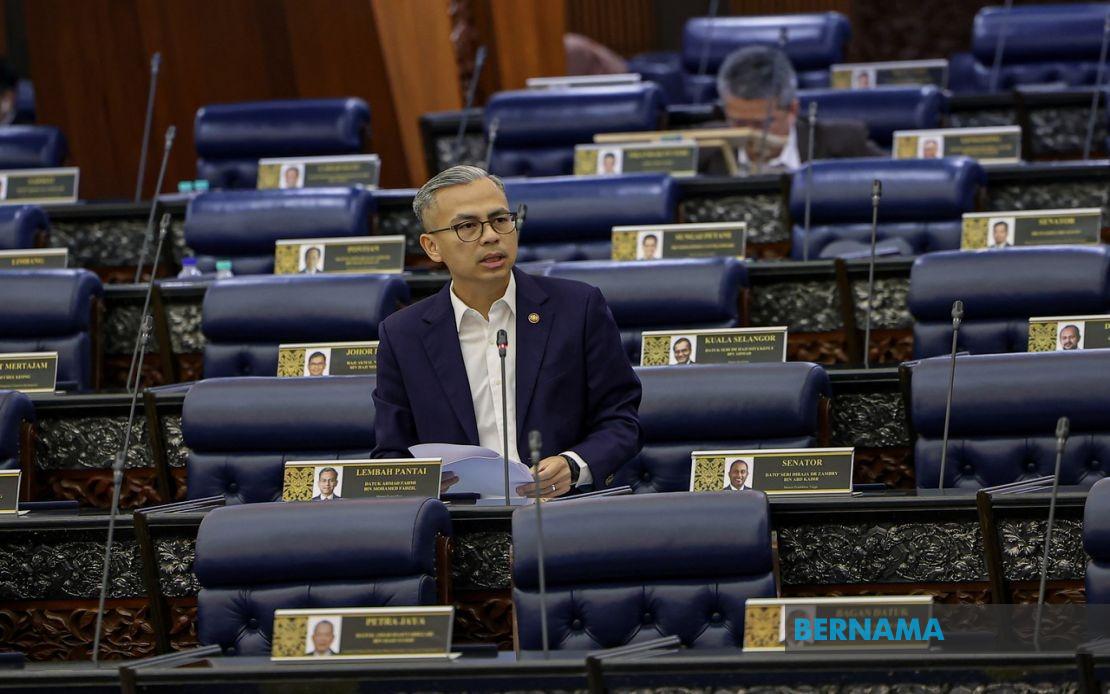
Malaysia is moving forward with legislative changes designed to align telecommunications infrastructure development with national security priorities. Communications Minister Datuk Seri Fahmi Fadzil introduced the Communications and Multimedia (Amendment) Bill 2026 for its first reading in Parliament on July 13, with the second reading scheduled for the current parliamentary session. The legislation represents a significant shift in how the country manages its digital communications ecosystem, introducing safeguards that go beyond traditional universal service obligations.
The amendment specifically targets Section 202 of the Communications and Multimedia Act 1998, the foundational statute governing Malaysia's communications sector. By inserting new subsections 202(1A) and 202(1B), the Bill grants the Communications Minister expanded authority to direct the Malaysian Communications and Multimedia Commission to pursue universal service initiatives that advance national security objectives. This represents a deliberate broadening of the regulatory mandate, moving beyond the conventional focus on service accessibility and affordability to encompass security-driven infrastructure development.
Under the proposed framework, the Minister can now instruct the MCMC to support initiatives involving network services or application services—or combinations of both—whenever such measures are deemed necessary for national security purposes. The determination of what constitutes a national security interest rests with the National Security Council, operating under the National Security Council Act 2016. This governance structure creates a clear chain of authority, with security assessments flowing from the National Security Council while implementation powers remain with the communications regulator.
The practical implications of this amendment extend to the physical and digital infrastructure underpinning Malaysia's communications landscape. Network facilities installation and the provision of network or application services can now be justified and mandated on national security grounds. This could encompass everything from broadband rollout in strategic locations to the resilience of critical telecommunications nodes. The approach reflects global trends in which countries increasingly view digital infrastructure as essential to national defence and sovereignty, a consideration that has gained prominence as geopolitical tensions rise and cyber threats multiply.
The proposed subsection 202(1B) includes an important guardrail, stipulating that any national universal service initiative must remain consistent with the objects of the original Communications and Multimedia Act 1998. This constraint ensures that security-driven measures cannot completely override the foundational principles governing Malaysia's communications sector, such as promoting competition and protecting consumer interests. The requirement maintains a degree of balance between security objectives and the established regulatory philosophy.
Additional amendments under Subclause 2(b) would enable the Minister to formulate regulations under Section 16 of the Act specifically addressing national universal service initiatives. This regulatory-making power allows for detailed operational guidance without requiring further parliamentary intervention, providing flexibility as security considerations evolve and technology advances. The provision acknowledges that a rapidly changing communications environment may require swift regulatory adjustments to address emerging security challenges.
The Bill's framers emphasize that these amendments respond to the evolution of Malaysia's communications and multimedia industry alongside technological advancement. Over the past two decades, the sector has transformed dramatically, with the emergence of internet-based services, cloud infrastructure, and fifth-generation networks. Each technological shift introduces new security complexities and vulnerabilities. By integrating security considerations into the universal service framework, Malaysia aims to ensure that infrastructure development strengthens rather than undermines national resilience.
From a financial perspective, the government has explicitly stated that implementing this legislation will not require additional budgetary allocation. This claim warrants scrutiny, as directing the MCMC to undertake security-related initiatives could shift priorities or impose costs on telecommunications operators through regulatory compliance requirements. The assertion of budget neutrality suggests the government intends to work within existing MCMC resources or expects costs to be absorbed by industry players through compliance obligations.
The timing of this amendment reflects broader regional concerns about digital sovereignty and infrastructure security. Across Southeast Asia, governments have grown increasingly attentive to ensuring that critical communications infrastructure remains under domestic control and operates in alignment with national interests. Malaysia's move aligns with similar legislative efforts in other regional economies, creating a framework through which security considerations can be embedded systematically rather than addressed through ad-hoc interventions.
For Malaysian telecommunications companies and foreign operators with local interests, the amendment introduces a new layer of regulatory complexity. While universal service obligations have long been part of the licensing framework, the expansion to encompass security-driven directives represents a material change in the regulatory bargain. Operators may face requests to modify infrastructure plans, invest in resilience measures, or restrict certain technologies on security grounds. The clarity provided by formal legislative authority, rather than reliance on administrative directives, offers some predictability, though the broad discretion granted to the Minister and National Security Council could still generate uncertainty.
The Bill's passage would establish a precedent for integrating national security into sectoral regulation beyond communications. Other critical infrastructure sectors—energy, water, transportation—may follow similar paths, creating a more comprehensive approach to infrastructure security governance. This trend reflects a global shift toward treating infrastructure resilience and security as explicit policy objectives rather than ancillary concerns.
Parliamentary scrutiny during the second reading will be crucial in clarifying how broadly the Minister and National Security Council intend to apply these powers and what safeguards exist against overreach. Opposition MPs and stakeholders from the technology and telecommunications sectors will likely raise questions about transparency, public interest, and the balance between security and innovation. The legislative record established during parliamentary debate will serve as important guidance for regulators implementing the law.
Looking ahead, the passage of this Bill would signal Malaysia's commitment to integrating security planning with infrastructure development policy. The amendment represents a recognition that in the digital age, universal service provision and national security are increasingly intertwined. Ensuring that communications networks reach all Malaysians while maintaining resilience against security threats requires coordination between multiple government agencies and regulatory bodies. By providing statutory authority for such coordination, the Bill enables a more systematic approach to achieving both objectives.

