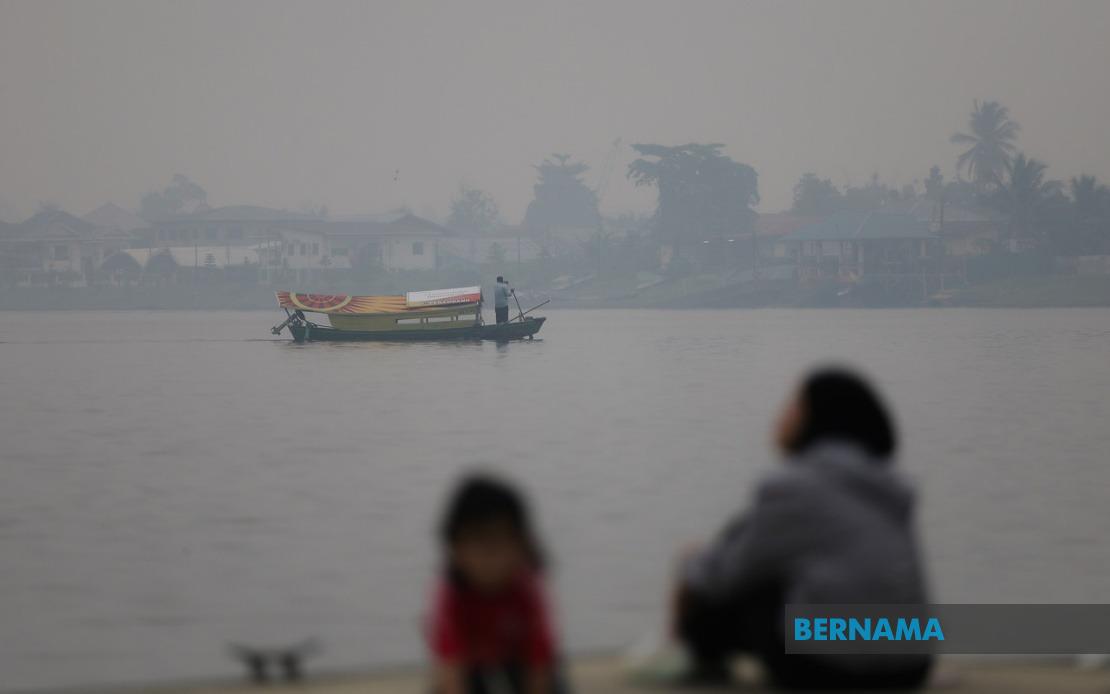
Malaysia has activated cloud seeding operations targeting haze-affected regions, with particular focus on areas recording Air Pollutant Index (API) readings above 150 and zones confronting acute water supply challenges due to falling dam levels. Deputy Prime Minister Datuk Seri Dr Ahmad Zahid Hamidi announced the multi-agency effort during a visit to the 2026 Malaysia Agriculture, Horticulture and Agrotourism Show (MAHA) in Serdang, underscoring the government's commitment to mitigating the dual crises of air quality degradation and water scarcity that have intensified across the nation's monsoon season.
The intervention represents a coordinated response mobilising the Malaysian Meteorological Department (METMalaysia) and the Royal Malaysian Air Force (RMAF) to engineer rainfall in strategic locations. Cloud seeding, a weather modification technique that introduces particles into clouds to stimulate precipitation, has emerged as a critical tool in Malaysia's environmental management arsenal, particularly as water reservoirs deplete during prolonged dry spells and regional haze episodes intensify air pollution levels to hazardous thresholds.
Currently, cloud seeding activities are concentrated in Putrajaya and surrounding federal territories, with the operations scheduled to expand into East Malaysia and northern peninsular states. Starting from September 3 to 5, teams will conduct seeding missions across Sarawak, Kedah, and Perlis, targeting zones where water security concerns are most acute and atmospheric conditions remain conducive to intervention. The staggered deployment reflects careful planning to allocate limited meteorological and aviation resources where they can generate maximum hydrological and environmental benefit.
The Deputy Prime Minister's remarks underscore a critical challenge that extends beyond immediate pollution concerns: Malaysia's water infrastructure faces mounting pressure from climate variability. By pursuing cloud seeding, the government seeks to replenish reservoirs that supply drinking water to millions while simultaneously reducing atmospheric pollutants that threaten public health and economic productivity. This dual-benefit approach acknowledges the interconnected nature of environmental crises in the tropical region, where dry seasons increasingly coincide with transboundary haze episodes originating from forest fires in neighbouring countries.
However, cloud seeding effectiveness depends entirely on meteorological preconditions often beyond operational control. As Datuk Seri Dr Ahmad Zahid Hamidi explained, the presence of cloud cover alone does not guarantee successful intervention; operators must continuously track cloud movement and atmospheric trajectories to ensure seeding efforts align with wind patterns carrying moisture-laden air masses toward target areas. This operational complexity means that despite deployment of sophisticated weather monitoring systems, outcomes remain probabilistic rather than guaranteed, a reality that shapes public expectations and policy planning.
Sarawak emerged as an immediate priority zone, with three monitoring stations recording hazardous air quality metrics on August 30. The Serian Police headquarters monitoring station registered the most severe readings at 412 on the Air Pollutant Index scale, indicating air quality conditions that trigger health advisories and may warrant activity restrictions. Samarahan followed with an API reading of 332, while Kuching recorded 304, both exceeding the 200 threshold that conventionally signals unhealthy air quality for sensitive population groups. Sri Aman, though registering a comparatively lower reading of 228, remained classified as experiencing very unhealthy atmospheric conditions according to the Department of Environment's Air Pollutant Index Management System (APIMS).
The API readings in Sarawak illustrate the geographic variability of transboundary haze pollution, a phenomenon that has plagued Southeast Asia episodically since the 1990s. Unlike uniform pollution sources, haze transmission depends on wind patterns, atmospheric pressure systems, and fire activity across multiple jurisdictions, making coordinated regional management exceptionally difficult. Malaysia's proactive cloud seeding approach implicitly acknowledges the limitations of purely domestic emissions controls and represents an adaptive strategy for regions where external pollution sources exceed local mitigation capacity.
For Malaysian readers in peninsular states, the implications extend beyond immediate air quality or water security. The deployment pattern suggests the government recognises that certain regions face compounded environmental stresses requiring emergency interventions. Northern states including Kedah and Perlis, scheduled for September cloud seeding operations, frequently experience elevated pollution during monsoon transitions when regional fire activity peaks and atmospheric circulation patterns concentrate haze over northern Malaysia and southern Thailand. Similarly, Sarawak's chronic haze vulnerability during dry seasons reflects its exposure to fire-prone regions across the Kalimantan border.
The integration of water security concerns with haze mitigation reflects broader recognition that environmental challenges in Malaysia increasingly manifest as cascading crises. Falling dam levels threaten electricity generation, agricultural irrigation, and domestic water supply simultaneously, while haze episodes exacerbate public health burdens and suppress economic activity. By deploying cloud seeding to address both concerns, the government signals that environmental policy must operate across multiple dimensions rather than treating air quality and water availability as separate domains.
Cloud seeding operations also carry implicit economic calculations. The costs of deploying aircraft, meteorological personnel, and coordination infrastructure are weighed against expenses associated with haze-induced health impacts, lost productivity, water rationing, and potential dam-triggered hydroelectric generation shortfalls. For a nation whose economy depends on reliable power supplies and water access, the investment in weather modification represents rational risk management, though public transparency regarding success metrics and resource allocation remains variable.
The announcement of expanded operations into September reflects anticipatory planning acknowledging seasonal patterns. Early September typically marks the transition into phases when atmospheric circulation patterns and fire activity in neighbouring regions align to create heightened haze vulnerability across the region. By positioning cloud seeding assets and personnel in advance, Malaysia attempts to maximise response capacity during the window when conditions favour successful intervention, though effectiveness ultimately depends on cooperation from meteorological forces beyond human manipulation.
For Malaysian stakeholders monitoring these developments, the cloud seeding initiative represents an adaptation to environmental realities that conventional regulatory approaches alone cannot address. While emissions controls, transboundary cooperation agreements, and alternative energy investments address underlying systemic drivers, cloud seeding provides immediate relief during acute episodes. This layered approach, combining long-term structural solutions with tactical emergency measures, increasingly characterises environmental governance across Southeast Asia as climate variability intensifies and regional interdependencies complicate unilateral action.

