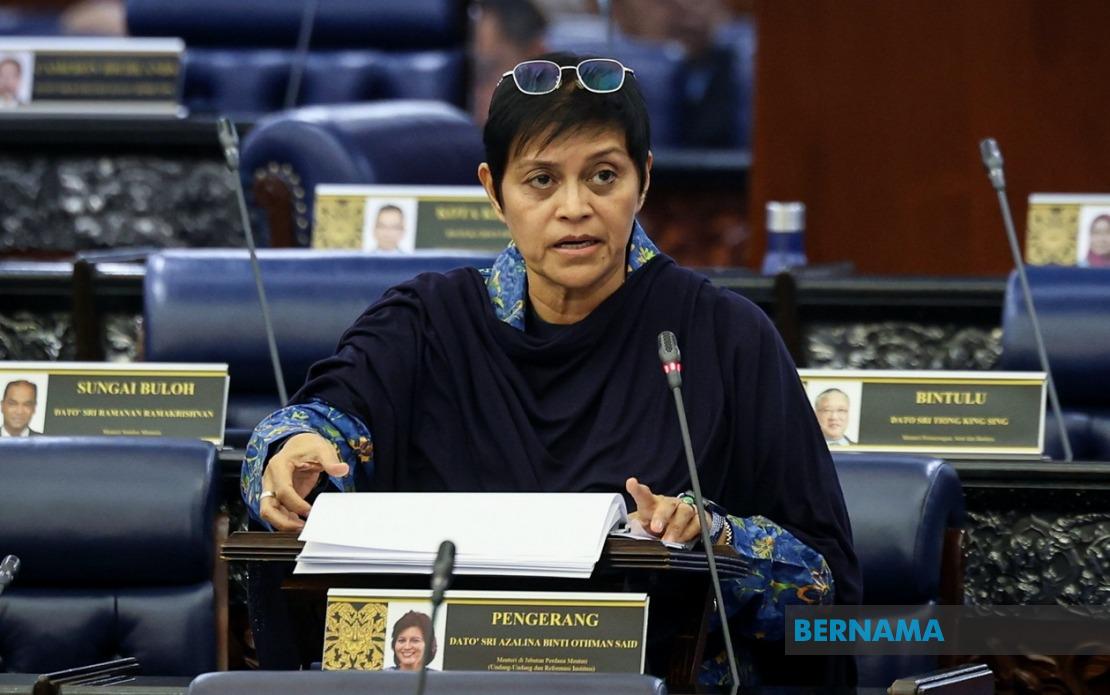
A landmark institutional reform affecting the structure of Malaysia's justice system moves forward this week as Parliament prepares to debate a comprehensive report on separating the positions of Attorney General and Public Prosecutor. The initiative, championed by Minister in the Prime Minister's Department (Law and Institutional Reform) Datuk Seri Azalina Othman Said, represents what officials characterise as a cornerstone of the MADANI Government's broader agenda to strengthen rule of law and democratic institutions across the country.
The Special Select Committee, which convened over seven sessions to develop its recommendations, has identified seven substantive reforms aimed at bolstering the independence and accountability of the Public Prosecutor's office. These proposals address longstanding concerns about institutional concentration of power and the need for greater transparency in prosecutorial functions, issues that have featured prominently in regional and international assessments of Malaysia's justice system.
At the heart of the proposed changes lies a fundamental restructuring of how Malaysia appoints its Public Prosecutor. Under the current framework, this position sits within the Attorney General's portfolio, creating what critics argue are potential conflicts of interest and gaps in oversight. The committee's recommendations seek to remedy this by establishing a process in which the Judicial and Legal Service Commission nominates a candidate, who would then be presented to Parliament's House Select Committee for formal scrutiny before the King appoints them on the commission's advice. Critically, this mechanism notably excludes direct involvement from the Prime Minister or Cabinet, a significant departure from existing arrangements.
The proposed seven-year fixed term, which cannot be renewed, represents another substantive safeguard designed to insulate the Public Prosecutor from political pressure during their tenure. This approach aligns with international best practices observed in Commonwealth jurisdictions and reflects growing recognition that prosecutorial independence requires structural protections beyond mere convention or goodwill between branches of government.
Integral to the reform package is the establishment of a comprehensive Code of Ethics specifically tailored for Public Prosecutors. Such a framework would formalise standards of conduct, decision-making criteria and accountability measures, creating documented expectations that extend beyond existing civil service regulations. This professionalisation of prosecutorial standards addresses concerns about consistency, fairness and public confidence in enforcement decisions that affect millions of Malaysians annually.
The government has also signalled its intention to pursue constitutional amendments to Article 145A, Clause 18 of the Federal Constitution to anchor these reforms in the fundamental law. This approach ensures that future governments cannot easily reverse the changes through ordinary legislation, embedding institutional independence within the constitutional architecture itself. The amendment process requires substantial parliamentary majorities, lending additional legitimacy and durability to the reforms.
From a Malaysian perspective, these changes carry significant implications for the country's trajectory as a functioning democracy. Malaysia's justice system has faced international scrutiny over questions of political impartiality in prosecutions, with various watchdogs noting concerns about selective enforcement and lack of institutional insulation from executive influence. By creating clearer separation of powers and introducing parliamentary oversight mechanisms, the proposed reforms signal an intent to address these vulnerabilities.
The mechanism for parliamentary involvement in the appointment process itself merits closer examination. Rather than merely requiring consent, Parliament's House Select Committee would conduct substantive scrutiny, allowing elected representatives to examine a candidate's qualifications, track record and judicial philosophy before recommendation. This represents a form of legislative accountability that has proven effective in other democracies in screening for conflicts of interest and ensuring public confidence in prosecutorial appointments.
Forward momentum on these reforms also reflects broader regional trends. Several Southeast Asian nations have undertaken similar institutional restructuring in recent years, seeking to strengthen judicial independence while maintaining democratic legitimacy. Malaysia's initiative places it among countries actively addressing the tension between prosecutorial effectiveness and safeguards against abuse of process. However, implementation challenges will test the government's commitment to institutional reform beyond the parliamentary approval stage.
The statement from Azalina emphasises that this represents more than mere administrative separation. Rather, officials frame it as foundational to building public confidence in the justice system itself. For Malaysian citizens and businesses, confidence in impartial prosecution and rule of law underpins contract enforcement, property security and fundamental rights protection. Institutional reforms that enhance perceived independence carry tangible benefits beyond symbolic gestures.
As Parliament prepares to debate and vote on the committee's recommendations, observers will monitor whether the reform achieves cross-party support. Constitutional amendments typically require two-thirds majorities, necessitating opposition cooperation. The nature of parliamentary debate may also reveal whether the proposed separation addresses concerns from various stakeholders including civil society, the bar association, and international observers who have advocated for strengthened prosecutorial independence.
Implementation will present another test of the government's commitment. Translating constitutional and legislative changes into institutional practice requires sustained political will, adequate resources and acceptance by existing institutions that may resist altered dynamics. The Public Prosecutor's office itself will need to adapt to new accountability mechanisms and oversight structures while maintaining prosecutorial effectiveness in complex criminal investigations.

