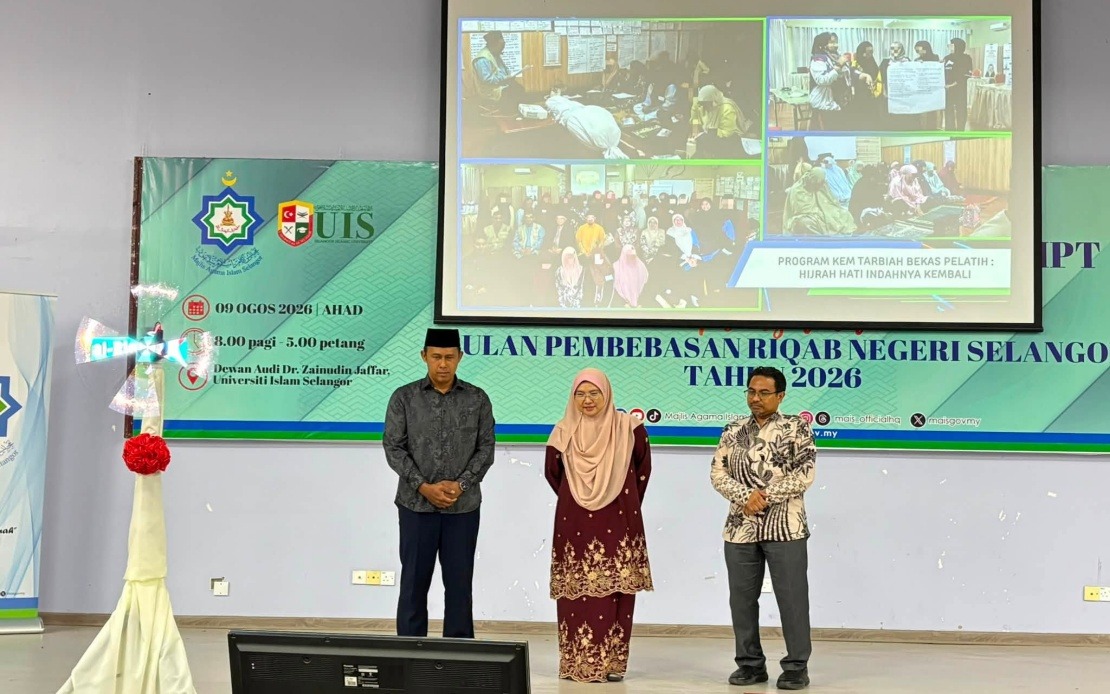
The Selangor Islamic Religious Council (MAIS) has demonstrated substantial commitment to addressing social welfare through its latest zakat distribution figures, channelling more than RM17 million during the previous financial year to support vulnerable populations requiring comprehensive rehabilitation and counselling services. The recipients, numbering 13,945 individuals classified as asnaf riqab, represent a significant segment of Selangor's community dealing with multifaceted challenges spanning substance abuse, identity concerns, and spiritual disorientation.
The infrastructure supporting this initiative reflects MAIS's institutional approach to the problem. The council operates three dedicated rehabilitation homes alongside 24 additional riqab rehabilitation facilities across Selangor, creating a network designed to provide continuity of care from initial intervention through long-term reintegration. These facilities receive funding through direct rehabilitation grants while also benefiting from courses, training programmes, professional counselling services, and ongoing welfare assistance, indicating a multi-layered response rather than one-dimensional aid.
Momentum has accelerated into the current year, with MAIS reporting that between January and June alone, approximately 1,656 asnaf riqab individuals accessed support mechanisms totalling RM4.1 million in zakat resources. This pace suggests the annual distribution could potentially exceed previous allocations, demonstrating either growing demand or enhanced outreach capacity. The mid-year figures indicate that rehabilitation and guidance remain central to MAIS's operational philosophy, with assistance extended through mentorship channels rather than purely financial transfers.
A particularly noteworthy dimension involves MAIS's appointment of 213 Al Riqab guides, individuals trained to provide spiritual direction and practical support to those navigating redemption pathways. These guides function as bridge figures between institutional programmes and individual recovery journeys, offering personal accountability and culturally grounded mentorship. The investment in human capital for guidance services underscores recognition that material resources alone cannot address the psychological and spiritual dimensions of the challenges faced by asnaf riqab populations.
The definition of asnaf riqab, formally established through a 2012 fatwa, encompasses individuals grappling with drug addiction, gender identity and sexual orientation matters, and those whose religious practice has fundamentally diverged from Islamic teachings. This broad categorisation reflects the council's understanding that social marginalisation and spiritual disconnection often intersect, requiring integrated intervention rather than siloed responses. The term itself translates concern about individuals perceived as having abandoned prescribed paths, with rehabilitation framed through Islamic moral frameworks.
MAIS has launched the Riqab Liberation Month Campaign 2026, operating throughout August to cultivate public understanding and catalyse community involvement in supporting asnaf riqab populations. The campaign architecture includes structured forums addressing root causes, information dissemination talks designed to shift public perception, spiritual guidance programmes, dedicated information kiosks, celebration events at rehabilitation facilities, and a dedicated Selangor Riqab Seminar. This comprehensive scheduling suggests intent to move beyond awareness into actionable community engagement and systemic understanding.
For Malaysian policymakers and religious authorities observing developments in Selangor, the MAIS model presents instructive elements regarding how faith-based institutions can mobilise charitable resources toward marginalised populations. The allocation scale—RM17 million annually—indicates zakat collection sufficiently robust to fund meaningful social infrastructure, though comparable figures from other state Islamic councils remain unclear. The question of whether other Malaysian states replicate similar programmes or devote proportional resources to equivalent populations remains an important policy consideration for national social cohesion.
The placement of LGBT-related issues alongside addiction and religious deviation within the asnaf riqab framework reflects particular theological and social perspectives that diverge from secular approaches to identity and public health. This framing shapes how affected individuals access services—through rehabilitation narratives emphasising correction and return to orthodoxy rather than harm reduction or affirmation models employed in other contexts. Understanding this distinction is essential for evaluating the effectiveness and appropriateness of interventions from diverse ethical standpoints.
Community participation forms the campaign's backbone, with MAIS explicitly encouraging civil society, businesses, non-governmental organisations, and individual citizens to contribute expertise and resources toward outreach objectives. This collaborative mobilisation reflects understanding that institutional capacity alone cannot address populations experiencing profound isolation and stigma. The emphasis on public awareness simultaneously aims to reduce social discrimination while encouraging family and community reintegration of individuals completing rehabilitation.
Digital accessibility figures prominently in MAIS's engagement strategy, with potential participants and concerned community members directed toward social media platforms and the council's website for campaign information and ongoing programme updates. This digital-first approach recognises that information-gathering increasingly occurs through non-traditional channels, particularly among younger demographics who may themselves be asnaf riqab or family members seeking confidential resource access. The approach also enables MAIS to document reach and engagement metrics previously difficult to capture through conventional communication.
For Malaysian readers, the MAIS initiative represents a localised instantiation of broader Islamic charitable principles applied to contemporary social vulnerabilities. The scale of numbers involved—nearly 14,000 individuals annually—suggests that asnaf riqab populations constitute meaningful demographic segments experiencing material deprivation, health challenges, and social exclusion. The investment reflects institutional prioritisation of these groups despite potential controversy surrounding certain categorisations, demonstrating that religious authorities in Malaysia increasingly recognise social welfare obligations extending beyond traditional zakat beneficiary classifications.

