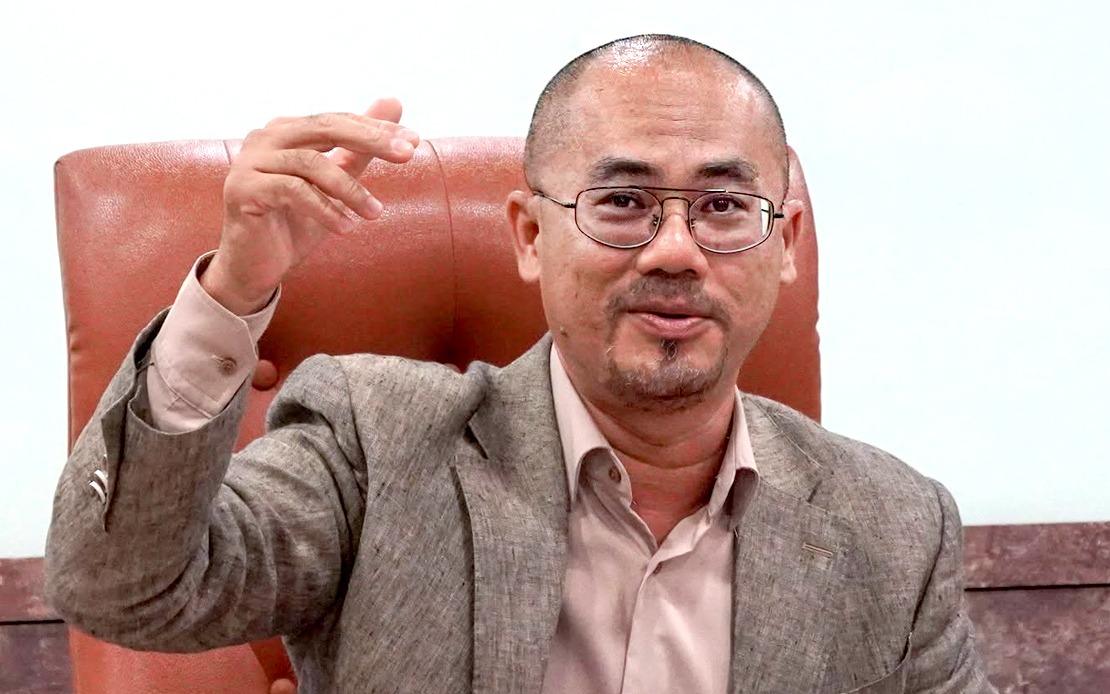
The Perak Islamic Religious and Malay Customs Council (MAIPk) has moved to quash viral social media allegations that it forcibly evicted traders from a commercial site in Ipoh, insisting that recent water supply disruptions stem from long-standing infrastructure problems rather than business closure orders. Speaking after the 2026 Perak State Mosque Committee Convention at the Casuarina Convention Centre, chief executive officer Syamsul Hazeman Md Salleh explained that the council issued a clarification notice to address misconceptions circulating on digital platforms, where a Threads user had accused MAIPk of cutting water without formal notice to vacate.
The underlying issue involves a deteriorating main water pipeline serving the commercial premises on Jalan Panglima Bukit Gantang Wahab, which has accumulated roughly RM100,000 in unpaid utility charges. Syamsul Hazeman emphasised that this debt did not originate from traders' consumption patterns, as individual businesses paid according to their actual water usage. Instead, the arrears relate to systemic problems within the main distribution line feeding the entire site, a liability MAIPk inherited when the council assumed land ownership in 2024. The discovery of these pre-existing complications came only after the transfer was completed, leaving MAIPk to grapple with a financial and logistical burden that exceeded its initial expectations.
During a July 14 engagement session with affected traders, MAIPk representatives outlined the necessity for a temporary water supply suspension to enable repair works and address the mounting debt. Syamsul Hazeman stressed that this operational measure was not tantamount to an eviction directive, and the subsequent notice merely sought to establish MAIPk's institutional position and shield the council from potential legal liability or unfounded accusations. The distinction matters considerably in Perak's commercial environment, where rumours of forced closures can rapidly undermine business confidence and create unnecessary panic among tenants.
The financial constraints facing MAIPk further complicate resolution efforts. According to Syamsul Hazeman, the council cannot legally deploy zakat or waqf funds—both reserved for charitable and religious purposes under Islamic law—to settle outstanding utility arrears classified as operational debts. This restriction leaves MAIPk in a precarious position, unable to deploy its core revenue sources to remedy an infrastructure crisis. Consequently, the council has initiated discussions with the Perak Water Board to negotiate a pathway toward debt settlement, recognising that the problem extends beyond MAIPk's administrative and fiscal capacity.
The complexity of the situation reflects broader challenges faced by religious institutions managing inherited commercial properties across Malaysia. When organisations acquire land or buildings encumbered with pre-existing liabilities, particularly infrastructure-related debts, the transition can prove unexpectedly costly and administratively demanding. MAIPk's experience underscores the importance of comprehensive due diligence during property acquisitions, especially when religious councils assume stewardship of sites previously managed by other entities.
Syamsul Hazeman indicated that MAIPk is simultaneously engaging Perak's state government to secure assistance and explore collaborative solutions. He acknowledged that resolving the outstanding water charges will require time and coordination across multiple stakeholders, but expressed cautious optimism that a viable arrangement could eventually materialise. Once the debt matter reaches resolution, MAIPk intends to proceed with necessary repair works and subsequently establish fresh rental contracts with traders, providing them with updated lease terms reflecting the improved infrastructure.
Looking ahead, the site's future trajectory remains uncertain, as MAIPk and state authorities are exploring the feasibility of constructing a Perak Islamic Religious Department Complex at the location. Syamsul Hazeman acknowledged that should this development project advance, traders would be required to relocate, though the timeframe for such construction remains indefinite and contingent upon government budgeting and planning priorities. This longer-term uncertainty adds another layer of concern for the business community currently operating at the premises, who face both immediate water supply challenges and potential displacement if the complex project proceeds.
The social media controversy highlights how institutional communications gaps can rapidly transform operational challenges into public relations crises. MAIPk's decision to issue a formal clarification demonstrates the council's recognition that allowing unverified allegations to circulate unchecked can damage stakeholder relationships and erode public trust. For traders operating in Malaysia's religious and commercial spaces, clear communication regarding infrastructure problems, financial constraints, and future development plans is essential for maintaining stability and planning business continuity.
Meanwhile, the situation raises pertinent questions about how utility debts inherited by institutions should be managed and whether mechanisms exist for burden-sharing between property acquirers and previous operators. The RM100,000 arrear at this Ipoh site reflects a broader pattern where infrastructure deficiencies frequently outlast individual tenants or administrative regimes, creating cascading financial and operational consequences. As MAIPk navigates this quandary, its experience may prompt other Malaysian religious and community institutions to scrutinise property acquisition procedures and establish clearer protocols for identifying and addressing inherited liabilities before assuming formal ownership.
For Ipoh's business community and the broader trading sector in Perak, the unfolding resolution of this matter will likely serve as a test case for institutional transparency and collaborative problem-solving. The council's commitment to working through official channels with both the Perak Water Board and state government, rather than pursuing unilateral enforcement actions, suggests a preference for negotiated settlement over confrontation. However, traders will require regular updates and concrete timelines to regain confidence, particularly given the economic impact of prolonged water supply uncertainties on their operational viability.

