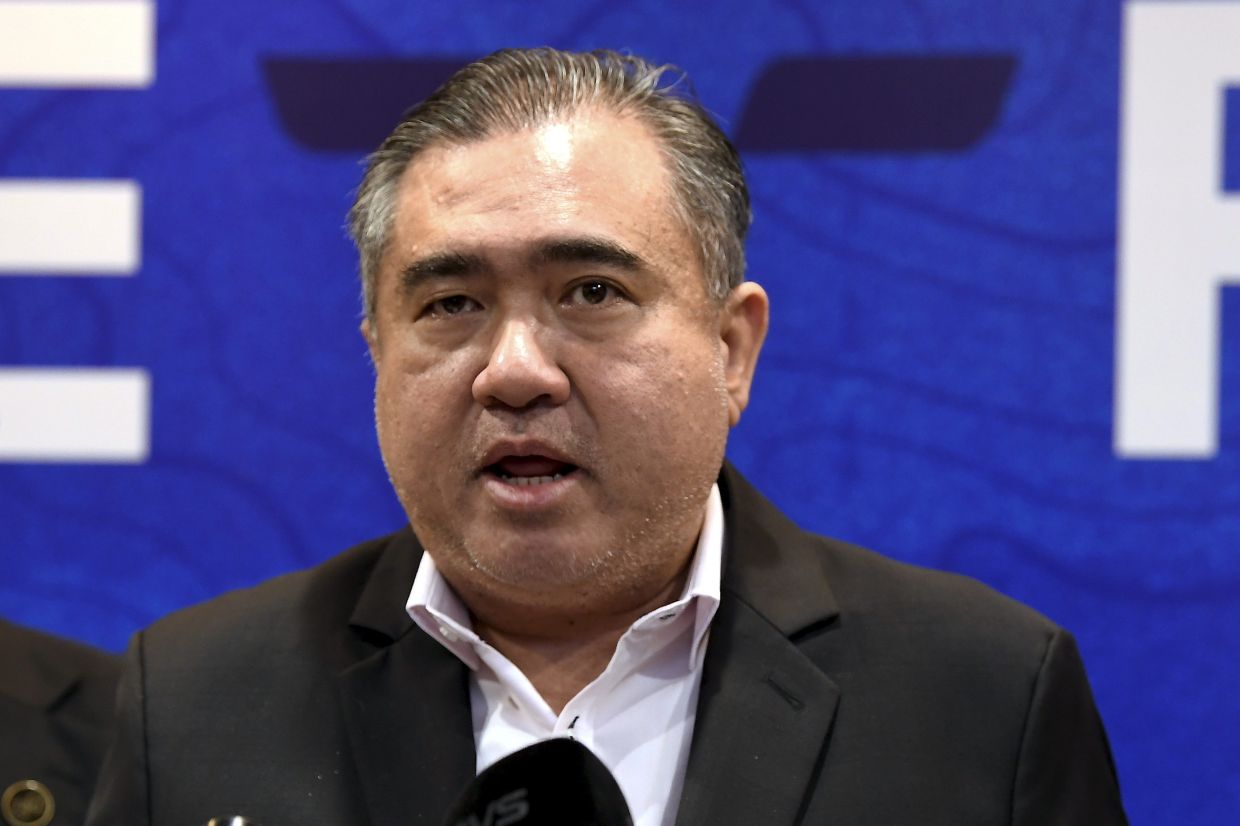
Malaysia Airports Holdings Berhad and Japanese real estate and logistics specialist Mitsui Fudosan have joined forces to construct a RM80 million air cargo logistics complex at Subang Airport, marking a significant pivot in how the country's aviation hubs leverage their land assets through strategic international partnerships. The groundbreaking ceremony, held on Thursday, underscores the government's intensifying focus on modernising Malaysia's air cargo infrastructure as Southeast Asia's supply chains become increasingly complex and competitive.
Transport Minister Anthony Loke Siew Fook framed the partnership as part of MAHB's deliberate strategy to unlock value from its extensive airport real estate by collaborating with experienced logistics developers. He specifically highlighted Mitsui Fudosan's proven track record in Japan, where the company has successfully built and operated advanced logistics complexes at Haneda Airport, one of Asia's busiest aviation hubs. By bringing this expertise to Malaysia, Loke suggested, the arrangement would substantially reduce operational and developmental risks for Malaysia Airports while ensuring best-practice standards in facility management and tenant services.
The venture operates through MFMA Industrial Sdn Bhd, a dedicated joint venture established between Mitsui Fudosan (Asia) Malaysia Sdn Bhd and Malaysia Airports (Subang) Sdn Bhd. This structural arrangement allows each partner to contribute distinct capabilities: Mitsui Fudosan brings global logistics expertise and development acumen, while MAHB provides land tenure, airport operational knowledge, and access to its existing customer base. The collaboration reflects a broader trend across Southeast Asian airports of seeking foreign partners to upgrade infrastructure as regional aviation markets mature and customer expectations rise.
Situated on a 1.78-hectare parcel within the established Subang Aerotech Park, the facility will occupy approximately 254,420 square feet of gross floor area. Its design emphasises flexibility through multiple tenancy configurations, accommodating diverse operational needs ranging from maintenance and repair operations to specialised logistics and warehousing. This adaptable approach addresses a critical gap in the Klang Valley's aerospace ecosystem, where numerous operators currently face spatial constraints and lack modern, purpose-built facilities that meet contemporary standards for temperature control, security, and handling protocols.
The timing of this development aligns with the government's broader vision for transforming Malaysia's air cargo competitiveness across multiple airports. Loke revealed that Penang currently dominates Malaysia's air cargo landscape, handling approximately 75 per cent of the nation's total throughput, a dominance rooted in its position as Southeast Asia's semiconductor manufacturing epicentre. However, this concentration represents both an opportunity and a vulnerability—opportunity because it demonstrates strong demand for air cargo services, but vulnerability because dependency on a single gateway leaves the system exposed to disruptions.
To address this geographic imbalance, the ministry is pursuing a multi-airport strategy. Kuala Lumpur International Airport is being repositioned as ASEAN's regional air cargo hub through a collaborative arrangement with China, a development that could fundamentally reshape intra-regional trade patterns. Simultaneously, Kota Kinabalu International Airport is undergoing transformation with support from the Sabah state government, which plans to repurpose Terminal 2 as a dedicated air cargo facility. These parallel initiatives suggest the government views air cargo diversification as essential to maintaining Malaysia's competitiveness as regional supply chains increasingly bypass traditional hubs.
The Subang project specifically targets the aerospace and aviation maintenance ecosystem that has gradually developed in the Klang Valley. The site's proximity to established operators, skilled workforce clusters, and existing transportation networks makes it an attractive location for companies offering maintenance, repair and overhaul services, as well as logistics firms supporting the broader aerospace supply chain. By providing modern, compliant facilities with proper handling infrastructure, the complex removes a significant barrier to expansion for companies currently constrained by inadequate local options.
Construction is scheduled to proceed methodically, with completion targeted for the third quarter of 2027 and operational launch in the final quarter of that year. This timeline allows sufficient runway for leasing activities and operator preparation, reducing the risk of vacant space that has plagued some airport logistics developments. The phased approach also permits learning from early tenant experiences to inform operational refinements before full-scale commercial operations commence.
The presence of Embassy of Japan representatives at the ceremony, alongside MAHB managing director Datuk Mohd Izani Ghani and Mitsui Fudosan (Asia) Malaysia managing director Masayoshi Saito, underscores Japan's strategic interest in Malaysia's logistics infrastructure modernisation. This reflects broader Japanese corporate engagement across Southeast Asia, where Japanese firms dominate advanced manufacturing, automotive supply chains, and electronics production—all sectors heavily dependent on efficient air cargo networks.
For Malaysia's aviation sector, the Subang facility represents a vote of confidence from an established international developer. Mitsui Fudosan's decision to invest alongside MAHB signals that the company perceives genuine commercial opportunity in Malaysia's air cargo market, despite competitive pressures from Thailand, Singapore, and Vietnam. The project also catalyses activity within Subang Aerotech Park more broadly, potentially attracting complementary businesses and reinforcing the cluster's position as a genuine aerospace ecosystem rather than merely a geographic collection of operators.
The initiative ultimately reflects a maturation in how Malaysia's airports approach their broader economic role. Rather than functioning simply as transportation nodes, modern airports increasingly serve as real estate and logistics platforms capable of generating substantial non-aviation revenues. By partnering with experienced operators and accepting a minority stake, MAHB gains development certainty and operational expertise while maintaining asset control—a model that could extend to other underutilised airport lands across the country.

