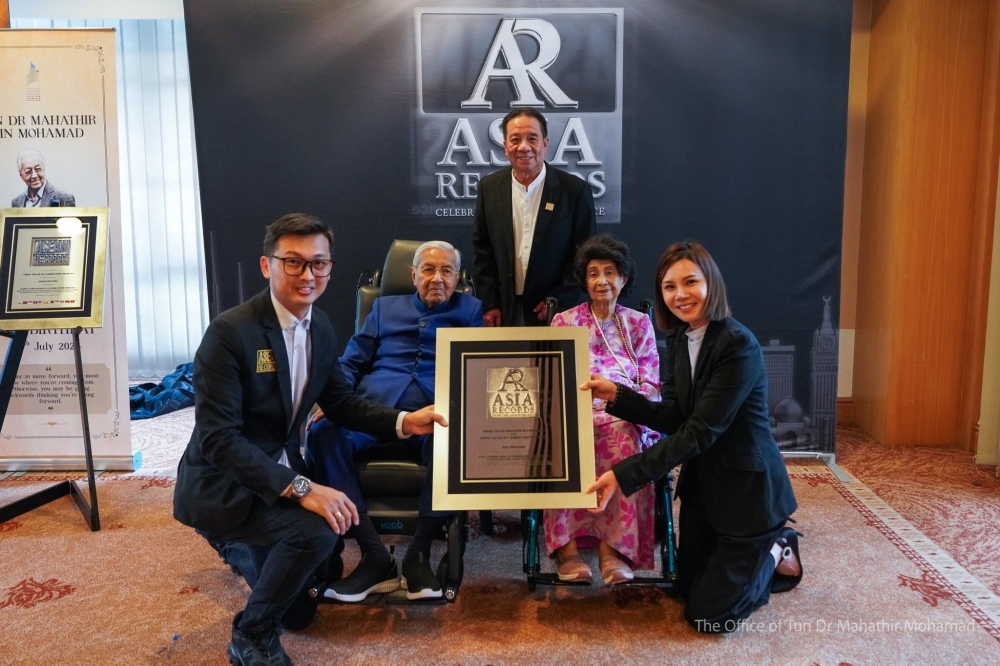
Malaysia's longest-serving former prime minister Tun Dr Mahathir Mohamad and his wife Tun Dr Siti Hasmah Mohd Ali have entered the record books with three Guinness World Records following the couple's simultaneous milestone of reaching 100 years of age, cementing their place in the nation's contemporary history and underscoring the nation's extended longevity achievements in the modern era.
The recognition comes as both spouses celebrated their centennial birthdays, a feat that speaks to advances in healthcare and living standards in Malaysia over their lifetimes. The records acknowledge not only their individual longevity but also the significance of their shared journey spanning more than seven decades of marriage. Guinness World Records, the international authority on record verification, formally recognised the couple's achievement, adding to Malaysia's growing roster of distinguished world record holders.
Tun Dr Mahathir's tenure as Prime Minister from 1981 to 2003, and his subsequent return to office from 2018 to 2020, shaped Malaysia's political and economic landscape across multiple decades. His influence extended beyond domestic policy into regional affairs, establishing Malaysia as a significant voice in Southeast Asian diplomacy and international discourse. The recognition of his longevity places him among global leaders who have maintained active engagement in public life well into their advanced years, a distinction that few politicians achieve.
Tun Dr Siti Hasmah, meanwhile, carved her own legacy as a physician and advocate for women's healthcare in Malaysia. Her contributions to the medical profession and her role supporting numerous charitable initiatives have garnered respect across Malaysian society. The couple's partnership has been a cornerstone of their respective achievements, with each supporting the other through Malaysia's transformative periods of development and modernisation.
The achievement of reaching 100 years together holds cultural and social significance within Malaysia's context. In a nation where the elderly are traditionally revered, the couple's milestone reflects both the benefits of modern medicine and the value of active engagement in life's pursuits. Reaching centennial age while maintaining cognitive sharpness and public engagement represents a rare accomplishment that resonates across the population.
The three records set by the couple recognise dimensions of their achievement that Guinness deemed noteworthy enough for formal verification and inclusion in its prestigious registry. Such recognitions are typically granted only when individuals or couples demonstrate exceptional circumstances that distinguish them from the broader population. The specific nature of these records underscores the singularity of Mahathir and Siti Hasmah's situation within the context of regional leadership histories.
For Malaysia, the achievement contributes to the nation's growing profile in global longevity statistics. Southeast Asian countries have increasingly attracted attention from longevity researchers and health economists examining the factors that contribute to extended life expectancy. Malaysia's healthcare infrastructure, dietary practices, and social support systems have all played roles in enabling citizens to reach and surpass the century mark in better health than previous generations experienced.
The recognition also speaks to evolving discussions about aging populations in developed and developing nations alike. As Malaysia's demographic profile shifts toward an older society, the experiences of citizens who have lived through the nation's entire modern period become valuable repositories of historical perspective and lived experience. Tun Dr Mahathir's reflections on Malaysia's journey from post-independence nation to regional economic player offer insights that younger generations find instructive.
Beyond the statistical achievement, the couple's reaching 100 years invites reflection on themes of longevity, purpose, and continued relevance in public discourse. Tun Dr Mahathir has remained a commentator on contemporary political developments even in his centennial years, maintaining an active voice in debates affecting the nation. This continued engagement challenges stereotypes about aging and demonstrates that advanced age need not diminish intellectual vigour or public contribution.
The Guinness World Records achievement represents formal international recognition of what many Malaysians already acknowledged: that Tun Dr Mahathir and Tun Dr Siti Hasmah occupy distinctive positions in the nation's historical narrative. Their journey spans the entire period of Malaysia's independent statehood, and their perspectives on how the nation has evolved carry weight and authority earned through direct experience.
For the broader Southeast Asian region, the recognition of a former ASEAN leader's remarkable longevity carries subtle diplomatic undertones. It underscores the region's growing prosperity and improving health outcomes, even as it personalises discussions about leadership transitions and the changing role of elder statesmen in political culture. The couple's achievement serves as a data point in the larger story of regional development and modernisation.

