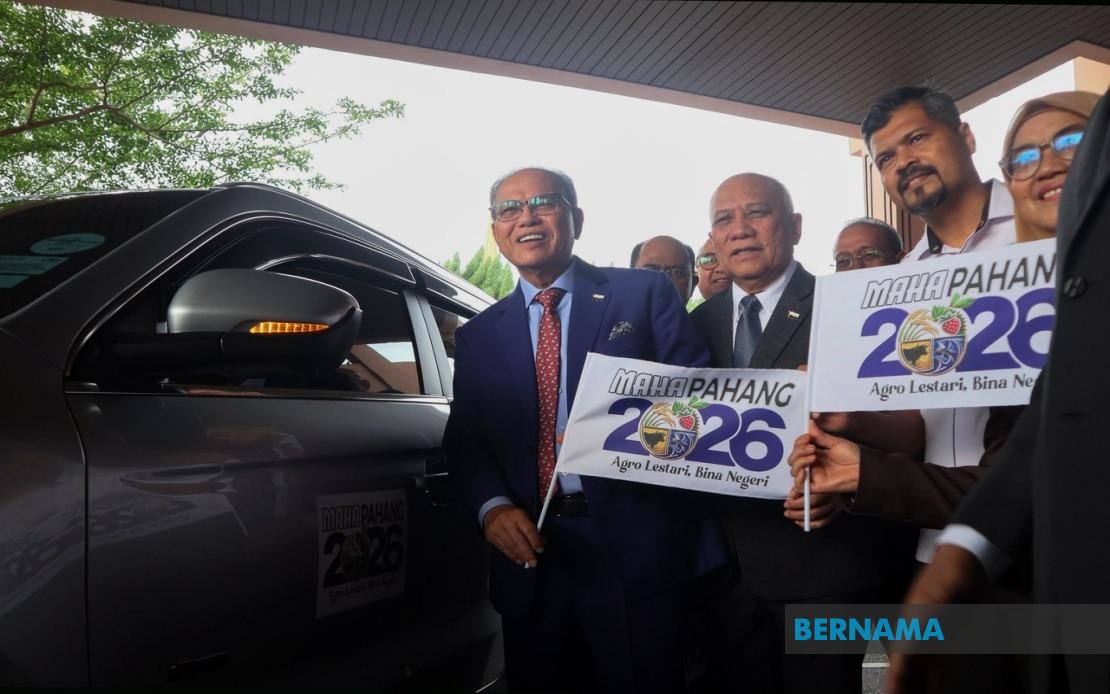
Pahang's major agricultural showcase, MAHA 2026, is gearing up to become a significant draw for the state's farming community and the general public, with organisers projecting it will welcome over 100,000 visitors across its four-day duration. Menteri Besar Datuk Seri Wan Rosdy Wan Ismail unveiled these ambitions while flagging off a convoy of 20 government vehicles from the Bera District and Land Office, signalling the official launch of promotional activities for the event.
Scheduled to run from July 30 to August 2 at Dataran Raub, the exhibition will feature approximately 100 entrepreneurs showcasing their agricultural products and services. Beyond merely serving as a marketplace, MAHA 2026 represents a concerted effort by the state administration to galvanise the agriculture sector, highlight innovation in farming practices, and create a platform where both established and emerging businesses can connect directly with consumers. The selection of Dataran Raub as the venue places the event in a strategically significant agricultural region, potentially drawing participants and visitors from across Pahang and neighbouring states.
Financial projections indicate the four-day programme is targeting RM1.3 million in overall sales, a benchmark that underscores the state government's confidence in the market potential of such an event. This figure reflects not only transactions in livestock and farm produce but also ancillary activities such as food stalls, agricultural equipment displays, and educational seminars. For small and medium-sized enterprises within Pahang's agricultural sector, the event provides a concentrated opportunity to reach a substantial customer base without the overhead of year-round retail operations.
To incentivise attendance and boost visitor numbers, the Pahang state government is rolling out an aggressive lucky draw programme designed to appeal to a wide demographic. The headline prize of a Wagyu cow represents a particularly clever offering, simultaneously promoting premium livestock farming in the state while providing a tangible reward with inherent agricultural value. The inclusion of a Perodua Bezza as a second major prize broadens the appeal beyond agricultural stakeholders to encompass the general public, effectively turning MAHA 2026 into a community-wide event rather than a niche industry gathering.
The prominence of Agriculture and Food Security Minister Datuk Seri Mohamad Sabu in the planning and execution of this event reflects the federal government's investment in state-level agricultural initiatives. This multi-level engagement—combining federal oversight with state administration and local entrepreneur participation—demonstrates a structured approach to developing Malaysia's agricultural capacity beyond the Klang Valley and traditional production heartlands. Wan Rosdy's specific acknowledgement of the minister and committee leadership highlights the collaborative frameworks now being deployed to strengthen rural economies.
MHA events have historically served as vital information hubs for farmers seeking knowledge about improved crop varieties, sustainable farming techniques, and market opportunities. The 2026 iteration is positioned to continue this educational mandate, offering visitors access to experts, demonstration plots, and comparative displays of agricultural innovations. For a state like Pahang, which possesses significant agricultural potential but faces challenges in knowledge dissemination and technology adoption, such structured exhibitions function as valuable bridges between research institutions and farming communities.
The venue selection and timing warrant consideration in the broader context of Pahang's agricultural calendar. July and August represent a transition period between monsoon seasons, making outdoor exhibitions feasible while potentially capturing farmers preparing for upcoming planting cycles. This timing allows participants to incorporate information gathered at MAHA 2026 directly into their production planning, enhancing the practical value of the event beyond mere commercial transactions.
For Malaysian agribusiness entrepreneurs, MAHA 2026 represents an opportunity to gauge market demand, test product positioning, and establish customer relationships in a concentrated setting. The participation of 100 entrepreneurs suggests the state government has successfully mobilised its business community, a prerequisite for any exhibition to achieve meaningful commercial outcomes. Competition among vendors should theoretically drive pricing competitiveness and product quality improvements, benefiting consumers while creating a dynamic marketplace atmosphere.
The convoy dispatch ceremony itself carries symbolic weight, transforming abstract promotional plans into visible civic activity. By mobilising multiple government departments and agencies, the state administration signals comprehensive institutional support for the event, potentially encouraging private sector participation and community enthusiasm. Such ceremonial launches, while sometimes dismissed as mere protocol, effectively communicate governmental commitment to regional stakeholders and media audiences.
The projections of 100,000 visitors position MAHA Pahang 2026 among significant state-level agricultural events in Malaysia. Achievement of these targets would validate the investment in planning and marketing, while establishing the event as a recurring fixture in Pahang's economic calendar. The commercial targets and visitor projections suggest organisers have conducted baseline research on similar events, lending credibility to these figures whilst also establishing clear benchmarks against which the 2026 edition's success will be measured.
Looking beyond immediate commercial metrics, MAHA 2026 potentially contributes to Pahang's broader rural development trajectory. Agricultural exhibitions strengthen supply chains, facilitate knowledge transfer, and provide visibility to farming communities that might otherwise remain disconnected from urban consumer markets. For a state seeking to balance resource extraction industries with sustainable agricultural development, such initiatives represent strategic investments in economic diversification and rural prosperity.

