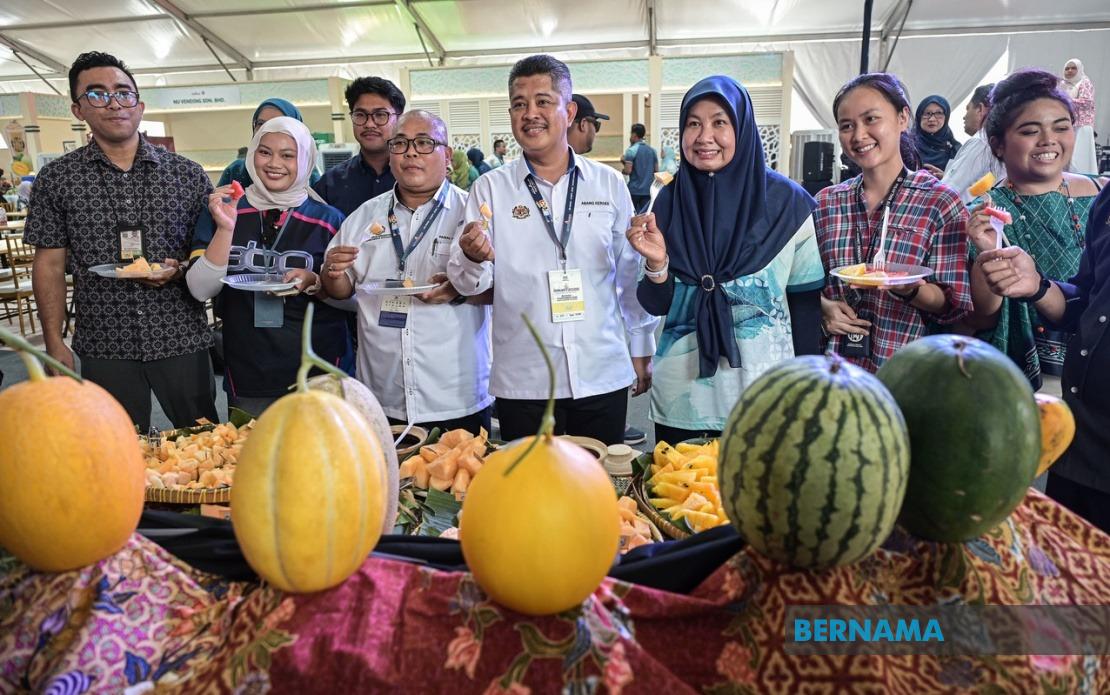
Malaysia's horticulture industry is poised to mark a significant milestone tomorrow with the unveiling of a specially developed melon variety at the opening ceremony of the Malaysia Agriculture, Horticulture and Agrotourism Exhibition (MAHA) 2026. The new fruit has been designated as the symbolic centerpiece of this edition of the biennial showcase, reflecting the sector's commitment to innovation and consumer-focused agricultural development. Minister of Agriculture and Food Security Datuk Seri Mohamad Sabu will officiate the formal launch and announce the melon's official name during tomorrow evening's ceremony at the Malaysia Agricultural Expo Park Serdang (MAEPS).
The journey to this moment represents a substantial investment in domestic agricultural research and development. FAMA, in partnership with local entrepreneurs, invested three years of collaborative effort to refine this melon variety, demonstrating the institutional capacity within Malaysia's farming sector to respond to evolving market dynamics. This timeline reflects the rigorous testing and refinement required to ensure the product meets both quality benchmarks and commercial viability standards necessary for successful market entry.
FAMA chairman Abang Ahmad Kerdee Abang Masagus emphasized that the symbolic importance of a flagship fruit cannot be understated for an agricultural festival of MAHA's stature. The presence of such an icon strengthens the event's identity and provides a tangible focal point for celebrating national agricultural achievements. By selecting a melon as the festival's emblem, organizers are placing emphasis on the horticulture segment, which continues to be crucial for diversifying Malaysia's agricultural portfolio beyond traditional commodities.
The new variety embodies a strategic response to documented consumer preferences within the domestic market. The melon achieves a Brix sweetness concentration level of 18, a measurement that reflects sugar content and overall palatability. This specification positions it competitively against existing market offerings, which typically register lower sweetness readings. Additionally, the flesh demonstrates a notably crunchier texture profile compared to conventional melons currently available in retail environments, addressing quality expectations among Malaysian consumers who have become increasingly discerning about produce characteristics.
The miniaturized format represents perhaps the most commercially innovative aspect of this development. Weighing approximately 1.3 kilogrammes each, the melons are substantially smaller than standard varieties, aligning with the household consumption patterns prevalent in urban Malaysia where single and nuclear family structures dominate. The distinctive netting pattern adorning the skin provides visual differentiation in the marketplace, offering farmers and retailers a branding advantage. At an anticipated retail price of approximately RM15 per unit, the fruit targets the ready-to-eat convenience segment, appealing to time-pressed consumers seeking quality produce without excessive portion sizes or waste concerns.
FAMA director-general Faisal Sulaiman noted that market research conducted throughout the three-year development cycle provided crucial insights into shifting consumer behavior. The preference for smaller household-sized portions reflects broader demographic and lifestyle trends across Southeast Asia, where urbanization and changing family structures have fundamentally altered purchasing patterns. This mini-melon directly addresses that market gap, offering practical advantages including enhanced portability, maintained freshness throughout consumption, and consistent sweetness delivery from the initial bite to completion.
The exhibition itself will showcase the scale of Malaysia's melon sector capabilities. FAMA intends to supply over 150,000 melon units representing approximately 100 local and international varieties throughout the ten-day festival period running from today until Sunday. This substantial volume provides both an educational platform for visitors to appreciate melon diversity and a direct sales channel for participating farmers and entrepreneurs. The aggregated supply demonstrates that even as new premium varieties are introduced, the sector maintains capacity to present comprehensive market options.
The broader significance extends beyond a single fruit launch. This initiative exemplifies how FAMA and local entrepreneurs collaborate to strengthen the entire value chain of Malaysia's agri-food sector. By developing products specifically calibrated to domestic consumer preferences rather than simply importing established international varieties, the initiative supports local farmer incomes and entrepreneurial ventures. The systematic marketing approach outlined by festival organizers suggests a recognition that innovation alone is insufficient; successful agricultural development requires coordinated strategies linking production, quality assurance, and market positioning.
MAHA 2026 itself represents a biennial institutional platform of considerable importance within Malaysia's agricultural calendar. The festival encompasses agrotech exhibitions showcasing technological advancement, state-by-state pavilions highlighting regional agricultural character, and farm-direct sales channels connecting producers with consumers. Participation from hundreds of local and international entrepreneurs transforms MAHA into more than a promotional event; it functions as a marketplace where industry trends crystallize and future directions become apparent.
For Malaysian consumers, the new melon variety offers concrete evidence of domestic horticultural innovation. Rather than passively accepting imported produce standards, the sector has invested in understanding and serving local preferences. The combination of superior sweetness, enhanced texture, convenient sizing, and accessible pricing creates a compelling value proposition. For regional observers, the development signals that Southeast Asian agricultural sectors can compete effectively in specialty produce markets by focusing on consumer intelligence and targeted product development rather than pursuing scale alone.
The economic implications merit careful consideration. Small-scale to medium-scale farmers throughout Malaysia's key agricultural regions stand to benefit from adoption of this commercially validated variety. The established market price point and documented consumer demand reduce the typical risk factors associated with new crop adoption. Regional entrepreneurs collaborating with FAMA gain access to research infrastructure and marketing support that would prove prohibitively expensive if pursued independently. This model of public-private research partnership potentially offers a template for developing other agricultural innovations addressing specific Malaysian market conditions.

