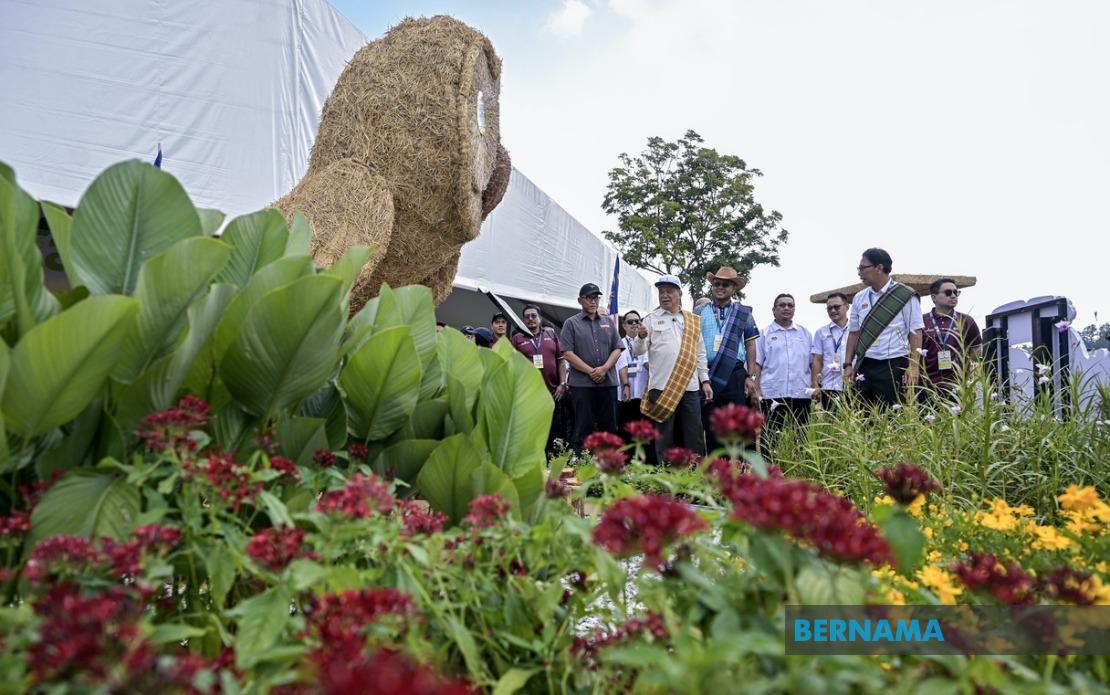
Malaysia's premier agricultural showcase has demonstrated robust consumer appetite in its opening phase, with MAHA 2026 recording 1.8 million visitors and generating nearly RM6 million in sales across its first three days of operation. Agriculture and Food Security Minister Datuk Seri Mohamad Sabu disclosed the figures following his tour of the Malaysia Agro Exposition Park Serdang (MAEPS) on August 31, underscoring the exhibition's early commercial success and drawing power among Malaysian farmers, agribusiness operators, and the general public seeking agricultural products and services.
The scale of attendance has created considerable logistical strain on the exhibition grounds, with 184,000 vehicles navigating entry and exit points during the same period. This vehicular throughput reflects both the exhibition's appeal across the nation and the infrastructural challenges posed by concentrating such high foot traffic within a defined venue. The vehicle count serves as a reliable proxy for visitor patterns, revealing that the typical vehicle carried between nine and ten occupants, testament to the family-oriented and community-focused nature of MAHA's draw.
Minister Mohamad's statement regarding transport arrangements indicates that organizers anticipated elevated visitor volumes but have found themselves adjusting protocols in real time. He confirmed that shuttle services have been expanded beyond initial capacity, a necessary response to congestion reported at the venue. This adaptive management approach reflects the exhibition's organic growth trajectory—initial projections may have underestimated demand, forcing rapid recalibration of operational services. The hot weather prevalent during August and early September compounded visitor discomfort, making efficient crowd movement and shaded transit options critical success factors.
The exhibition has established an ambitious sales target of at least RM58 million for its ten-day run, a figure that scales proportionally from the RM6 million achieved in seventy-two hours. Should visitor numbers and purchasing patterns remain consistent, this target appears achievable, suggesting robust demand across the agricultural sector. The projection incorporates anticipated spending on diverse agricultural inputs including crop seeds, livestock feed supplements, farming equipment, and processed agricultural goods, reflecting the diversified nature of Malaysia's agricultural economy.
AMHA 2026, operating from August 28 through September 6 at MAEPS, features approximately 2,000 exhibitors representing producers, agribusinesses, government agencies, and agricultural technology providers. The exhibition management has set an overarching visitor target exceeding four million guests throughout the event's duration, positioning it as a significant commercial and cultural fixture in Malaysia's agricultural calendar. The 184,000 vehicles recorded in the first three days, if sustained proportionally, would support achievement of this ambitious attendance goal.
Programming has emerged as a critical draw for visitors, with the Agriculture and Food Security Ministry strategically aligning exhibition activities with national calendars and seasonal celebrations. MAHA Merdeka, a special event coinciding with National Day festivities on August 31, featured fireworks and drone light shows, transforming the agricultural exhibition into a broader cultural celebration. This programming strategy broadens MAHA's appeal beyond agricultural professionals and smallholder farmers to encompass families and casual visitors seeking entertainment alongside agricultural discovery.
Queue formations at state pavilions have become a visible symbol of MAHA's success, though also illustrative of capacity constraints within individual exhibitor spaces. Minister Mohamad, following his observations of lengthy visitor queues at state-level display areas, instructed management to implement queue management protocols that balance visitor experience with safety considerations. The request for accelerated visitor movement reflected genuine concern about heat exposure and fatigue, particularly acute given prevailing atmospheric conditions and the outdoor nature of much exhibition infrastructure.
Daily coordination meetings involving relevant committees and MAHA management indicate a responsive governance structure capable of identifying and addressing operational bottlenecks. Rather than treating complaints as isolated incidents, the organizational approach treats them as systemic signals warranting collaborative problem-solving. This commitment to continuous improvement throughout the exhibition's run suggests that early operational friction should diminish as management implements transport, queuing, and visitor flow solutions informed by real-world patterns observed during the opening weekend.
For Malaysian agriculture sector participants, MAHA 2026 represents a critical nexus for product introduction, direct consumer engagement, and business-to-business networking. The exhibition's strong early performance validates the importance of such national platforms in facilitating agricultural value chain development. Farmers, cooperative organizations, agricultural processors, and input suppliers converge at MAHA to assess market sentiment, showcase innovations, and maintain industry relationships essential to Malaysia's agricultural competitiveness. The RM6 million in early sales, while impressive, understates the exhibition's true economic significance, which extends to deal origination, market intelligence gathering, and relationship cultivation occurring across the venue.
Regionally, MAHA 2026's commercial trajectory carries implications for agricultural trade patterns and Malaysian agricultural product positioning within Southeast Asia. Strong domestic exhibition performance reinforces Malaysia's food security narrative and demonstrates sustained consumer engagement with local agricultural products. As Malaysia navigates regional agricultural competition and global supply chain uncertainties, showcases like MAHA serve essential functions in maintaining domestic producer viability while generating export momentum through the relationship networks forged during such exhibitions.

