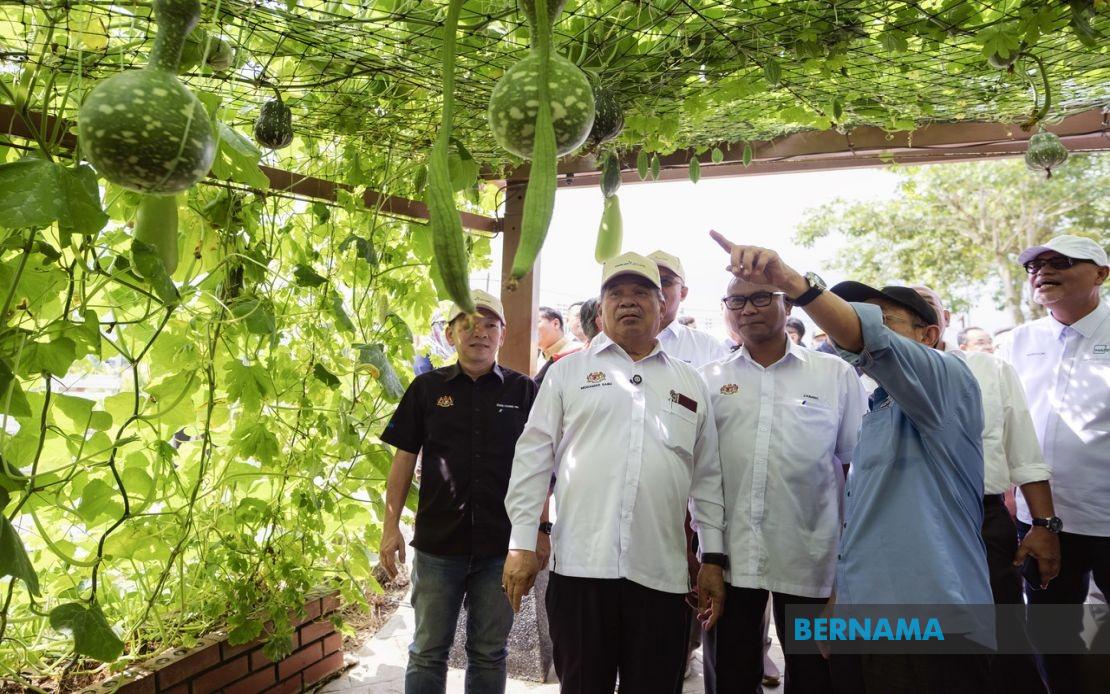
The Malaysia Agriculture, Horticulture and Agrotourism Exhibition (MAHA) 2026 is moving toward its grand opening with preparations at the Malaysia Agro Exposition Park Serdang (MAEPS) reaching the final stretch. Agriculture and Food Security Minister Datuk Seri Mohamad Sabu announced that construction and infrastructure work stands at 80 per cent completion, with all remaining tasks expected to conclude by Aug 27, a day before public access begins on Aug 28. The final week will focus on detailed setup and installation of display materials across the exhibition grounds.
The core infrastructure at MAEPS has already been finished, leaving organisers to concentrate on the finishing touches that will shape visitor experience. Mohamad expressed confidence that the exhibition venue would present an impressive appearance when doors open on Aug 28, during a media inspection conducted at the sprawling venue. The exhibition will operate through Sept 6, with Mohamad presiding over opening proceedings and Prime Minister Datuk Seri Anwar Ibrahim set to officiate the closing ceremony.
This year's iteration carries the theme 'Penciptaan Nilai Demi Keterjaminan Makanan', centring on how Malaysia's agricultural sector can leverage technology and innovation to ensure food security. The exhibition will prominently feature modern farming solutions already established in leading agricultural nations. Visitors will encounter automated machinery, robotic systems, and drone applications spanning paddy cultivation, pineapple farming, and melon production—technologies increasingly adopted across China, the Netherlands, and other agricultural-advanced countries.
Beyond showcasing equipment, MAHA 2026 emphasises strengthening the value chain within Malaysia's agri-food industry. Mohamad highlighted how farmers and livestock producers must move beyond producing raw materials into downstream processing and value-added manufacturing. Products such as dairy from milk, processed pineapple products, and cassava-based items demonstrate the potential for entrepreneurs to capture higher margins through processing and production rather than relying solely on commodity sales. This approach aims to deepen farmer participation throughout the supply chain rather than at its beginning.
The exhibition will incorporate Perkampungan Abang Mat, a dedicated cultural space celebrating Malaysia's agricultural heritage through traditional cooking practices and communal food preparation activities known as rewang. Daily programmes will rotate throughout the 10-day run, ensuring visitors encounter fresh cultural experiences each day. The village will feature traditional games including congkak and other pastimes designed to appeal to families and provide leisure opportunities, particularly for older attendees seeking relaxed engagement with the exhibition's offerings.
Incentive programmes have been woven throughout the event calendar to boost attendance and engagement. Organisers will conduct daily lucky draw sessions with prizes totalling 20 motorcycles distributed across the 10 days, alongside electrical appliances awarded as consolation prizes. These giveaways are designed to encourage repeat visits and sustain visitor flow across the exhibition's duration.
Projections for MAHA 2026 anticipate more than four million visitors navigating the grounds across the ten-day window. Approximately 2,000 exhibitors from Malaysia and fourteen international countries will showcase products and technologies, representing a significant gathering of regional and global agricultural stakeholders. Kenya's participation marks the first time the East African nation maintains a dedicated pavilion at MAHA, creating platforms for knowledge exchange and bilateral agricultural cooperation with Malaysian entities.
The international dimension carries strategic importance beyond commercial transactions. Countries participating in MAHA 2026 will utilise their pavilions to demonstrate sector innovations and identify partnership opportunities with Malaysian counterparts. This diplomacy-through-agriculture approach positions the exhibition as a networking hub where technology transfer and collaborative ventures between nations can materialise, strengthening Malaysia's position within regional and global agricultural networks.
Young Malaysians represent a key audience segment, with organisers targeting approximately 800,000 youths through specialised programming on automation, technology adoption, and agricultural modernisation. Mohamad's ministry is liaising with the Education Ministry to incorporate MAHA activities into school co-curricular programmes, creating pathways for students to engage with the sector's technological evolution. This educational thrust addresses Malaysia's need to attract younger generations into agriculture-related careers at a moment when technological advancement is fundamentally reshaping industry composition and skill requirements.
The exhibition timing reflects strategic planning within Malaysia's agricultural calendar. By staging MAHA during late August and early September, organisers capture a period when farmers are transitioning between seasonal cycles and may have capacity to visit. The scale of preparation underway at MAEPS—involving coordination across government ministries, corporate exhibitors, and international partners—demonstrates the significance placed on this biennial event as both a trade platform and public engagement mechanism.
For Malaysian stakeholders in agriculture, horticulture, and agrotourism, MAHA 2026 represents an opportunity to access cutting-edge practices and establish connections with international peers. Farmers considering technology adoption will encounter live demonstrations and direct engagement with equipment suppliers. Entrepreneurs exploring downstream processing can gain insights from established producers and potential business partners. The exhibition thus functions simultaneously as a marketplace, educational forum, and cultural celebration of Malaysia's agricultural identity.

