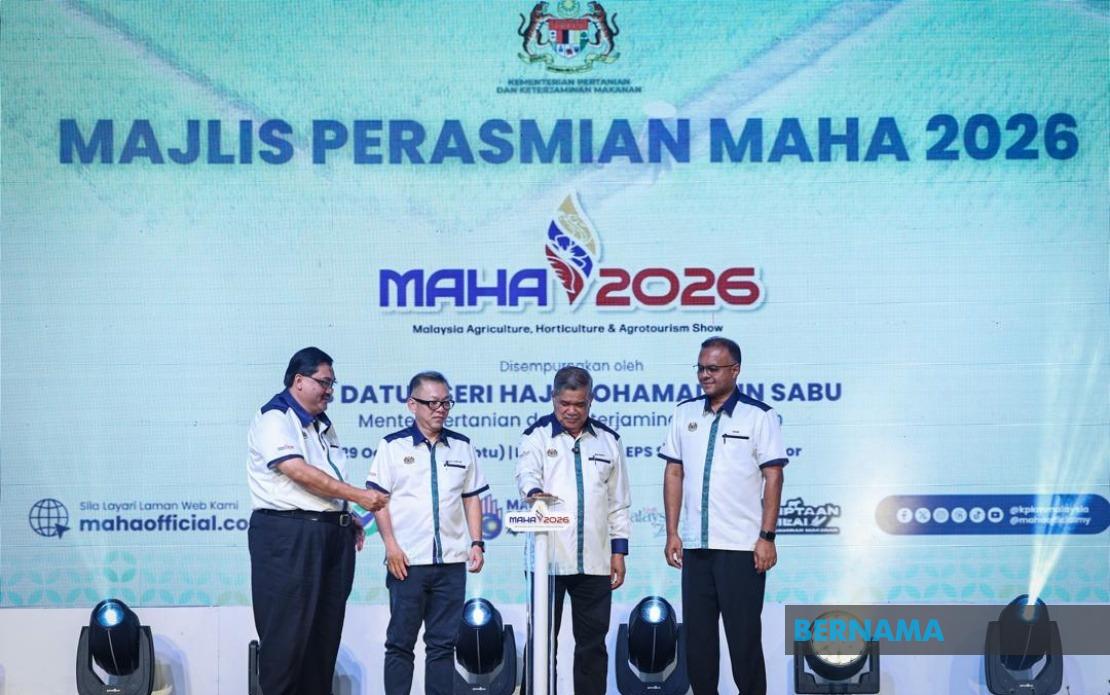
Agriculture and Food Security Minister Datuk Seri Mohamad Sabu has positioned the Malaysia Agriculture, Horticulture and Agrotourism Show 2026 as a watershed moment for the nation's farming sector, one where environmental responsibility takes centre stage alongside economic growth. Speaking at the opening ceremony of MAHA 2026 at the Malaysia Agro Exposition Park Serdang (MAEPS) on August 29, Mohamad outlined an ambitious vision for transforming how Malaysia produces and manages its food supply, with sustainability no longer treated as an afterthought but as a foundational principle guiding industry development.
The minister's emphasis on sustainability reflects growing international pressure and domestic recognition that Malaysia's agricultural competitiveness depends on adapting to climate pressures and global market expectations. By integrating sustainable practices throughout the agrifood value chain—from efficient energy consumption to minimising plastic waste and adopting regenerative farming techniques—Malaysia can simultaneously address two critical challenges: curtailing its contribution to global carbon emissions and positioning domestic producers for premium export markets increasingly dominated by environmentally conscious consumers. This dual approach transforms sustainability from a regulatory burden into a strategic competitive advantage for Malaysian farmers and agribusinesses.
Central to Mohamad's message was the revival of the Green Book Policy, a landmark framework introduced in 1974 under Prime Minister Tun Abdul Razak that aimed to reduce Malaysia's reliance on imported food and cushion citizens against rising living costs. Nearly five decades later, this philosophy carries renewed urgency as supply chain vulnerabilities exposed by global disruptions and inflation pressures underscore the fragility of depending heavily on external food sources. The government's resurrection of this philosophy signals recognition that food security represents not merely an agricultural concern but a matter of national economic stability and social resilience.
To strengthen domestic production capacity, the ministry plans systematic modernization across fisheries and livestock operations. This includes upgrading fishing fleets with contemporary technology, expanding high-value aquaculture ventures, integrating advanced systems into animal feed manufacturing, and implementing rigorous biosecurity protocols to prevent disease outbreaks that could devastate livestock populations. These investments represent a sophisticated understanding that raw productivity gains alone prove insufficient; competitive sustainability requires technological sophistication, disease management rigour, and value-chain integration that transforms commodity production into higher-margin specialised output.
The 2026 edition of MAHA has attracted participation from 14 countries, positioning the exposition as a platform for strengthening agricultural diplomacy and securing international partnerships. However, Mohamad sounded a notably pragmatic note regarding such collaborations, warning against treating bilateral and multilateral agreements as mere ceremonial exercises. The minister stressed that memoranda of understanding must transition into concrete commercial outcomes—expanded export channels, technology transfer arrangements, and genuine market access for Malaysian producers rather than accumulating as filed documents.
This stance reflects frustration common across Southeast Asian government circles, where well-intentioned international agreements frequently fail to generate tangible benefits for local businesses. By insisting that international cooperation translate into measurable commercial gains, Mohamad signals that the ministry will adopt a performance-oriented approach to diplomacy, potentially setting precedent for other government bodies managing international engagements. For Malaysian agritech startups and emerging agricultural enterprises, such partnerships could provide crucial pathways to international capital and market expansion, addressing a persistent barrier to scaling innovative farming solutions.
The exposition itself represents considerable logistical and commercial ambition, running from August 28 through September 6 and drawing approximately 2,000 exhibitors while targeting four million visitor attendances. This scale transforms MAHA beyond a trade show into a significant public engagement platform where rural and urban consumers encounter agricultural innovation, sustainability messaging, and domestic produce promotion. For Malaysia's vast smallholder farming community—a demographic that often struggles with market access and profitability—such platforms provide visibility and direct-to-consumer connections that bypass traditional middlemen.
Modern agricultural challenges require coordinated responses spanning multiple government agencies and private sector actors. The presence of Deputy Minister Datuk Chan Foong Hin and Ministry Secretary-General Datuk Seri Isham Ishak at the MAHA 2026 opening reflected whole-of-government commitment to advancing the agricultural modernization agenda. This bureaucratic alignment suggests that sustainability initiatives will receive sustained ministerial attention and resource allocation rather than functioning as isolated initiatives.
For Malaysian consumers and regional observers, MAHA 2026 signals that the government recognizes agriculture's centrality to long-term prosperity and social stability. By emphasizing both sustainability and food sovereignty, policymakers acknowledge that short-term profit maximization divorced from environmental stewardship ultimately undermines the sector's viability. This philosophical positioning places Malaysia alongside regional peers increasingly recognizing that agricultural transformation—not retreat—offers the pathway toward competitive advantage in global markets increasingly demanding responsibly produced food. The exposition's focus on practical sustainability measures and concrete international partnerships suggests this represents not rhetorical commitment but operational policy realignment with potentially significant implications for farming communities, consumers, and export performance across Southeast Asia.

