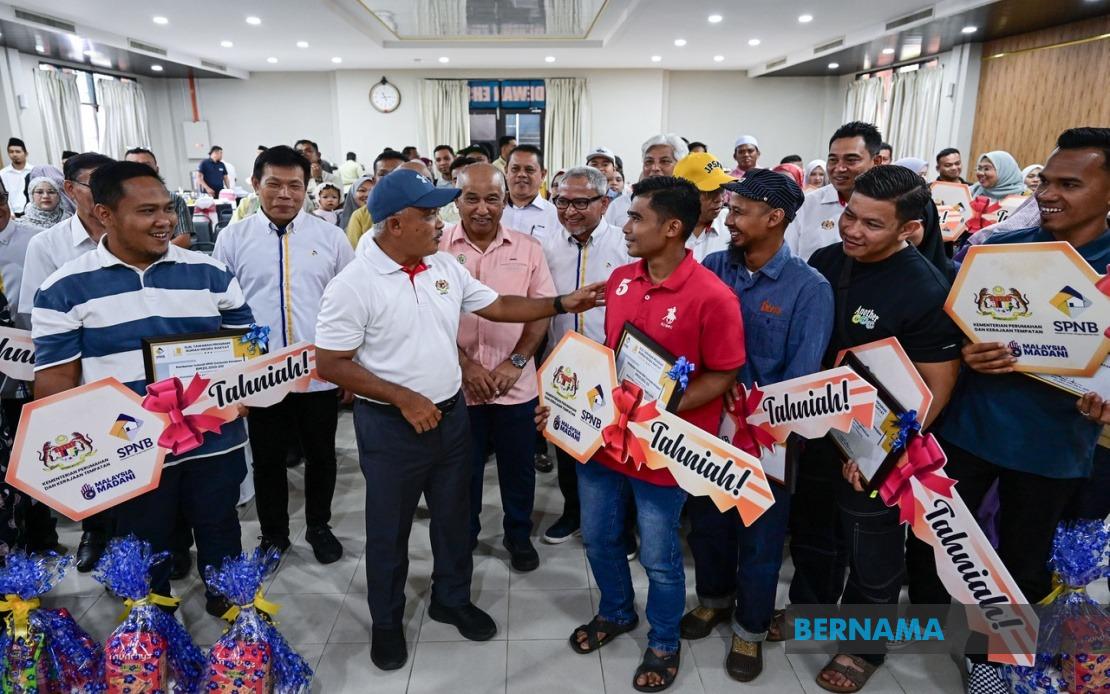
The Malaysian government's commitment to affordable housing took tangible shape on June 28 when fifty families across Kuala Terengganu and Kuala Nerus received direct assistance through the Rumah Mesra Rakyat (RMR) programme. The ceremony, held at Dewan Ehsan in Felda Wilayah Timur, marked a significant milestone for a housing initiative that addresses a critical gap in the market: providing dignified living spaces for lower-income Malaysians who own land but lack the means to construct proper dwellings.
The beneficiaries received either completed homes ready for immediate occupancy or formal offer letters granting them the right to construct new residences. Thirty families walked away with keys to finished houses, while another twenty received construction authorisation letters—a distinction that reflects the programme's flexible approach to meeting diverse household circumstances and preferences. Housing and Local Government Ministry (KPKT) secretary-general Datuk Dr M. Noor Azman Taib oversaw the distribution during his official working visit to the state, underscoring the central government's direct engagement with implementation efforts beyond Kuala Lumpur.
The RMR programme, administered by Syarikat Perumahan Negara Berhad (SPNB) under KPKT's stewardship, represents a distinctive policy response to Malaysia's persistent housing affordability challenge. Rather than simply constructing and distributing homes, the initiative targets a specific demographic: landowners lacking capital for construction. This nuanced approach recognises that many Malaysians possess valuable property assets but remain trapped in inadequate living conditions due to insufficient financial resources. The programme essentially unlocks dormant economic potential by enabling asset holders to transition into proper homeownership.
Datuk Dr M. Noor Azman articulated the government's broader philosophy underlying the scheme, emphasising that housing provision transcends mere shelter. The RMR programme functions as a catalyst for comprehensive quality-of-life improvements, he explained, transforming families' circumstances through the psychological and practical benefits of secure homeownership. This framing aligns with international development research demonstrating that stable housing correlates strongly with improved health outcomes, educational attainment among children, and economic mobility across generations. For lower-income households, home ownership serves as an anchor for long-term planning and family stability.
Terengganu has emerged as a particular focus for RMR expansion, receiving substantial resource allocation reflecting either demographic need or political prioritisation. The state hosts 680 units across the broader implementation pipeline, with a total financial commitment of RM46.67 million mobilised for the programme's execution. As of May this year, the state had achieved 246 completed and distributed units, while another 154 remained under active construction. This progress demonstrates the programme's capacity to scale across multiple constituencies simultaneously, though construction timelines suggest that completion remains dependent on contractor performance and supply chain stability.
Within Terengganu's allocation, Kuala Terengganu parliamentary constituency has received 34 units, with eighteen already completed and transferred to recipients. Seven additional units remain under construction. Kuala Nerus, the neighbouring constituency, maintains a comparable footprint with 32 units implemented, of which twenty-five have reached completion while seven continue under development. These constituency-level breakdowns reflect a deliberate distribution strategy, ensuring that programme benefits reach across multiple administrative divisions rather than concentrating resources in single areas. Such geographic spread builds broader political acceptance while addressing housing shortages throughout the state.
Looking forward, Budget 2026 allocations signal accelerated programme expansion, with the government targeting 6,545 new RMR units across Malaysia over the forthcoming fiscal cycle. The national progress to date remains measured but steady: 3,900 units have entered the implementation phase, comprising 2,478 completed and distributed, with 1,422 others actively under construction. This completion-to-construction ratio of roughly 1.7:1 suggests a functioning delivery mechanism, though the gap between units commencing construction and those reaching completion warrants monitoring as the programme scales significantly. Supply chain constraints, labour shortages in the construction sector, and coordination challenges across multiple delivery partners could complicate efforts to maintain current productivity rates.
The RMR programme's historical trajectory extends over two decades, since its 2002 inception marking its longevity as a flagship housing initiative surviving multiple government transitions. Over this extended period, the scheme has benefited more than 80,000 families nationwide, establishing itself as a substantial component of Malaysia's social safety net and housing policy infrastructure. This accumulated impact represents meaningful intervention in the lives of hundreds of thousands of Malaysians, though the continuing demand for affordable housing—evidenced by ongoing allocations and expansions—indicates that supply remains insufficient relative to need.
For Southeast Asian observers, the RMR programme offers instructive lessons regarding targeted housing policy design. By focusing on landowners rather than the landless, and providing construction support rather than direct cash transfers, the scheme achieves efficient resource deployment while building permanent assets. The targeting mechanism reduces deadweight loss compared to universal programmes, concentrating benefits on those demonstrating genuine housing need through land ownership. Meanwhile, the construction approach, rather than finished-home distribution, accommodates local preferences in dwelling design and specification, often proving more culturally appropriate and economically efficient than standardised housing solutions.
The presentation ceremony in Kuala Nerus reflects broader MADANI Government messaging around inclusive economic development and social protection. Housing policy remains politically salient across Malaysia, where home ownership aspiration remains high yet market prices in urban centres exceed wage growth significantly. Programmes targeting lower-income segments while respecting individual land ownership represent a pragmatic middle path between purely market-driven solutions and comprehensive state provision. As Malaysia navigates post-pandemic economic uncertainties and persistent income inequality, such targeted interventions maintain political legitimacy while delivering tangible improvements to beneficiary households' material circumstances and future prospects.

