The Malaysian government has reiterated its dedication to sustaining the Ziarah Kasih programme, which represents a cornerstone of the MADANI administration's approach to reaching those facing significant hardship across the nation. Speaking during a community engagement event in Mersing, Abdullah Izhar Mohamed Yusof, political secretary to the Communications Minister, underscored that the government views direct assistance as integral to maintaining trust and connection with citizens navigating difficult circumstances. The initiative reflects a deliberate strategy to move beyond traditional welfare channels and establish personal touchpoints with families and individuals experiencing acute vulnerability.
The Ziarah Kasih scheme operates through a systematic identification process involving the Department of Information working in conjunction with Komuniti MADANI, a grassroots mobilisation framework designed to embed government presence at the neighbourhood level. This collaborative approach enables authorities to identify deserving recipients more effectively, ensuring that assistance reaches households that might otherwise fall through bureaucratic gaps. Rather than relying solely on applications or institutional referrals, the programme emphasises proactive outreach, with officials visiting homes to assess circumstances firsthand. This methodology acknowledges that many vulnerable individuals, particularly elderly or disabled Malaysians, face barriers in accessing formal assistance channels.
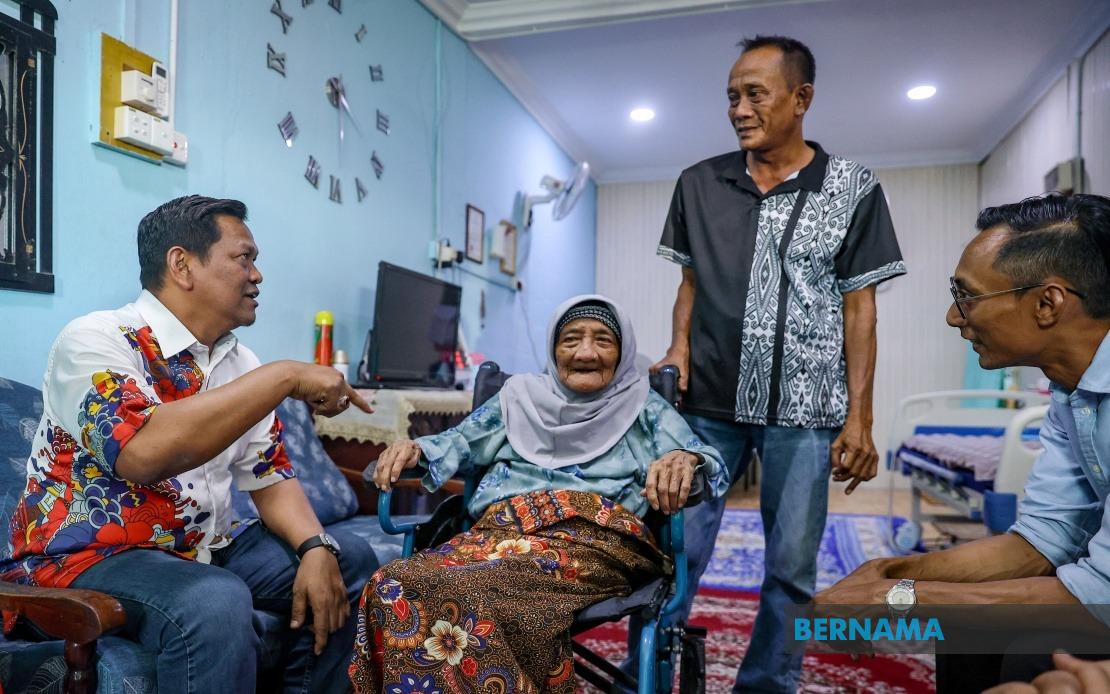
The practical dimensions of Ziarah Kasih extend beyond monetary support. During recent visits to residents in the Endau area, government representatives distributed healthcare equipment alongside financial contributions, recognising that vulnerability often encompasses multiple dimensions. For elderly citizens living with chronic conditions or disabilities, the combination of financial relief and medical supplies addresses both immediate material needs and longer-term health management challenges. This holistic approach signals recognition that poverty and vulnerability are not monolithic problems but instead require tailored interventions that account for individual circumstances and family dynamics.
One beneficiary, Hamdan Abd Latif, a 71-year-old bedridden resident, exemplifies the programme's target demographic. His situation illustrates how sudden illness can unravel a family's economic stability. A retired firefighter who suffered a catastrophic fall in 2011 while engaged in supplementary income activities, Hamdan subsequently underwent brain surgery and later endured a stroke, leaving him dependent on full-time care. His wife, Meriam Abd Wahab, sacrificed her own income-generating sewing work to provide this care, creating a household where medical expenses compound with lost earning capacity. For families in such circumstances, government assistance alleviates immediate pressures while enabling informal caregivers to sustain their essential labour without falling into destitution.
The case of Zainon Ibrahim, a 91-year-old widow receiving care from her son Jamaluddin Ismail, illustrates another critical dimension of Malaysian family vulnerability. Jamaluddin abandoned his career two years ago to provide full-time care for his elderly mother, a sacrifice that reflects both filial duty and the inadequacy of formal aged care infrastructure. Without sibling contributions and government assistance through Ziarah Kasih, such caregiving arrangements would prove economically unsustainable. This pattern—where working-age adults exit the formal economy to care for elderly relatives—remains commonplace across Malaysia, yet receives limited policy attention outside targeted assistance programmes. The initiative thus addresses a structural gap in Malaysia's social care architecture.
Ziarah Kasih's framing as part of the broader Malaysia MADANI aspiration positions welfare assistance within a larger ideological framework emphasising collective well-being and social cohesion. Rather than presenting aid as reactive crisis management, the government situates these interventions as expressions of shared national values and commitment to inclusive development. This rhetorical positioning matters in Malaysian political culture, where welfare assistance has historically carried stigmatic dimensions. By integrating poverty alleviation into a larger vision of national aspiration, the MADANI government attempts to normalise assistance-seeking and reshape social attitudes toward vulnerability.
The sustainability of Ziarah Kasih depends on consistent implementation and adequate resourcing. The programme's effectiveness relies on regular visits and assistance cycles, as reflected in Abdullah Izhar's commitment to ongoing implementation. For beneficiaries accustomed to precarious circumstances, predictability of support constitutes as much value as the material assistance itself. However, questions persist regarding the programme's scalability across Malaysia's diverse geographic and demographic landscape. Rural areas in Peninsular Malaysia, East Malaysia, and densely populated urban centres present markedly different implementation challenges. The Mersing visit, conducted as part of a broader Jiwa@Komuniti MADANI engagement series, suggests geographical rotation of government attention, though whether this translates to equitable coverage remains unclear.
For Southeast Asian readers assessing Malaysian social policy, Ziarah Kasih represents one approach among several models for targeting welfare assistance. Unlike means-tested systems requiring extensive documentation or targeted cash transfers channeled through banking infrastructure, Ziarah Kasih emphasises direct personal engagement by government officials. This approach carries advantages in contexts where beneficiaries may lack formal identification or banking access, yet also entails significant administrative requirements and potential inconsistency across different implementing officials. Comparative observation suggests that successful targeted assistance programmes typically combine multiple mechanisms—community identification, direct delivery, and institutional referrals—rather than relying on singular approaches.
The emotional resonance of recipients' testimonies—gratitude expressed by both Hamdan's wife and Jamaluddin—indicates that Ziarah Kasih succeeds in delivering tangible relief to vulnerable households. Yet individual testimony should not obscure systemic questions regarding coverage, adequacy, and complementarity with other social protection mechanisms. Malaysia's welfare landscape encompasses multiple programmes with different eligibility criteria and delivery mechanisms, creating complexity that may limit access among those most needing assistance. Whether Ziarah Kasih functions as a supplementary initiative enhancing existing protections or as a substitute for more comprehensive social safety nets remains a critical policy question.
Moving forward, the government's reiteration of commitment to Ziarah Kasih suggests this initiative will feature prominently in MADANI administration messaging around social engagement. For policy observers, the programme merits monitoring regarding implementation consistency, resource allocation, and integration with broader social protection strategies. Whether direct assistance proves sufficient to address structural vulnerabilities affecting Malaysia's elderly, disabled, and chronically ill populations, or whether complementary structural reforms in healthcare, aged care, and disability support systems are necessary, will substantially influence the initiative's long-term impact on national social welfare outcomes.