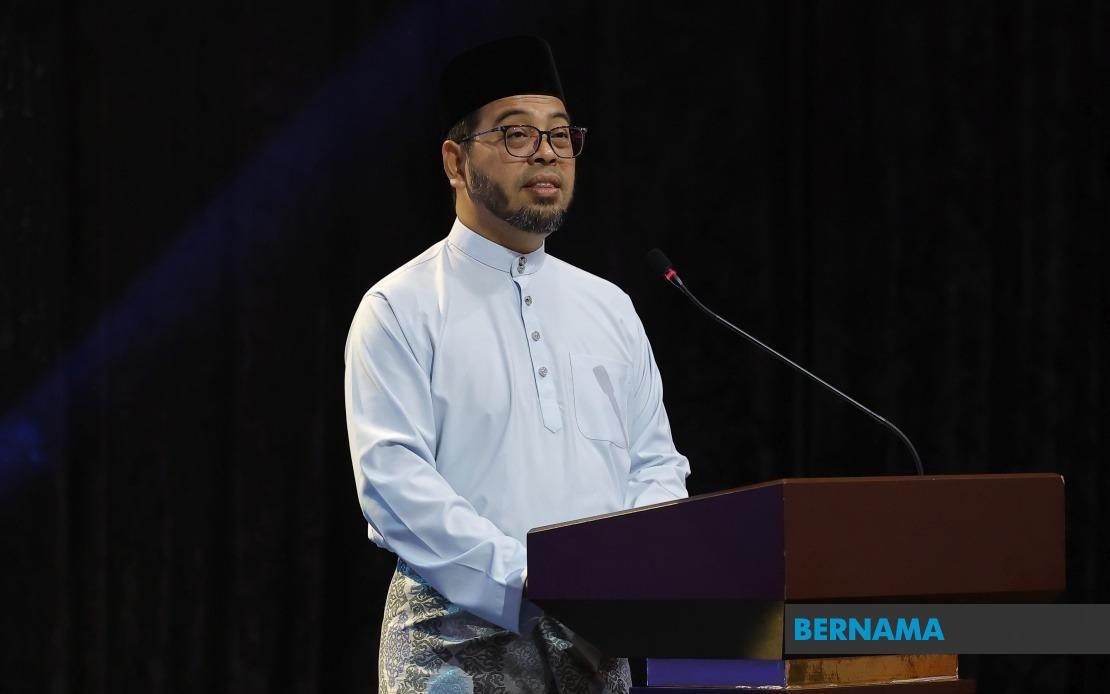
Malaysia's religious sector is entering a new phase of institutional development, with the MADANI Government reaffirming its dedication to elevating tahfiz education as a parallel and integral component of the nation's broader educational landscape. Speaking at the 34th convocation ceremony of Darul Quran JAKIM in Kuala Lumpur, Minister in the Prime Minister's Department (Religious Affairs) Dr Zulkifli Hasan outlined a strategic vision where Quranic memorisation institutions operate not in isolation, but as essential partners to conventional schooling systems, each reinforcing the other's objectives.
The minister's pronouncement comes against the backdrop of evolving conversations about Islamic education's role in a multi-faith, developing nation. Rather than framing tahfiz centres as alternatives or competitors to mainstream pathways, the government's position treats them as institutions capable of producing graduates equipped with both religious knowledge and secular competencies required for modern professional life. This integrated approach addresses long-standing concerns among policymakers and employers about ensuring that religious scholars maintain contemporary relevance and possess skills applicable across diverse sectors of the economy.
Darul Quran's six-decade trajectory provides the institutional context for this policy direction. Since its establishment in 1966, the centre has matured into Malaysia's preeminent tahfiz academy, a status reflected in its substantial graduate output. The institution has so far produced 12,633 huffaz—individuals who have memorised the entire Quran—who have dispersed throughout the professional ecosystem. These graduates occupy positions spanning education, Islamic jurisprudence, religious outreach, academic research, public administration, and specialized professional fields, demonstrating that tahfiz training need not consign individuals to narrowly defined religious roles.
The convocation itself celebrated 700 new graduates across multiple qualification levels, underscoring the diversity of pathways through which the institution engages students. The cohort included 37 Bachelor's degree holders from a collaborative programme with Universiti Sains Islam Malaysia, reflecting an important structural innovation wherein tahfiz institutions partner with universities to award higher credentials. Additionally, 454 diploma-level graduates in Quranic studies and recitation standards, 204 participants completing tahfiz certification programmes, and five basic-level certificate holders rounded out the intake, indicating a tiered system accommodating varying levels of commitment and academic background.
Dr Zulkifli's framing of tahfiz education transcends the conventional understanding of these institutions as purely memory-focused academies. Instead, he articulated a holistic developmental vision wherein tahfiz education serves the multifaceted purpose of cultivating rounded individuals. The emphasis rests on building not merely memorisation capacity, but equally on instilling moral character, intellectual depth, and practical skills that enable meaningful contribution to national economic and social progress. This reorientation responds to criticisms that have periodically surfaced regarding gaps between religious knowledge and contemporary professional demands.
The timing of this policy affirmation proves significant, coinciding with Darul Quran's Diamond Jubilee milestone. The 60-year marker provides psychological and institutional impetus for forward-planning. Rather than dwelling exclusively on past accomplishments, the minister deliberately cast the anniversary as an inflection point between completed chapters and nascent possibilities. His exhortation—to allow the legacy of six decades to inspire construction of the subsequent sixty years with intensified excellence—signals that complacency poses a greater threat than external challenges. The government's backing suggests it views tahfiz institutional renewal as strategic priority meriting sustained investment and policy attention.
For Malaysia's educational architecture, the MADANI administration's stance represents a deliberate choice to integrate rather than segregate knowledge traditions. In regional context, this approach distinguishes Malaysia's strategy from other Southeast Asian nations wrestling with similar questions about Islamic education's institutional positioning. By affirming tahfiz education's legitimacy while simultaneously ensuring graduates remain economically competitive and professionally versatile, policymakers attempt to navigate theological authenticity and practical modernisation simultaneously.
The collaborative degree programme with USIM exemplifies this integrative philosophy operationally. By enabling tahfiz graduates to earn university credentials in a single educational pathway, the institutional structure removes artificial barriers that previously forced students into binary choices between religious and secular qualification tracks. Such architectural changes ripple through labour markets, employer perceptions, and graduate career trajectories, gradually reshaping professional ecosystems to accommodate individuals with hybrid credentials.
The minister's emphasis on Darul Quran's role in producing inheritors of Islamic knowledge and community leaders introduces a succession planning dimension often overlooked in contemporary educational discourse. The institution functions not merely as a training ground but as a pipeline through which traditional Islamic scholarly authority reproduces itself generationally. The minister's language suggested that tahfiz education serves civilisational continuity purposes beyond immediate economic productivity, anchoring Islamic knowledge transmission as a legitimate state interest aligned with broader national development.
For Malaysian employers and professional bodies, the government's explicit commitment to tahfiz education's strengthening carries practical implications. Recognition that these institutions operate as components within an integrated educational ecosystem may encourage greater engagement with tahfiz graduate recruitment. Professional standards bodies might develop clearer frameworks for credentialing and deploying tahfiz-trained individuals in roles where their expertise adds demonstrable value. Such institutional coordination represents the practical endgame of the MADANI administration's positioning.
The minister's careful distinction between tahfiz education and huffaz production merits particular attention. By emphasising that memorisation forms only one component of broader personal development, he articulated a pedagogical philosophy extending beyond mechanical Quranic retention toward cultivating reflective, skilled graduates. This conceptual repositioning matters for international engagement, particularly given heightened global scrutiny of Islamic educational institutions. Framing tahfiz centres as character-building academies rather than solely scriptural memorisation factories facilitates dialogue with international educational frameworks and accreditation standards.
Looking forward, the MADANI Government's commitment appears unlikely to remain rhetorical. The existence of multiple qualification levels and the university collaboration suggest institutional evolution already underway. Sustained policy backing, combined with ongoing graduate output across diverse sectors, positions tahfiz education as increasingly normalised within Malaysia's educational mainstream. Whether this integration fully realises the minister's vision of genuine equivalence and mutual reinforcement between tahfiz and conventional pathways will depend on subsequent policy implementation, resource allocation, and—crucially—the extent to which employers and professional communities actively integrate tahfiz graduates into competitive merit-based recruitment processes.

