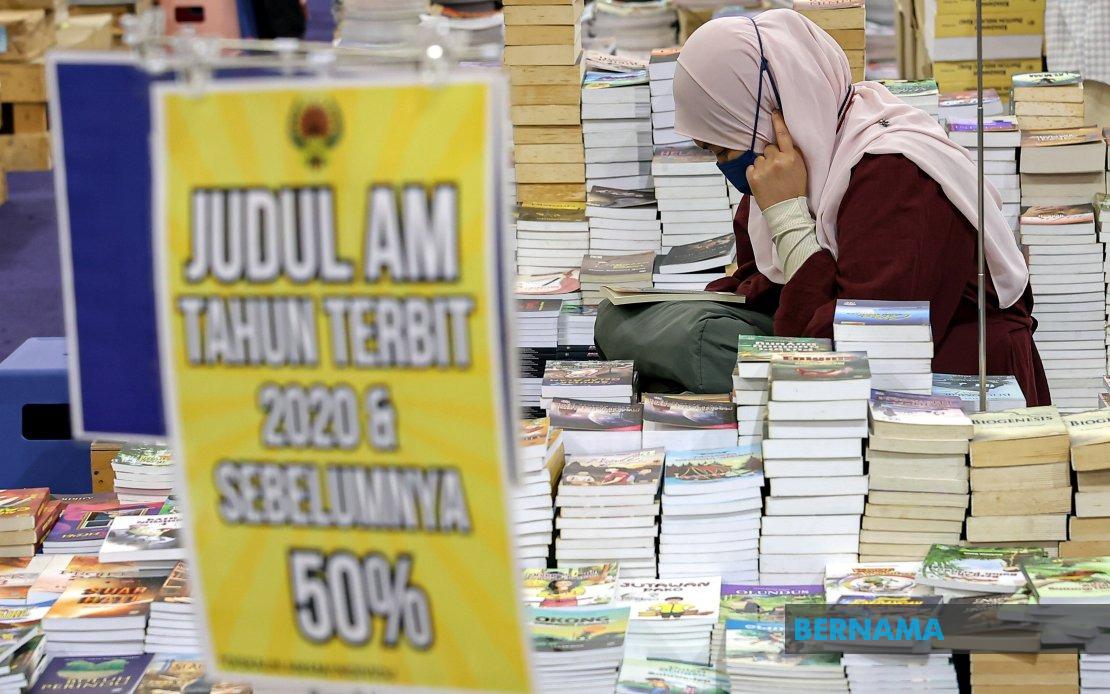
The Malaysian government's commitment to democratising access to reading materials for students nationwide received fresh momentum today when the Dewan Rakyat was informed that the MADANI Book Voucher Programme 2026 would benefit more than 2.2 million pupils across the country. Deputy Education Minister Wong Kah Woh announced that redemption of the RM100 e-vouchers would commence tomorrow, June 30, and continue until October 31, underpinned by a substantial allocation of RM221.6 million. The scale of this initiative underscores the government's recognition that equitable access to quality educational resources remains fundamental to developing Malaysia's human capital, particularly for students from economically disadvantaged backgrounds.
The beneficiary pool encompasses 2,217,579 recipients spanning Remove Class through Form Six, vocational college students, matriculation college attendees, and trainees enrolled at the Malaysian Institute of Teacher Education (IPGM). This broad eligibility criterion ensures that the programme reaches learners across different educational pathways, acknowledging that academic development extends beyond conventional secondary and tertiary streams. By including vocational and teacher education institutions, the initiative recognises the diverse skills pipeline required to sustain Malaysia's competitive advantage in a rapidly evolving regional economy. The comprehensive coverage demonstrates a deliberate policy approach to prevent any segment of the student population from falling behind their peers in accessing contemporary learning materials.
Technologically, the entire voucher redemption process operates through the BookCapital platform, a digital marketplace that currently hosts 1,238 registered booksellers. This online infrastructure represents a significant shift toward transparent, traceable government spending on education while simultaneously supporting the broader retail book ecosystem. The platform's integration across Malaysia ensures that even students residing in geographically remote areas can participate fully, eliminating the traditional disadvantages that rural learners faced when attempting to purchase books through conventional channels. The digital architecture also generates valuable data on student reading preferences and educational priorities, information that can inform future curriculum development and publishing industry trends.
A notable innovation within the 2026 iteration is the introduction of the MADANI Special Title Focus, a curated selection emphasising both classical literature and contemporary non-fiction examining history, philosophy, economics, and geopolitical analysis. This expansion reflects recognition that student development encompasses not merely technical proficiency but also critical thinking and contextual understanding of global affairs. Particularly significant is the programme's emphasis on future-oriented disciplines including artificial intelligence, information technology, STEM subjects, and digitalisation—domains recognised as critical for Malaysia's positioning within the global digital economy. The mandatory requirement that each recipient purchase at least one title from this focus category ensures that even students with alternative reading preferences gain exposure to forward-looking educational content.
Evaluation data from the programme's first two years of operation provides compelling evidence of its tangible impact. An impact study conducted by the Darul Ehsan Institute revealed that 97.5 percent of surveyed recipients agreed the MADANI Book Voucher substantially assisted students, with particularly pronounced benefits for those from lower-income households. A further 92.2 percent of respondents reported that the vouchers contributed meaningfully to their examination preparation, suggesting that the initiative addresses a genuine educational need rather than serving merely symbolic purposes. These metrics, derived from structured feedback collection since the programme's introduction in 2024, offer robust justification for continued government investment and expansion of the scheme.
Performance indicators from the initial implementation phase underscore the programme's operational effectiveness. The 2024 redemption rate achieved a perfect 100 percent, a remarkable outcome indicating both strong student awareness of the initiative and the accessibility of the BookCapital platform. This comprehensive uptake contrasts favourably with many government assistance programmes, which typically experience lower participation rates due to administrative complexity or inadequate communication. Wong's emphasis on achieving simultaneous objectives—100 percent redemption, complete transparency, and zero financial leakage—addresses persistent public concerns regarding government expenditure efficiency. The elimination of intermediary corruption and the creation of verifiable transaction records represent substantial improvements over previous assistance mechanisms that operated through less transparent channels.
The programme's geographical inclusivity warrants particular emphasis for Malaysian policymakers. By utilising online ordering and nationwide delivery infrastructure, the MADANI Book Vouchers guarantee that students in Sabah and Sarawak, as well as peninsular rural areas, enjoy identical access to identical titles compared with their urban counterparts. This principle of equalised opportunity extends beyond mere rhetorical commitment and translates into concrete operational reality. Students in remote communities are no longer constrained by limited local bookshop inventories or by transportation costs that previously rendered the purchase of educational materials prohibitively expensive. The systemic levelling of educational resource distribution carries significant implications for regional inequality reduction and social mobility enhancement across Malaysia's diverse geography.
The programme's second iteration incorporates lessons learned from initial implementation while introducing thematic refinements. The strategic elevation of STEM and artificial intelligence within the Special Title Focus category reflects both Malaysia's aspiration toward knowledge economy positioning and recognition that competitive advantage in the twenty-first century derives increasingly from technical and digital literacy. The inclusion of philosophical and geopolitical literature alongside technical subjects indicates sophisticated understanding that technological capability requires accompanying contextual wisdom regarding global interconnections and ethical considerations. This balanced approach to knowledge curation suggests educational philosophy extending beyond narrow vocational training toward development of well-rounded critical thinkers capable of navigating complex societal challenges.
For Southeast Asian context, the MADANI programme offers instructive lessons regarding equitable technology-driven social policy. The region contains numerous economies struggling to extend educational resources to rural and economically marginalised populations. Malaysia's experience demonstrates that carefully designed digital infrastructure, coupled with genuine commitment to universal access, enables governments to overcome traditional logistical barriers separating urban and remote educational opportunities. The programme's success metrics may encourage neighbouring countries to examine similar approaches adapted to their own circumstances, potentially catalysing broader regional shifts toward inclusive digital governance in education.
The RM221.6 million financial commitment carries additional economic implications beyond its direct educational benefits. Distribution of vouchers to 2.2 million students generates substantial demand stimulus for the book retail sector, supporting both large bookstore chains and independent booksellers through the BookCapital platform's 1,238 registered vendors. This multiplier effect extends economic benefits throughout publishing supply chains, from authors and illustrators to printers and distributors. The programme thus simultaneously achieves social objectives of educational equity while providing targeted stimulus to the knowledge industry, creating circular economic benefit where investment in human capital development directly supports related business sectors.
Looking forward, the programme's demonstrated success and robust evaluation framework position it as potentially replicable model for other educational initiatives. The collection of detailed data on redemption patterns, title popularity, and recipient demographics creates foundations for increasingly sophisticated future iterations. Policymakers might examine whether similar voucher mechanisms could address gaps in other educational resource categories, from laboratory equipment to technology hardware, particularly for students in under-resourced institutional settings. The MADANI programme's trajectory from initial pilot through scaled national implementation with rigorous evaluation suggests institutional learning capacity that augurs well for continuous policy refinement across Malaysia's education system.

