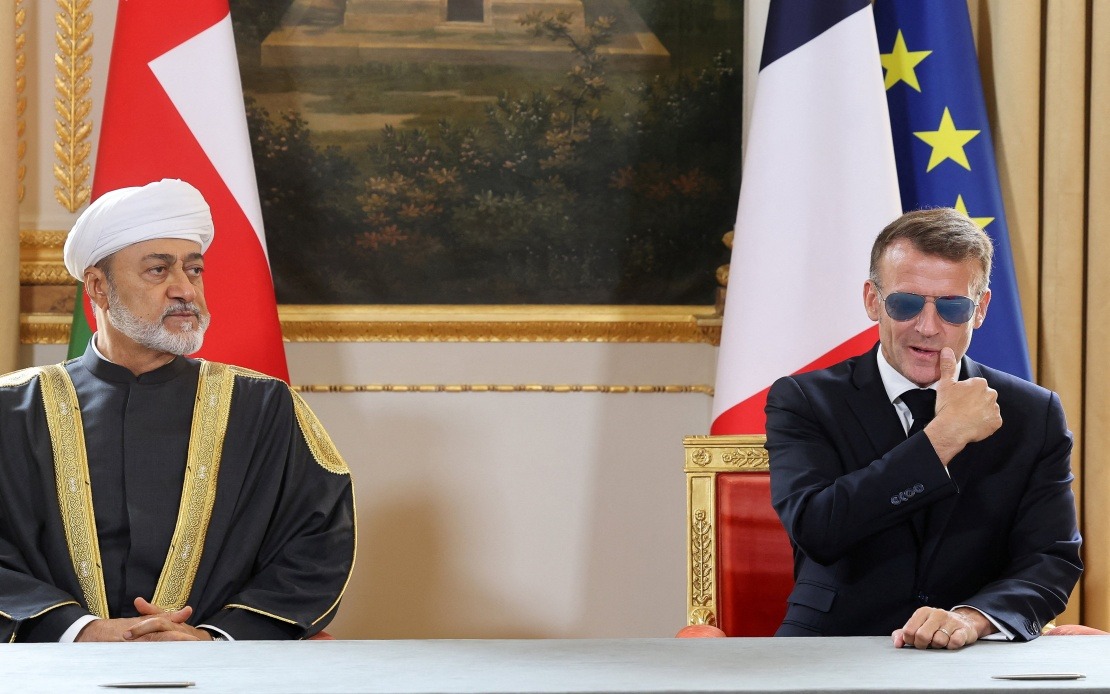
French President Emmanuel Macron returned to wearing his now-famous aviator sunglasses during bilateral meetings with Sultan Haitham bin Tariq of Oman at the Élysée Palace on Monday, prompting fresh commentary about the eyewear that has become unexpectedly central to discussions of the French leader's public image. According to French media sources briefed by officials close to the president, Macron donned the sunglasses because of an ongoing eye condition requiring light protection, a practical measure rather than a fashion statement.
The choice to wear the sunglasses during formal diplomatic engagement proved unavoidable given Macron's medical circumstances. He greeted the Sultan of Oman while wearing the aviator-style frames and maintained them throughout the subsequent bilateral discussions, a decision that highlighted how a medical necessity can intersect with high-profile public appearances. The meeting represented a significant diplomatic engagement, making the sunglasses an inescapable element of the visual record from the occasion.
Macron's eye difficulties trace back to January of the current year, when French officials disclosed that the president was managing a minor eye inflammation. Medical advisors determined that extended sunglasses use would be necessary for approximately two weeks to manage the condition and protect his vision during the recovery period. However, the inflammation appears to have persisted longer than initially anticipated, necessitating continued protective eyewear several months later.
The aviator sunglasses gained international prominence when Macron wore them during his appearance at the World Economic Forum in Davos earlier this year. What might have remained a minor detail of diplomatic dress became a subject of widespread commentary and light ridicule across global media outlets. The eyewear drew particular attention from US President Donald Trump, who publicly mocked Macron's appearance, transforming what was ostensibly a medical accommodation into a cultural moment that transcended typical political discourse.
In France itself, the response to Macron's sunglasses took on a different character, with domestic commentators drawing comparisons between the French president and Hollywood actor Tom Cruise, particularly referencing the star's iconic appearance in action films. This comparison, though intended humorously, reflected how the sunglasses had captured public imagination and become a topic of casual conversation among French citizens. The shift from medical necessity to cultural reference point illustrated how contemporary media environments can rapidly recontextualise personal details of public figures.
The commercial implications of Macron's eyewear choice extended beyond symbolic or satirical value. Henry Jullien, a French manufacturer specialising in luxury eyewear, reported a notable surge in customer inquiries specifically about the aviator model that Macron had been wearing. Rather than treating the public interest as a temporary curiosity, the company strategically capitalised on the attention, continuing to feature photographs of Macron wearing the sunglasses in its promotional materials and marketing campaigns.
This commercial response highlights the phenomenon of inadvertent celebrity endorsement, whereby a public figure's authentic use of a product—in this case, driven by medical necessity rather than deliberate promotion—generates significant market interest. For Henry Jullien, the Macron effect represented an unexpected marketing windfall, demonstrating how geopolitical figures can influence consumer behaviour even without formal endorsement arrangements. The company's decision to leverage the connection through continued promotional use suggests confidence that the public association remains valuable.
The persistence of Macron's eye condition months after initial diagnosis raises questions about the underlying cause and severity of his inflammation. While French officials have characterised it as minor, the extended duration suggests either that the initial assessment underestimated recovery time, or that the president has experienced recurrent episodes requiring repeated interventions. The continued use of sunglasses in formal settings indicates that medical considerations continue to supersede purely aesthetic diplomatic considerations.
For Malaysian and broader Southeast Asian audiences observing French politics and diplomacy, the Macron sunglasses episode offers insight into how contemporary political leadership navigates the intersection of personal health, public image, and media scrutiny. In an era where photographs circulate globally within moments, even routine medical accommodations become subject to international commentary and interpretation. The incident also reflects how luxury brands can organically benefit from political exposure, a dynamic that operates across cultural and geographic boundaries.
The practical reality that heads of state must sometimes manage visible health conditions during diplomatic engagements represents an underexplored dimension of political life. Macron's willingness to proceed with important meetings despite a visible medical accommodation—rather than rescheduling to avoid public scrutiny—demonstrates a pragmatic approach to governance that prioritises substantive diplomatic relations over cosmetic political theatre. Whether future bilateral meetings will continue to feature the sunglasses depends partly on whether his eye inflammation continues to require protective measures, keeping this curious footnote of French diplomacy potentially unresolved.

