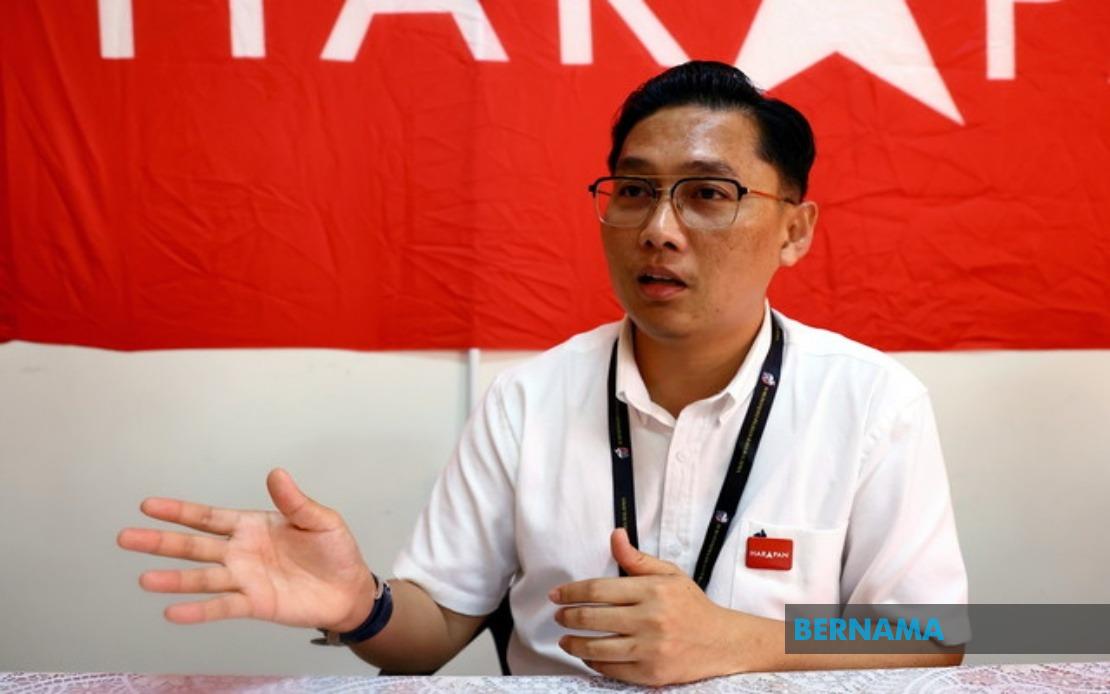
Pakatan Harapan's candidate for the Machap state seat, Nur Hafiz Roslan, has dismissed concerns about contesting against the incumbent Johor Menteri Besar Datuk Onn Hafiz Ghazi, insisting that his campaign will focus on delivering meaningful solutions to constituents regardless of the seat's historical voting patterns. The contest represents a significant challenge for the opposition, given that Machap has long served as a Barisan Nasional fortress, with Onn Hafiz securing a majority of 6,543 votes in 2022. Yet Nur Hafiz, drawing on nearly two decades of experience practising law, contends that such historical dominance does not guarantee continued electoral success.
The candidate's confidence stems partly from political precedent. He points to former Johor Menteri Besars such as Tan Sri Abdul Ghani Othman and Datuk Seri Khaled Nordin, both of whom experienced electoral defeats despite their high office and regional standing. This historical perspective suggests that incumbency, even at the highest state level, provides no automatic shield against electoral challenges. For Malaysian observers accustomed to seeing certain constituencies shift allegiance only rarely, Nur Hafiz's optimism might seem audacious. Yet in recent electoral cycles, particularly following the dramatic 2018 results that brought Pakatan Harapan to federal power, voters have demonstrated increasing willingness to cross traditional party lines when presented with compelling alternatives.
Nur Hafiz has also expressed satisfaction with the internal cohesion of Pakatan Harapan's campaign machinery in Johor. He describes the coalition's election operations as organised, stable, and free from the internal divisions that have historically plagued opposition campaigns. This organisational discipline represents a crucial advantage when contesting in established BN strongholds, where traditional loyalties run deep but can be gradually eroded through effective ground-level engagement and consistent messaging. The apparent absence of factional tension within PH's Machap operations contrasts with occasional reports of coordination challenges between the coalition's component parties in other constituencies.
Central to Nur Hafiz's campaign strategy is a deliberate pivot away from what he characterises as outdated political messaging. He explicitly rejects the deployment of divisive rhetoric centred on race, religion, and royalty—what he terms the "3R" framework. Instead, he advocates for what he calls "mature politics," an approach prioritising policy substance and practical solutions to citizens' immediate concerns. This framing carries particular resonance for younger urban voters and those frustrated with what they perceive as repetitive communal messaging that fails to address economic pressures, employment opportunities, and service delivery.
The candidate's emphasis on moving beyond fear-based politics directed at Malaysia's diverse communities represents a subtle but significant repositioning of the opposition narrative. Rather than attacking the ruling coalition's governance directly, Nur Hafiz proposes a positive vision centred on effective bridge-building between state and federal authorities. For Machap residents, this translates into his pledge to ensure their concerns receive fair representation regardless of ethnic or religious background. In a constituency where demographic diversity requires careful political navigation, such positioning attempts to appeal across community lines without appearing to dilute commitment to any particular group's welfare.
The 2022 election results provide context for understanding the competitive landscape. Onn Hafiz's 6,543-vote majority, while substantial, is neither insurmountable nor reflective of overwhelming voter approval. In Malaysian state constituencies, margins of this size can shift when motivated campaigns succeed in mobilising previously disengaged voters or converting swing communities. The Machap contest thus offers a genuine test of whether PH's organisational improvements and message repositioning can successfully challenge BN in its traditional strongholds, rather than merely competing in marginal seats.
Johor's political dynamics have undergone significant recalibration since 2018. The state has witnessed instances of electoral volatility, with certain constituencies proving more competitive than conventional wisdom suggested. Additionally, the administration's handling of development priorities and service delivery standards will likely influence how receptive Machap voters prove to opposition overtures. Nur Hafiz's legal background provides him with credibility as a professional outsider to traditional political hierarchies, potentially appealing to voters seeking alternatives to career politicians.
The broader context of Malaysian opposition politics suggests that candidates willing to emphasise substantive governance over communal messaging increasingly attract support, particularly among urban and suburban populations. Nur Hafiz's explicit rejection of divisive "3R" rhetoric, while potentially contentious with certain traditional constituencies, aligns with emerging voter preferences for issue-focused campaigning. This approach acknowledges demographic changes across Johor constituencies and reflects understanding that electoral coalitions must now accommodate voters fatigued by long-running communal tensions.
As the July 11 Johor state election approaches, with early voting set for July 7, the Machap contest exemplifies how Malaysian opposition parties are attempting to breach long-established BN territorial strongholds. Nur Hafiz's candidacy, grounded in professional credentials and a commitment to elevated political discourse, suggests that the opposition sees potential in constituencies previously written off as unwinnable. Whether such campaigns succeed will significantly indicate whether Malaysia's electorate is fundamentally reordering its preferences or whether traditional voting patterns remain resilient even as political messaging evolves.

