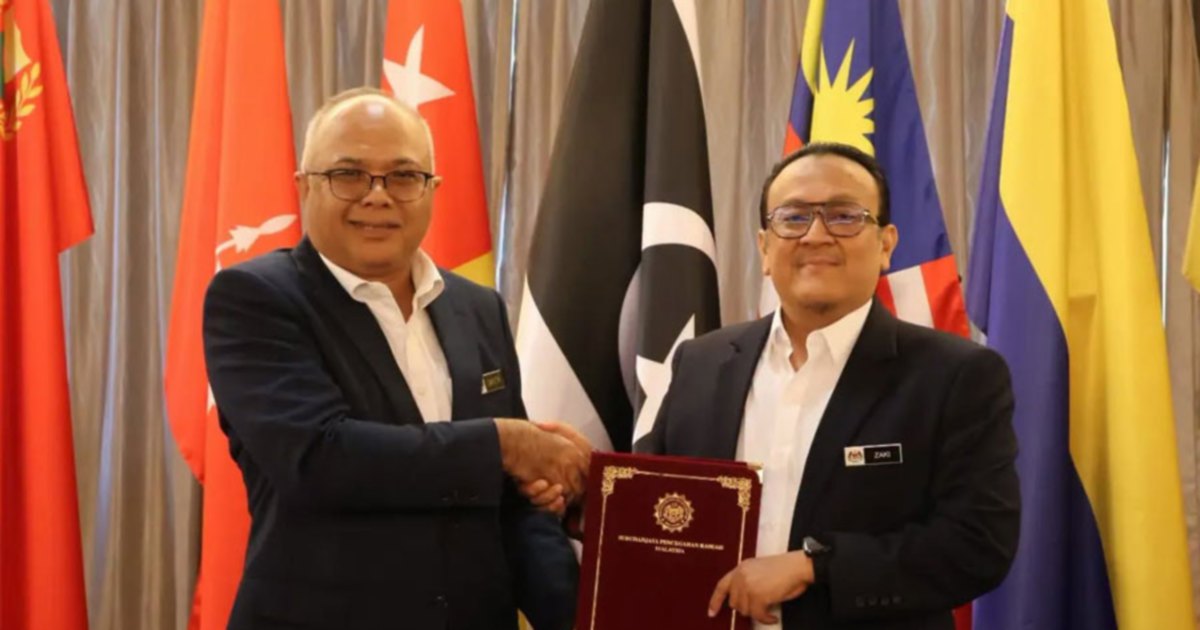
The Malaysian Anti-Corruption Commission has outlined a comprehensive six-point governance framework intended to reinforce the Cooking Oil Price Stabilisation Scheme, reflecting growing concerns about the integrity of one of the country's most economically significant subsidy mechanisms. Speaking from Putrajaya, the MACC emphasised that the proposed reforms represent a critical intervention to enhance supervisory architecture and curtail the diversion of heavily subsidised cooking oil, which remains a persistent vulnerability in Malaysia's food security infrastructure.
Cooking oil subsidies constitute a substantial fiscal outlay for the Malaysian government, serving as a price stabilisation instrument that affects virtually every household and food business across the nation. The leakage of subsidised oil into black markets or for unauthorised purposes has long been identified as a systemic challenge, undermining both fiscal sustainability and the policy's core objective of protecting consumers from volatile commodity prices. MACC's intervention signals acknowledgement at the highest anti-corruption level that the current governance framework has structural weaknesses requiring fundamental redesign rather than incremental adjustment.
The commission's recommendations emerge within a broader context of heightened scrutiny over subsidy programmes globally. Developed and developing economies alike have grappled with balancing affordability objectives against budgetary constraints and preventing subsidy capture by traders and operators who exploit regulatory gaps. Malaysia's cooking oil subsidy, which directly influences the retail price experienced by consumers at supermarkets and wet markets, represents a policy mechanism where governance failures cascade quickly into inflationary pressure and black-market distortions.
Effective implementation of MACC's framework would necessitate coordination across multiple agencies including the Domestic Trade and Cost of Living Ministry, the Federal Agricultural Marketing Authority, Petronas, and state-level regulators. This multi-agency dimension introduces complexity, as institutional fragmentation has historically enabled gaps in oversight where responsibility diffuses and accountability becomes difficult to assign. The MACC proposals likely address these coordination failures through unified reporting mechanisms and clearer demarcation of supervisory authority.
From a regional perspective, Malaysia's experience with cooking oil subsidy governance carries implications for other Southeast Asian nations operating similar programmes. Indonesia, Thailand, and the Philippines all maintain price controls on essential food commodities, and governance weaknesses in Malaysia's scheme may offer cautionary lessons. The transparency and accountability measures advocated by MACC could become a benchmark for emerging best practices across the Association of Southeast Asian Nations, particularly as commodity price volatility intensifies pressures on government budgets.
The timing of MACC's intervention reflects mounting pressure to demonstrate tangible anti-corruption outcomes to a Malaysian public increasingly concerned about the nexus between subsidy programmes and rent-seeking behaviour. Cooking oil fraud cases have sporadically surfaced in media reports, featuring allegations of diversion to neighbouring countries where price differentials create arbitrage opportunities. Such incidents undermine public confidence in government's stewardship of taxpayer resources and erode support for subsidy mechanisms that are politically difficult to withdraw.
The proposed reforms are expected to include enhanced traceability systems tracking cooking oil from point of subsidy disbursement through distribution networks to retail locations. Digital mechanisms and blockchain-type verification could establish immutable records of transaction chains, making unauthorised diversions exponentially more difficult to execute undetected. Additionally, MACC likely recommends strengthened penalty frameworks and increased investigative resources dedicated specifically to subsidy programme fraud, signalling heightened consequences for misconduct.
Supply-chain transparency also figures prominently in governance frameworks aimed at reducing leakage. By mapping authorised dealers, distributors, and retail outlets with geographic precision, regulators can identify anomalies such as unusually high per-capita consumption in particular localities or patterns inconsistent with population density. Sophisticated analytics applied to transaction data would enable detection of suspicious patterns that suggest diversion rather than legitimate consumption.
Stakeholder engagement represents another critical reform dimension. Retailers and food manufacturers dependent on cooking oil have incentives to report suspicious market activity, as subsidy leakage inflates black-market prices that disadvantage compliant competitors. MACC's framework likely contemplates whistleblower protections and incentive structures encouraging supply-chain participants to report governance violations, shifting from enforcement-only models to cooperative compliance architectures.
The financial implications of strengthened governance extend beyond immediate fraud prevention. By reducing subsidy leakage, the government preserves budgetary resources that could be allocated to other priority areas or retained as fiscal space during commodity-price spikes. Moreover, enhanced programme integrity strengthens the political sustainability of the subsidy itself, as public perception of fairness and efficient administration determines whether citizens and opposition politicians continue to regard subsidies as legitimate policy instruments or wasteful government overreach.
Implementation success depends critically on sustained political commitment and adequate resource allocation to enforcement agencies. Past governance reform initiatives in Malaysia have occasionally foundered when bureaucratic inertia, resource constraints, or competing priorities diluted attention. The MACC recommendations will face similar implementation risks unless accompanied by explicit budgetary allocation, executive-level endorsement, and performance metrics that hold agencies accountable for reform execution.
As Malaysia navigates economic pressures and commodity-market volatility, the cooking oil subsidy will remain essential to household budgeting and food industry operations. MACC's governance proposals represent a recognition that sound policy design alone is insufficient without robust implementation systems and corruption-prevention architecture. The commission's intervention reflects a sophisticated understanding that subsidy programmes succeed or fail ultimately on governance, not just legislative design.
The broader significance extends beyond cooking oil to inform discussions about subsidy architecture across the Malaysian economy. As the government explores subsidy rationalisation and targeted assistance models, the principles embedded in MACC's cooking oil recommendations could establish templates for governance frameworks applicable to fuel subsidies, fertiliser support, and other transfer mechanisms, potentially elevating governance standards across the entire subsidy ecosystem.

